
Saturday 22nd February 1975
‘Saturdays are always boring to wake up on because we do morning lessons. But today, we were playing Fists XV Rugger against Malsis, a rival team who boasted they had never lost and had their best team for 15 years. We played them. U/11 lost 8-0, 2nd XV lost 16-4 but we played our hearts out and won 22-3. We had hoped to watch a Carry On film (not allowed to). B came and I played and talked a great deal with him. He left in the Summer, one best friend of mine.’
KAI: Fifty years on, this entry from Saturday, 22nd February 1975, captures routine, triumph, disappointment, and friendship—elements that still shape memory and identity today.
Routine and the Shape of Saturdays
The complaint about morning lessons on a Saturday evokes a strict school routine, where academic expectations intruded into what many might have hoped would be a free day. Half a century later, the idea of a six-day school week has become rare, making such a structure almost archaic. Yet, within that constraint, the anticipation of sport brought a break from the monotony—a reminder of how ritualised structure and the promise of something different can shape the emotional landscape of a day.

The Rugby Match: Competition and Camaraderie
The contrast in match results—some defeats, one significant victory—paints a vivid picture of youthful determination. The First XV’s win against a team that prided itself on being undefeated carries an underdog story, a small but unforgettable triumph. Decades later, does the memory of that victory still bring pride? The way it was written—factual yet energetic—suggests a genuine emotional investment in the game. The sense of playing with heart remains a valuable lesson across time: the idea that effort and teamwork can overturn expectations.
The ‘Carry On’ Film: Hopes and Denials
Denied permission to watch a Carry On film—there’s a sense of an authority figure’s disapproval, perhaps due to the film’s risqué humour or general irreverence. At the time, that must have been frustrating, another small but significant disappointment in the structured life of the school. Fifty years later, Carry On films have become period pieces emblematic of a particular era’s humour. Still, the broader theme remains: the withheld little freedoms can be as memorable as the victories gained.
Friendship and Farewell
The mention of B—a best friend who left that summer—introduces a more personal and poignant note. It’s a reminder of how school friendships were intense, deeply felt, yet often transient. In boarding school or structured environments, a friend leaving could feel like the sudden loss of a familiar world. Half a century later, what became of B? Did your paths ever cross again, or was that summer the end of a chapter?
Fifty Years On
Looking back at this entry, what resonates most? The discipline of school life, the thrill of competition, the minor disappointments, or the lasting impact of friendships? The memory, preserved in ink, still carries weight, even if the emotions have softened over time. Would the younger self have imagined a reflection on this day half a century later?
Does reading this now bring back a specific feeling—perhaps even the scent of the changing room, the sound of boots on grass, or the echo of laughter with B?
Decades later, does the memory of that victory still against Malsis bring pride?
JV: Sporting achievements for those involved always brought a sense of personal, team and community pride. We’d out in the hours, we had the coaching, we played as a team, we had a segment of the school cheering us on, and school sports prizes were awarded after an account of the game was read out during assembly. Those not already glorified with school colours might receive them – the right to wear a distinguished tie with silver thread sewn into the school colours of green and red.
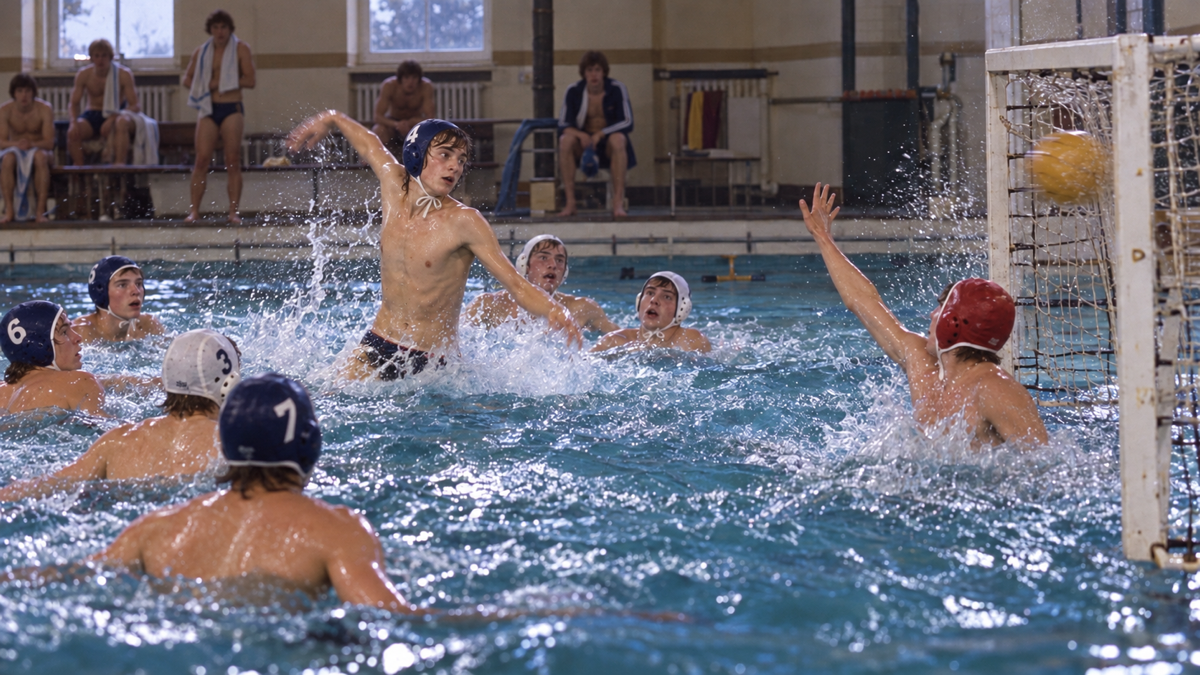
However, I had no intrinsic interest in the game. My father never saw me play. At public school, I had no desire to be one of the ‘Rugger Buggers’, a raw and rough ‘hearty Beghian’. I played to fit in, for lack of choice over doing anything else. I wasn’t that good. I played my role in the scrum as a wing forward in the u/11s, then second row or No.8 in the 1st XV. I remember playing Malsis away and being impressed and jealous that they had an indoor swimming pool.
KAI: Half a century later, what became of B?
JV: ‘B’ is for ‘boy’, just as ‘T’ is for ‘teacher’. I write his surname in my diary, which I would have used at school. I made friends primarily restricted to the school term, as they lived too far away to meet during the holidays. I felt adrift when I realised all my friends from an entire year group had moved on. Most then attended various public schools: Harrow, Fettes, Gordonstoun, Eton, and Winchester. If a couple turned up at Sedbergh, where I went, they were in a different house—which was off-limits until you reached the Sixth Form.
I wanted my children to make and keep friends from school, and I am delighted that they continued through pre-school from age 5 to sixth form 11 or 12 years later. My son has the same gang of friends who attended his birthday parties growing up.
And that’s another source of sadness. From 8 to 16, my birthday fell during the school term, and I was away. A birthday involved receiving a few cards, a half-hour visit from Mum after lunch, and in the evening, birthday boys would reserve a table for their ‘friends’ to enjoy a cake that was shared among the table, along with a few other morsels offered around to eager takers elsewhere in the dining hall. It was a miserable, torrid affair that undoubtedly left some kids feeling excluded.
KAI: Looking back at this entry, what resonates most?
My surprise is that I can remember so much from so little. Some of the Malsis boys we played against eventually turned up at Sedbergh. We had that joint boarding prep school experience behind us. Many of the boys had come from day schools, so at age 13 or 14, this was their first time away from home.
Winning the game likely resonates the most. A battle triumphed against a worthy rival – another boarding prep school. We led more Spartan lives than boys still at home. We exercised more, trained more often, and got more sleep! And being boys, we competed in one thing or another day and night. We were more challenging than ‘day boys’.
KAI: There’s a wealth of reflection here, and a few more angles that come to mind:
Sport and Belonging
You describe playing rugby not out of passion but as a means to fit in. Because there was no alternative, the school structure dictated it. Nevertheless, winning the match against Malsis still resonates due to the collective effort, the shared experience, and the organised way victories were celebrated and rewarded.
Did the experience of playing team sports at school, despite not having an intrinsic love for them, shape your approach to teamwork later in life? Have there been situations where you’ve found yourself playing a ‘role in the scrum’ in other areas—whether in work, committees, or projects—because that’s what was expected rather than what you truly wanted?
JV: Too often, and always with the same outcome. I get restless or bored, or they get fed up with me.
The Absence of a Spectator
You mention that your father never saw you play. Was this absence something you actively felt at the time, or is it something you’ve reflected on more in hindsight? Did you wish he had been there, or was it simply a given that he wouldn’t be? If he had come to watch, would it have changed how you felt about playing?
Parental interest in their children is invaluable. As kids, we are hugely influenced by their encouragement, so we can go along with things just to please them. I kept all the letters my brother and I wrote to him so I’m sure he cared, I’m sure, as our mother always told us, ‘he loved us’. Maybe if we’d gone to his old school, Rossall, he’d have taken more interest if we’d done gymnastics and hockey like he had done. Who knows.
Friendships and Transience
There’s a contrast between the fleeting school friendships of your childhood and the continuity you ensured for your children. You’ve highlighted how your son has kept the same close-knit group of friends since childhood. Was this an intentional effort on your part—perhaps encouraging them to stay local or fostering continuity in their schooling—or did it happen naturally?
JV: we settled in a new town just as they reached school age. They made friends, and so did we. Twice, circumstances could have led us to leave if I had pursued work opportunities correctly, but I preferred the continuity of staying put. I also wanted them to take great pleasure in planning their birthdays each year.
KAI: Looking back, do you think the transience of your school friendships made you more adaptable, or did it leave a sense of loss? Did you ever reconnect with any of your schoolmates much later in life?
JV: I recognise the value others find in the friendships they formed in their youth and have maintained. However, this presumes I was never the type to need or desire a circle of friends. Over time, I discovered that I much preferred the company of women. The people I still know or have recently reconnected with after many decades, thanks to social media, are merely acquaintances, surely? We didn’t choose one another; we were simply thrust into the same dormitory, class or house.
Birthdays at Boarding School
KAI: You paint a vivid picture of birthdays at school—formal, ritualistic, and ultimately unsatisfying. It sounds like there was little real celebration, just an obligatory marking of the day. How do you feel this shaped your attitude toward birthdays later in life?
JV: In this Five-year diary, I marked the day my birthday would fall for a decade. I wouldn’t get a birthday at home until I was in my late teens and about to start University.
I remember birthdays at home, parties, and games at a friend’s house with other school friends, their family and sisters, some old folk, and maybe close neighbours. They were a community affair and might include dressing up, a magician, a trip to the cinema, or a swimming pool. These are all memories of when I was 6 or 7.
The Boarding School Experience
The distinction between ‘day boys’ and ‘boarding school boys’ is a source of pride. Even though the boarding school experience was challenging, it forged resilience.
JV: I wouldn’t call it pride. I’d call it snobbery, status, differentiation between them and us, the lesser and the more significant. We were better physically and mentally because of how we were raised. Being a ‘boarder’ toughened you up. And with the big cars, fancy homes, and holidays, we must have become aware at some point that our lives were privileged, even if I have come to think of boarding school as a ‘posh prison’. Once we started sharing life experiences, some of us concluded that a relatively large proportion of us had divorced parents—and we concluded that we were at boarding school for that reason. Teachers, their wives, and the matrons, Maty Ma and Maty Mi, were never substitutes for parents.
KAI: Did you feel that same toughness when you later moved on to Sedbergh? Did you see a difference between the boys who had come from day schools and those who had gone through the prep school system?
JV: I felt so. But teen boys in a boarding environment who were left untethered were inclined to be nasty.
KAI: And looking back now, does that toughness still feel like an asset, or do you see the sacrifices that came with it more clearly?
JV: Look at our politicians who are the product of the elitist boarding system. What could they possibly know about people who struggle to survive and provide while worrying if they’ll get two skiing holidays this year and still get the Jeep for their 17th birthday?


Leave a Reply