
Monday 17th March 1975
‘Exams. English I, I had done it before for common entrance, so I had 15% taken from 79%. I’ve done the maths paper too. I got 89%. Then we had scripture. I got 60%. Lunch. Felt sick but played games. After plunge went to Maty. Was sick. Went to sleep. Was sick. And then felt better by nine. Was okay. In the morning, I was told to stay in bed until lunch.’
Why on earth should I have marks taken off? Simply because I’d done an exam before? I didn’t have those papers to revise from, and my brain wouldn’t be any different—if anything, I should have been allowed to do my best, and any mental improvement should have been expected.’
The maths paper went well—I got 89%—but scripture was less impressive at 60%. Then lunch. I felt sick but played games anyway. After the plunge bath, I went to Matron. I was sick. I went to sleep. I was ill again. And then, by nine, I felt better. In the morning, I was told to stay in bed until lunch.
Fifty years later, I find myself unwell again, possibly from something similar. What started as an earache has turned into overwhelming exhaustion. Back then, it was physical sickness; this time, it’s not.
Being ill at boarding school was grim. There was little sympathy, particularly for something that seemed to recur. Earache and vomiting were everyday occurrences for me, and it took decades to recognise that food was the culprit. In that respect, the school was to blame for my illness. That, or I had simply picked up a bug. Either way, proof was required—a temperature, visible vomiting, or a visit from the doctor. Earache, triggered by certain foods, went unnoticed. Even when my older brother defended me with, “It’s not fakeritis; he gets this at home,” it was dismissed.
I was put into the sick dorm, a designated space for ill boys. Five or six beds, usually someone else there, suffering from something. It was isolating. The process was clinical, routine, impersonal.
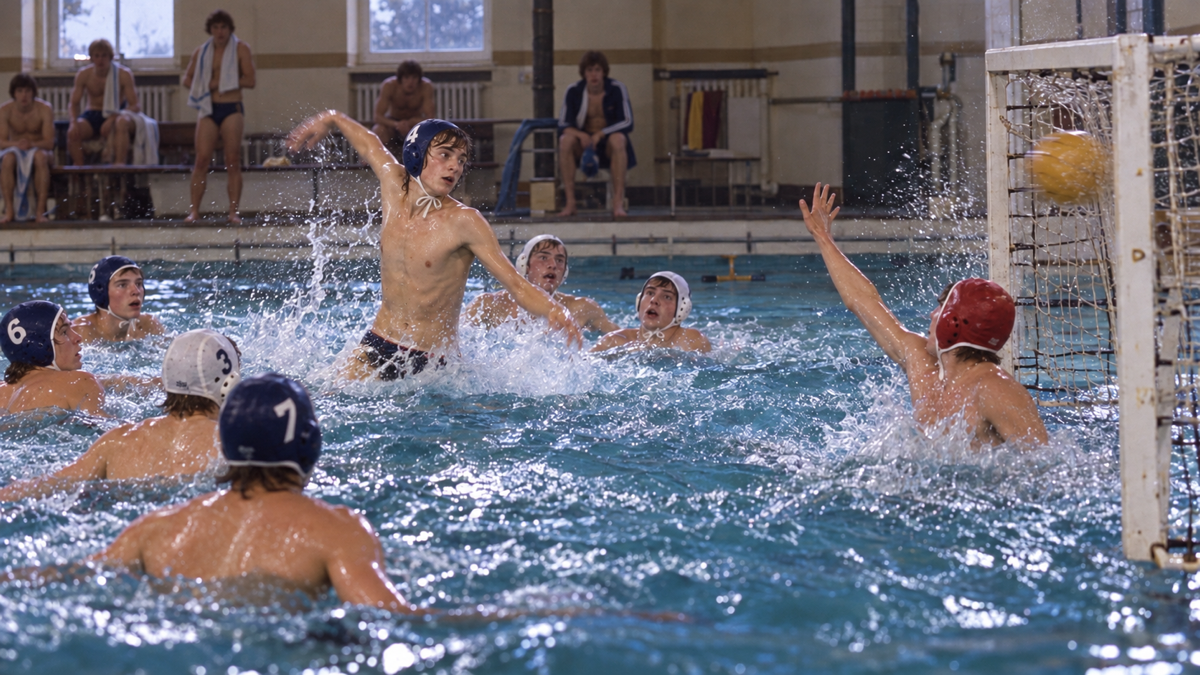
I fell ill after games and the plunge bath—that freezing shock to the system that was meant to be invigorating but, in my case, seemed to trigger something deeper. Memory does that—it clings to sensations, the unusual, and the details that stand out.
Illness was a chapter in its own right, how it came on, how I responded, how the school reacted. I wasn’t the only one. There was the boy with asthma, his breathing heavy and laboured, hauntingly like a funeral cortège on the top landing. I, too, was asthmatic but wasn’t diagnosed until I was seventeen. Had I been, I might have been excused from games on dry, dusty days or from the dormitory during sheet-changing. But such weaknesses were picked on. Two boys had partial hearing loss. Dyslexia or learning difficulties weren’t recognised. “There must be something wrong with the boy,” was the standard response. Unwillingness or inability to learn was met with punishment, not understanding.
I was expected to play rugby with diarrhoea because the team captain was dismissive—“Put a cork in it,” he sneered. I was sick before a choir performance and was sent to the vicar’s house to rest. I vividly remember the room, not because of its comfort but because it was decorated as if it belonged in a Chinese restaurant: red and gold, tassels on the frame of a picture. The strangeness of it imprinted itself on me. Memory latches onto the unexpected.
Some things remain visceral even now:
- The smell of Marmite on toast, thickly spread on white bread, prepared in bulk and plucked from a tray. No choice—love it or hate it, you ate it. I loved it: crispy toast, a thinner spread of Marmite, less butter. I still do.
- The sound of the outside bell, ringing from the rooftop, calling us in from the woods, garden, or workshop for tea.
- I still use glass tumblers for drinking water, but they are unchanged. They may be a subconscious comfort.
- The food minefield: fried eggs, oven-baked in lard; omelettes and scrambled eggs made from powdered egg.
- The metal studs on the tarmac road leading to the games field—painful if you landed on them in a ruck.
- Dettol’s sharp, medicinal smell poured into the plunge bath and foot baths, its milky translucence.
- The newspaper stand in the marble entrance hall, like something from a gentleman’s club, who read them?
- Silver cups engraved with the names of past winners—a vast collection eventually ‘mine’.
- The contrast between the noise everywhere and the quiet of the library.
- Games of table tennis. Games of billiards—but never snooker.
- The whirr of a 16mm projector on film night.
- The smell of wet redwood from the giant cedar at the top of the drive.
- The ever-present smell of mud—on the fields, on boots, after rugby.
- The almost total absence of anything feminine.
The lack of sympathetic female figures made the school an entirely male world. There had been a younger matron for a time—Maty Mi, as we called her—but otherwise, women were rare presences. A teacher’s wife might occasionally get involved with a school play, but that was it.
Mud itself was a constant. It came in many forms—the thick sludge of the rugby pitch, the churned-up ground after a rota had passed over it, the mud we had to ‘stone-pick’ as punishment. The mud in the woods where we built trenches, the mud in our miniature allotments, sieved and watered with care. And, of course, the inevitable mud fights.
Mud fights—one of the few chaotic joys in an otherwise regimented existence. We boys made our entertainment within the structures imposed on us – the woods were the world where we ruled.
All of this—the discipline, the lack of individual care, the impersonal nature of illness, the rigid structures—shaped me. I conformed, dodged punishment, and kept my head down. I never had to face a caning, but I often wondered: If I had been threatened with one, would I have refused? Would I have taken the stand and been expelled? I suspect I would have.
We were round pegs to bash through square holes – the school neither cared for nor indeed saw us unless it won them plaudits.
And yet, the memories persist, tethered to smells, sounds, sensations. Dettol in water, the monastic call of a kind bell, Marmite on toast.
The past never vanishes—it lingers, waiting to be noticed again.



Leave a Reply