Saturday 12th April 1975

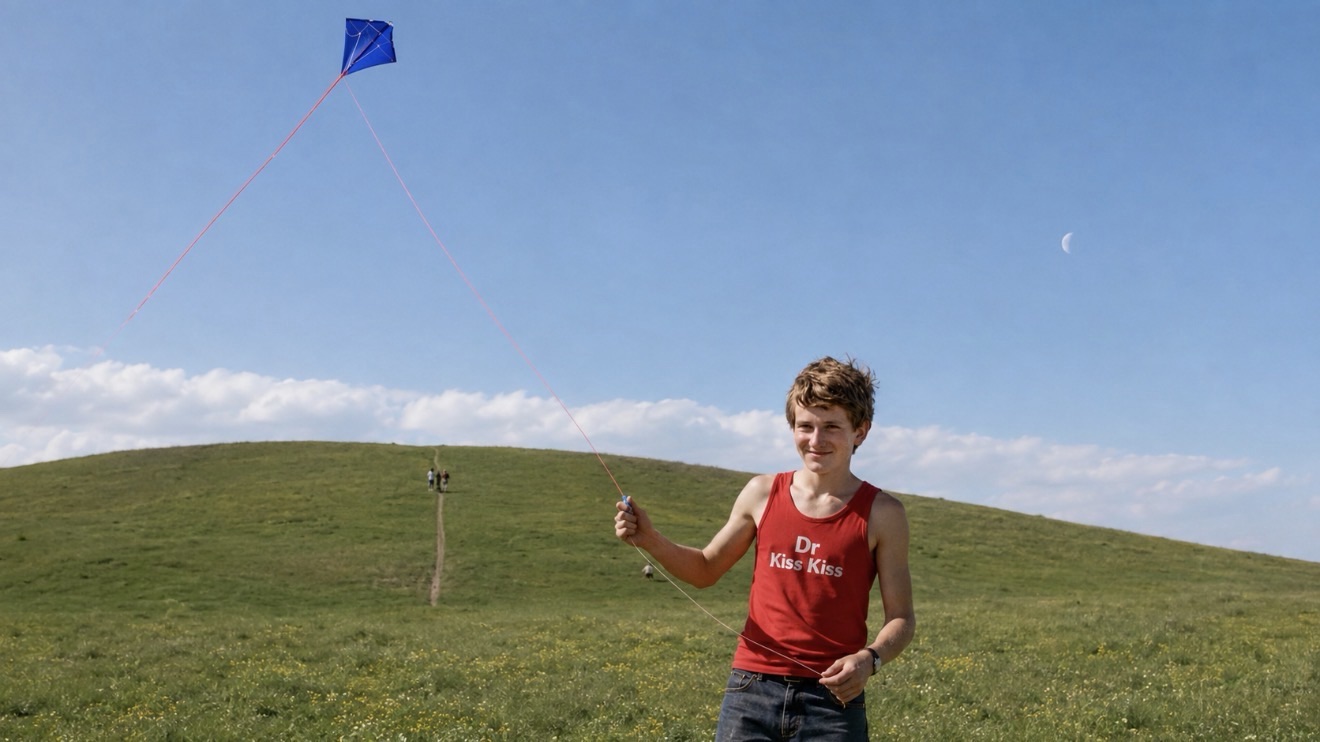
The photograph says it all. My brother is mid-jump at Isola 2000, not that high above the slope, knees straight, bent, poles out, with no one to advise us on the best stance. We did this through the woods on our racing bikes, so why not here on skis? That was *the* jump—the one we tried, over and over, testing gravity as boys do. I thought I had nailed it. I reckon I can increase the speed—increase the dads.
The Alpine sky was sharp and clean. I was on a pair of red ‘Ski Evolutif’ skis and had just about learnt to transition from snowplough to parallel. On this particular run, I had picked up too much speed. I was out of control. I had to dodge a metal post. I tried to turn. I wanted to sledge it—legs together, steer with weight. But my left leg pulled away, buried in a snow bank, and the binding didn’t release. My leg broke instead.
There was no sound. Just the thump of falling, the cold rush of snow, and a visual I still carry: my leg, still attached, skew-whiff. Knee pointing up. Ski boot and foot in when laying off to the side. It didn’t look rights
The shock was complete. The pain came later.
I was within sight of the Cabinet Medical. It took a few minutes up the slope to reach me. The blood wagon had me off the hill within fifteen minutes. I watched others ski past, faces turning. There, they applied a temporary plaster—a split cast from ankle to groin—and gave me a bottle of painkillers. The initial plan was to send an ambulance to Nice and operate it. Secure the fractures with a metal plate as the French knew how. Instead, with a flight home booked for tomorrow, Mum could get me home to Newcastle under the watchful eye of an orthopaedic surgeon she knew and trusted.
That night, I got little sleep in the apartment. Neither did anyone else. The pain was beginning to bite. I took more pills. They didn’t help much.
Sunday 13th April 1975: What To Do With Me
I was thirteen.
The option in France—then as now—was to have a metal plate inserted. I would have stayed at the American International Hospital in Nice. It sounded good to me. The French have far more experience treating broken limbs from skiing accidents than the British. I might have been back on my feet in weeks, not months. I might have met a nice American girl with a broken ankle or twisted shoulder. Who knows. It wasn’t to be.
But that wasn’t the plan.
My mother decided I should be flown home. That was the plan. Always the plan.
I was drugged up on painkillers, braced up in a split plaster, and my face was burnt by the Alpine sun. My face flaked, and my leg throbbed. I was transported to Nice Airport by ambulance. That much, I recall. Isola is an hour’s drive away.
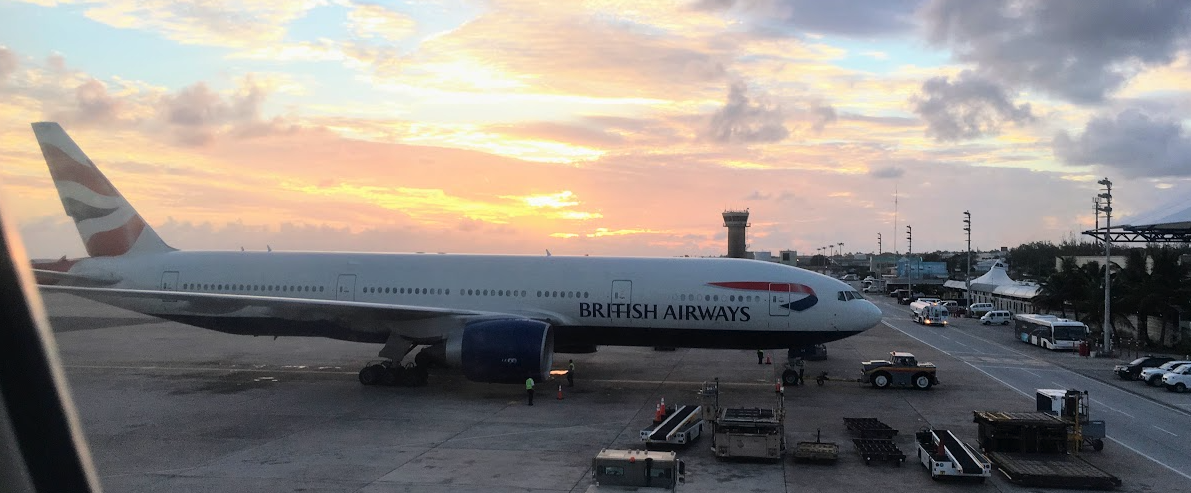
We got to the airport in Nice—the first flight to Stansted. My mother would drive back north, and I would fly alone. The airline had been warned that there was a medical situation. I would need help boarding and disembarking. There were no concessions for my leg, so I was squeezed onto a standard passenger seat.
I should have been met at Stansted and put straight on the Newcastle Flight. But there was no flight; it was at least four miles away. I was found a trolley or wheelchair and shunted into a side room. No food. No water. A toilet break was a hazard I had to risk somehow. Any movement or jolting of the leg was torture.
I took the painkiller as instructed at first. And then I took more. I thought more pills meant less pain. I was right. I passed out.
I barely remember being collected in Newcastle. I have an out-of-body vision of an ambulance on the tarmac in the rain. I was picked up and bundled into town.
I woke up in a ward hours later. Something new disturbed me and brought me around. Had they pumped my stomach? I don’t think so. My mountain-burnt face had the nurses thinking I was pulled from a car accident. It liked right: burns to the face, badly broken leg.
Surgery on my leg was coming. But not today. Or the day after. Or the day after that. I felt like a mountaineer left dangling by his fingertips on a ledge. I hurt.
Monday 14th April 1975:
I woke in a ward. The light was dim and institutional. My leg still ached and throbbed. The cast was still temporary. It had split wide apart. My leg had pumped up like something you’d throw out the back of a boat to mark a sailing race. I had made it to the hospital, but nothing yet had changed.
It was early morning. I had been moved from the travel fugue state into the suspended state of hospital life. There was a smell—metal, disinfectant, cotton—and a constant background soundtrack of snoring, trolleys shunting about smokers coughing, and murmured female voices. The curtains were half-drawn. I could hear other patients but not see them.
At last, I was stationary—a patient, a body in a bed.
Two nurses appeared with warm water and flannels to wash me. I was too tired to speak, so I complied, lifting my good leg and raising my arms. I didn’t need to ask about washing any other bits; they left me to do that in my own time.
My mother arrived. She listened to my heartache and pain. She sympathised. She shared her view that the first day in the hospital was always the worst.
I remember thinking, “I just want to go home.” Still, nothing about it felt right—not the bed, not the air, not the room.
Later that day, I was moved into a private room. I hadn’t been asked about this. Who asks a 13-year-old for a point of view? And with it came another discomfort: guilt.
Why was it so special to get the private room? Because I was a private patient in an NHS hospital. Here I was, in a single room next to a public ward, hearing others but unseen. It didn’t feel like kindness. It felt like being quietly removed. Bumped up from economy straight into first class.
I was thirteen. I didn’t want separation. I didn’t want special treatment.
Tuesday 15th April 1975. The Waiting
Surgery offered renewal and repair. I expected it to be the switch that would dial down or turn off the pain.
I was kept in a private room, removed but not alone. The sounds of the ward—snoring, coughing, and low voices at night—reminded me there were others nearby.
But I saw almost no one. I watched TV. I read the local newspaper my mother brought, though I had little interest in Newcastle or its local news as depicted in the pages of The Journal. Never in five years did boarding prep schools have the Journal or the Evening Standard appear on the Newspaper stand. Instead, it had been The Times and The Telegraph.
The pain settled in like an unwelcome roommate. It wasn’t sharp so much as persistent—a low, bone-deep throb punctuated by occasional, unbearable pulses.
Wednesday 16th April 1975: Surgery
The plaster itched with a ferocity that made me want to scream. I scratched at the edges and found no relief. A cup of water may have found its way in. I called for the nurse more than once, not out of panic but out of necessity. It was too much. I didn’t think I was crying wolf. I was in pain. I had broken my leg on Saturday, and now it was Wednesday. It still hadn’t been set.
Using the bedpan was a humiliation all its own. I couldn’t move. I couldn’t walk. I was dressed in a hospital gown with a split at the rear that never quite stayed closed. Modesty was theoretical. I was, in effect, required to piss and dedicate while in bed. Mum probably bought a sketch pad and pencils. She’d brought my Five Year Diary, which I have written up these days to prove.
And so I waited—counted hours. I tried not to count days. I longed for something to shift—for movement, for answers, for action.
Soon, they said. Soon, they’d set the leg.
Thursday 17th April 1975: Surgery
No breakfast. An early injection. And then: the moment.
I remember lying still, waiting for the anaesthetist. I remember their cold confidence in their approach, brief words, and countback from ten.
Ten.
Nine.
Eight.
“Like lead poured on my face.”
My words. Scrawled in spidery writing.
That’s how I described it then, and it holds. The pressure, the weight, the sinking away into unconsciousness. Not blackness, but absence. A door closing, and no memory of what’s on the other side.
When I woke, it was over. The surgery had happened, and time had been removed from me. My leg was now fully enclosed—plastered from toe to hip. The smell was strong—wet plaster and sick. Mine, I presume. They saw it coming: no breakfast.
My mouth was dry. My head was dizzy. I wasn’t allowed food or drink yet, and I felt wretched.
Someone said something about it going well. I nodded. I think I nodded. There was a voice, maybe two. I couldn’t place them.
The rest of the day passed in a haze. I watched TV. I caught Pebble Mill at One.
Something had been done. Something had changed.
I was no longer waiting. I was no longer broken and un-fixed.
I was beginning the long knit back together.
Friday 18th April 1975: First Steps
The nurses were kind. Two of them, both young, both practical. They were given the task of teaching me how to walk again. Not quite from scratch, but not far off. Crutches. Balance. Movement.
We started small—down the corridor, to the bathroom, back again. Each step was a negotiation between confidence and fear. My body didn’t trust itself yet. The leg, heavy in plaster, was a pendulum I had to learn to swing.
I was back in my pyjamas, which should have been a small triumph. But at the top of the stairs, with nothing to hold onto, I discovered the flies had come undone. My modesty had gone with it. The nurses didn’t flinch. “We’ve seen it all,” one of them said. They didn’t offer to fix it. That was my job.
I remember balancing the crutches, steadying myself on the bannister, and carefully tying the cord. I stopped listening to their instructions long enough to do what needed to be done, and then I resumed the lesson.
That moment—that fumble with the pyjama cord—brought something back to me. Control. Embarrassment, yes. But also self-determination. I wasn’t just a body anymore. I was a boy reassembling.
Downstairs, I practised again. A shuffle became a step. A step became a lurch. Eventually, with the crutches angled just right, I found a rhythm. I’m not walking, not yet, but I’m moving.
And moving meant I was going home.
Saturday 19th April 1975: Home
I was discharged on a Saturday—a week to the day since the fall. Crutches under my arms, my leg in plaster, and my pyjamas properly tied, I was bundled into a car and driven home.
The house looked the same, but nothing about it felt familiar. My bedroom had not been touched.
The stillness was disorienting. There were no buzzers, nurses, or hospital lights through the slats—just ordinary domestic quiet. I realised then how institutional I had become in just a few days.
The garden was still looked at in late winte
The school was out of the question. I’d miss the entire summer term. I was sent a box of books from my new school-to-be, which I mostly ignored. I learned more from *The Reader’s Digest Guide to Gardening* than from anything they’d packed. I dragged myself around the lawn on a tea tray. I tried to propagate rhododendrons. I watched ants. I watched Clouds. I was a boy in stasis.
None of my schoolmates wrote. Most had scattered to different places, and we were already beginning to forget each other.
It felt like a fracture in more than just the bone. Something had split quietly. And I didn’t know yet how it would grow back.
Sunday 20th April 1975: The Essay Never Written
I had promised myself I’d write it.
And I’d promised myself I’d forget the nickname too—’Booties.’ A legacy from the regulation-breaking footwear I had to wear for months after, one boot thick-soled and orthopaedic to match my uneven legs. A name that stuck, but not in the way I wanted. No one wants to be remembered by their limp.
“In December, I will write an essay on the whole term and staple it here.”
That’s what I’d scrawled in my diary. The diary that had carried the record of pain, of pills, of plaster and passage. A boy’s account. A broken rhythm of terse, factual lines. And then silence.
I never wrote it. Not then.
But this is it.
It took fifty years. Half a century to gather the pieces, to develop the photographs in my head, to find the words for the ache and the absurdity, the indignities and small victories.
Back then, I didn’t know what the term had meant. I was too close. Too stuck in it. I had broken a bone, but more than that—something in me had shifted. The old lines had cracked. New ones hadn’t yet been drawn.
This is my essay. Not Stapled in but transcribed from my diary, picked through with AI prompts, revisited and relived vividly.
It’s not just about a jump gone wrong or a leg gone skew-whiff. It’s about how …
Leave a Reply