
Diary: Got up late. Had a bath. Watched TV. My kid sister and I were sent to our rooms. I couldn’t care because I had records, a radio, a typewriter, crayons, etc., and I watched TV. Cycled. Took down Christmas decorations and the tree. Dad rang, no Tuesday. Didn’t mind so used to him. Watched heart surgery on Horizon.
KAI > Here’s how a social historian might lean in—not to interpret yet, but to situate this small, dense shard of ordinary life inside its larger ecosystems: family, media, discipline, technology, emotion, and time. Think of these as questions asked with an archive at one elbow and curiosity at the other.
A historian of family life might start with time and routine.
“Got up late” compared to what? A school day, a holiday rhythm, a boarding-school schedule? Who decided what “late” meant in this household, and was lateness indulgence, illness, or quiet resistance? The bath that follows—was this ordinary hygiene, a weekend luxury, or a compensatory ritual replacing something else (school showers, shared facilities, lack of privacy elsewhere)?
They would then probe discipline and domestic order.
“Sent to our rooms” begs for context: what counted as a punishable offence here? Noise, mess, tone of voice, something unsaid? Was being sent away framed as punishment by the adults, or had it already lost its sting for the children? Did this practice mirror older Victorian/Edwardian models of child management still lingering in the 1970s middle-class home?
Next comes material culture, which is doing a lot of work in a single sentence.
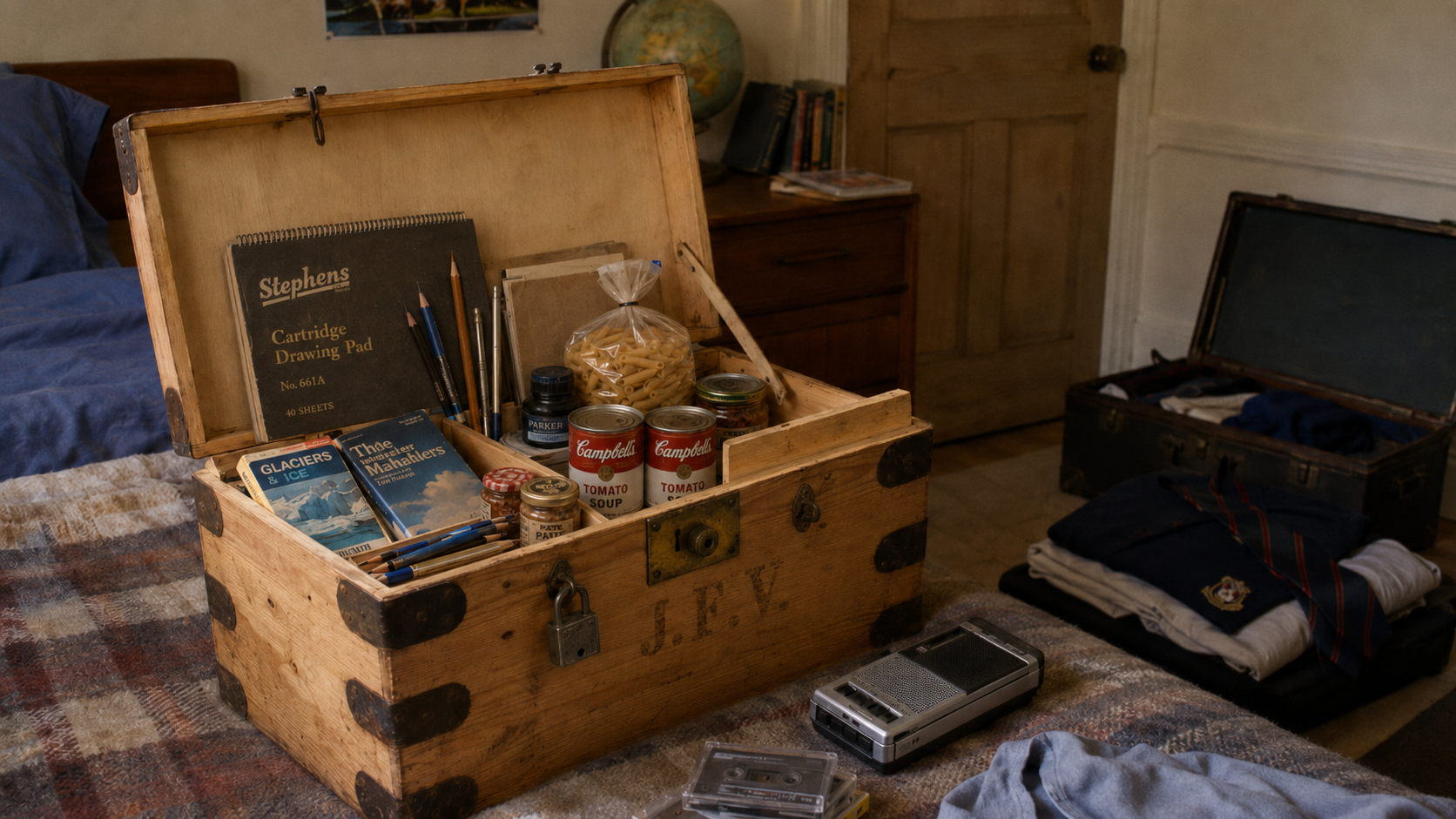
Records, radio, typewriter, crayons: which of these were shared and which were yours? Were they gifts, earned possessions, or tools supplied by parents with educational intent? How common was it, in 1975, for a 14-year-old to have access to a typewriter at home—and what does that suggest about class, aspiration, or ideas about self-expression?
A historian of childhood might pause on emotional economy.
“I couldn’t care” is doing rhetorical labour. Is this bravado, truth, or rehearsal? Would younger-you have written that same phrase a year earlier? Is indifference here a defence, a learned stance, or simply the confidence of being well-supplied with distractions?
Then there’s mobility and freedom.
Cycling where, exactly? To friends, nowhere in particular, or just movement for its own sake? Was cycling a sanctioned escape, a necessity, or a quiet assertion of autonomy? How far could a 14-year-old range without explanation in this place and time?
Seasonal rituals matter to social historians.
Taking down the Christmas decorations: who decided it was time? Was this a communal task, delegated labour, or symbolic closure? Did Christmas linger emotionally after the physical evidence was cleared away, or did the house snap back to normality?
The historian would slow right down at “Dad rang, no Tuesday.”
What did “Tuesday” usually signify—contact, visitation, money, authority, hope? Was a phone call from a father routine or exceptional in 1975, given cost and access? How often did plans change like this, and who absorbed the disappointment when they did? When you write “didn’t mind,” are you reporting feeling, or recording a position you had learned to occupy?
Media history then leans in hard.
Watching heart surgery on Horizon: was this watched alone or with others? Was it considered educational television, suitable, impressive, or faintly shocking? Did adults comment, explain, or simply allow it? How unusual was it for graphic medical imagery to enter a family living room in the mid-1970s—and what did it say about public trust in science, the BBC, and rational enlightenment?
Finally, a historian would ask about voice and compression.
Why is everything flattened into equal clauses—bath, punishment, cycling, absence, surgery? What does the lack of adjectives tell us about diary-keeping as practice at 14? Was this written quickly, dutifully, or with an eye to being read later (by self or others)?
Taken together, these prompts don’t ask what it means yet. They ask:
What systems—family, media, discipline, technology, class—are quietly visible here?
And how much of a 1975 childhood can be reconstructed from a boy who says, with some insistence, that he “couldn’t care,” while carefully listing everything that filled the space.

Leave a Reply