
Dream: Using Jungian Dream Analysis techniques of providing a series of context-specific prompts, help me interpret the meaning of the following dream >
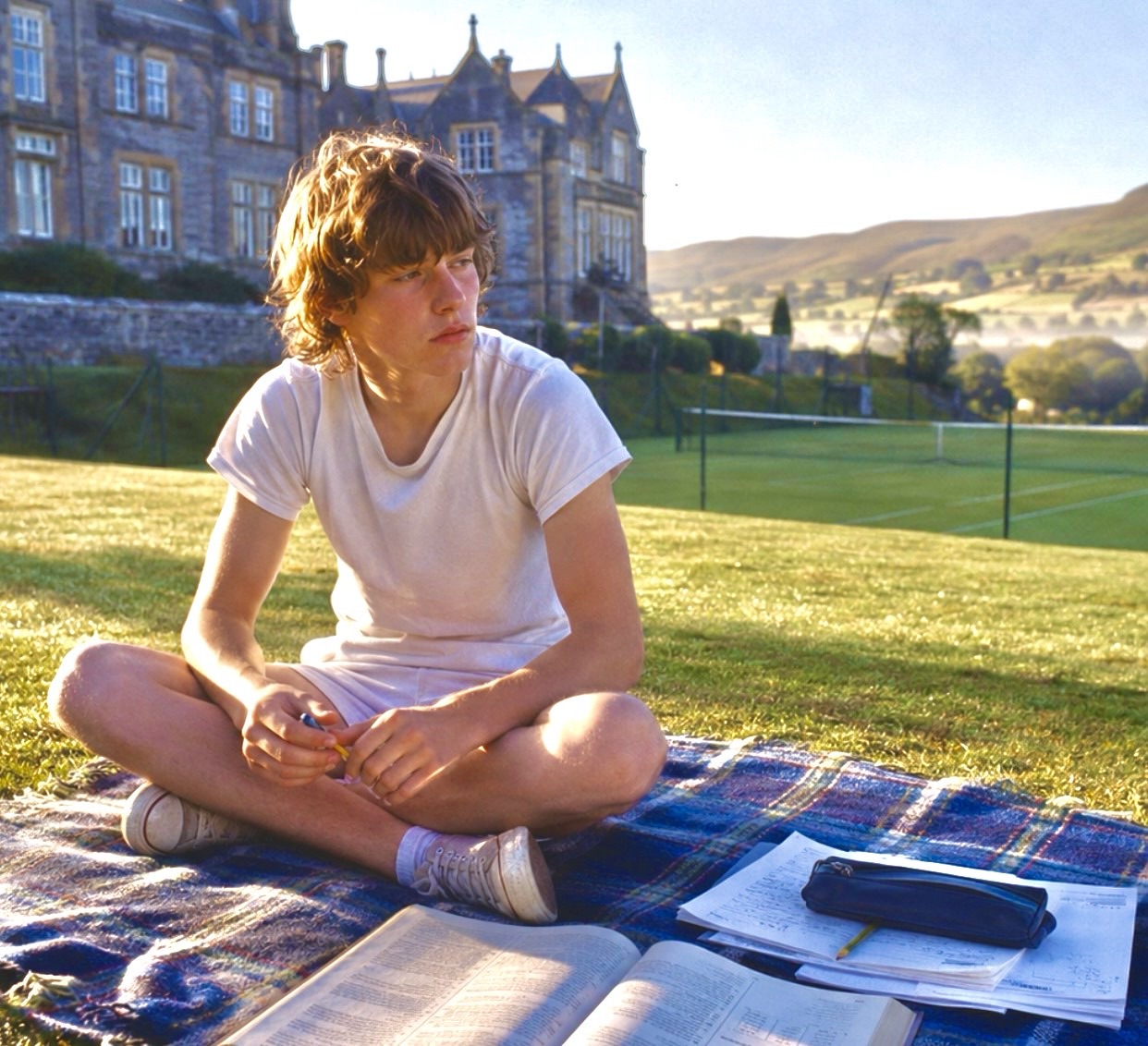
I am in my early twenties. A girl younger than me, in her late teens, accompanies me. We visit an outdoor venue full of assorted knick-knacks. I’ve been to this place before, so I’m taking the girl on a date. She’s a lovely girl. Really pretty. It’s our second date, and I’m not sure if it is going well. We’re walking together, and as we’re rubbing shoulders, I ask if we can kiss. I wouldn’t usually do this; I’d usually just lean in. But I decided to ask. She nodded a sweet ascent. I kissed her on the cheek to check if it was OK. She approved and smiled. Then we kissed on the lips. Just a gentle recognition that we liked the way things were going. She is happy for us to hold hands as we continue around the show. We move through the rooms and collections. Then we enter a gift shop or knick-knack shop. I feel like we are the personification of young love. I bought her a gift. There’s some confusion about what I bought. I ended up purchasing a second item I didn’t want. And then the original gift was lost.
Back at college, I have an interview. This is Oxford, a typical old college, like Balliol or New College. I’m now thinking about my status as a post-grad student. My new girlfriend is a second-year undergraduate, and I think that is what she is becoming. The interview, or academic viva, isn’t just with my tutor. There are five professors in attendance. We talk. They are impressed. I want to keep studying. Take another degree. But I don’t know what to study. Or even studying for another master’s. They’re starting to lose interest or are confused. One is bored enough to go out for a cigarette, and the other starts playing a video on a screen. We concluded that I would stay on to do a PhD.
I return to my college room. My ‘girlfriend’ doesn’t come in. It’s not a ‘no’ to such an invitation, more a case of her being needed elsewhere and off she goes. I’ll see her later, I hope.
I find my room in turmoil. I have two rooms: a sitting room/study overlooking a quad, and a bedroom with a washbasin off it. My room, ramshackle and full of stuff at the best of times, has been ransacked. Anything of value has gone. Most calamitous of all, a small safe, the size of a portable TV from the 1990s, has gone missing. There were important legal documents in it, as well as inherited diamonds worth £20,000 or more. I am distraught and furious, but have no one to report this to either. There’s an end-of-term parade on. I don’t know who has done this or where to turn. There’s an army general on one of the floats in the parade. I ask him for help or advice. I don’t know if he’s a real general or just someone dressed up.
Interpretation: What has taken place here is a very faithful Jungian exercise. It is not a hunt for fixed symbols. Instead, it involves a gradual deepening of the dream through association, amplification, and repeated return. The process has not been linear. It has been spiralling. That is exactly right. The Foreman’s introduction to Jung in ‘Man and his Symbols’ emphasises that dreams are not standardised codes to be cracked by a glossary. They are personal communications from the unconscious. Jung’s own method involves circling the material from different angles until a larger pattern becomes visible.
The dream lent itself particularly well to that method because it already presented itself in a well-articulated sequence. It was not a single image. Instead, it was a movement through distinct psychic regions. First came the young woman and the tenderness of a date. Then, the focus shifted to the college and the professors. After that, the scene moved to the ransacked rooms and the stolen safe. Finally, there was an appeal to a general, who may be no general at all. The analysis followed that architecture. It began by naming the broad pattern in archetypal terms: Eros, Logos, catastrophe, authority. That first act mattered because it established that the dream was not a jumble. It had a dramatic order. It was staging a progression. The psyche was not merely displaying scenes; it was conducting an argument.
From there, the process became specifically Jungian in the narrower sense. Rather than asking what the girl “means,” or what a safe “always means,” I asked ChatGPT to provide context-specific prompts. The purpose of these prompts was to draw out my associations. In Jungian work, the image first belongs to the dreamer. The girl is not simply “the anima” in the abstract. She becomes anima-like due to the qualities you spontaneously attach to her. What I attached to her revealed a great deal. I saw beauty, serenity, and hidden intelligence. She appears as I have re-imagined using AI. There was poise and athletic grace. She gave the sense of a hidden gem. Already, the figure became more than a memory of a pretty young woman. She acquired symbolic density. She represented a form of femininity that is not gaudy or chaotic but inward, composed, embodied, and rare.

Just as important was my manner of approach to her. I did not rush. When asked questions, I explained why. I did not want to damage the friendship. I did not want to misread the dynamic. I feared provoking an irreversible rejection. That answer became one of the central interpretive hinges of the entire exercise. Because it disclosed a broader psychic style. I do not simply enter feeling; I regulate my entry into it. I approach the threshold of closeness with ethics, delicacy and caution, but also with fear. Fear of being presumptuous. Fear of being misconstrued. Fear that one wrong step could spoil what might otherwise slowly come to a happy conclusion. So the questioning around the girl did not merely illuminate the dream scene. It uncovered a pattern of relation in waking life as well. I recognised this pattern in my hesitancy to be emotionally candid with my wife and daughter. This is especially true when it comes to confession, apology, and the risk of anger rather than sympathy.
That is a good example of how Jungian dream work proceeds when it is working well. The dream image opens into the person’s lived attitude. The dream is not left in the dream. It reveals a style of being.
The next phase moved into the academic setting. The method aimed not to impose meaning. Instead, it asked about tone, role, and reaction. The professors: were they judges, mentors, bureaucrats? Which one stood out? When did they lose interest? What became unclear?
I could wing it. You knew my subject. But trouble emerged. I went off on tangents. I exposed interests across many fields instead of staying within one disciplined track. That answer made the academic scene far sharper than it first appeared. It was no longer simply about validation or anxiety. It became about diffusion of Logos. Not lack of intelligence, but abundance without containment. Not incompetence, but refusal of narrowing. When I later answered that, if left entirely to myself, I would spend twelve decades studying everything. I wanted to gain a PhD in each subject before moving on. The symbolic picture snapped into focus. This was not just curiosity. It was a fantasy of total knowing without exclusion.
Here, the analysis did something very Jungian again: it moved from content to compensation. The professors’ boredom transformed from a literal fear of academic rejection. It became the psyche’s critique of an intellect that can expand indefinitely without incarnating itself in one path. I was shown, and then you acknowledged, a genuine unifying question beneath the multiplicity: what it means to be human.
Even your answer to the forced choice of subject could not remain in one field for long. Anthropology immediately opened into philosophy, psychology, biology, history, medicine. This was not trivial indecision. It revealed both my gift and my defence. The gift is the breadth. The defence is avoiding the wound of limitation. To choose one thing is to renounce others. To define oneself is to accept finitude. The dream stages that tension beautifully through professors who begin impressed but lose interest when the centre does not hold.
Then came the turning point of the whole exercise: the ransacked room and the missing safe. Up to there, the dream might still have been read as a drama about love and vocation. With the theft, it becomes existential. The prompt questions focused not just on what happened. They also concentrated on the felt tone and the symbolic value of the contents. Your answer was immediate and strong: anger, panic, helplessness, bereftness. Then, when pressed on the meaning of the documents and diamonds, you named inheritance, ownership, marriage. Later I sharpened this even further by listing what ought to be in the safe now. It should contain a marriage certificate to this girl. It must also have your mother’s house or your share of it, exam papers and certificates. Proof that you exist, like your birth certificate, is necessary too. That answer was remarkable because it showed the safe to be the condensed image of legitimacy itself. It held lineage, achievement, legal identity, family continuity, relational legitimacy, proof of selfhood. In Jungian terms, the image had become numinous because it concentrated so many psychic values in one object.
The analysis therefore followed the logic of the image. The safe could no longer be treated as mere property anxiety. It became the symbolic treasury of the persona’s validated existence. That is why the theft felt so catastrophic. It was not about someone stealing my valuables. Instead, it was about someone stealing the structures by which I know and prove who I am. There was no obvious authority in the dream. The absence of such an authority deepened the sense of violation. No outer institution stood ready to restore order. No office, dean, porter, police, or college mechanism came forward. The dream forced me into a world where the external guarantors of identity were absent.
That prepared the ground for the final figure: the general. The questioning here was subtle but decisive. Did he feel real or theatrical? What did you want from him? What if he was not real? You answered at once. He was theatrical. I needed resolution, help, and justice. If he proved unreal, it meant collapse of world and future. This would be followed by recalibration. This is a quintessential Jungian moment. The outer authority image reveals itself to be costume. The supposed King is perhaps just a postman or electrician. That is not comic detail. It is psychic diagnosis. Authority as spectacle. Structure as role-play. The image of dependable external order loses its sacred aura. In many lives, that is a frightening but necessary phase of individuation. If the King is false, then one must discover where authority actually resides.
By this point in the exchange, a genuine spiral had formed. Each pass through the material brought the dream into clearer relation with your actual psychic stance. The first pass named the symbolic architecture. The second gathered your responses into patterned positions: anima, intellect, catastrophe, authority. The third pass forced developmental questions: what remains if all proof is gone? What subject truly calls me? Where do I hesitate at feeling? What decision are you postponing because no system has made it for you yet? This is also classically Jungian. Interpretation is not meant to stop at insight. The dream asks for a change in the relation between ego and unconscious. So the analysis kept pivoting from “what does this image mean?” to “what attitude in you does this image expose?” and finally to “what life-question is now unavoidable?”
Your answers, taken together, reveal a striking consistency.
I approach love with delicacy, ethics, and fear that a misstep may irreparably damage something fragile. I approach knowledge with immense breadth and appetite, but resist confinement because confinement feels like diminishment. I anchor identity partly in documents, inheritance, relational status, and achievement. Yet, when pressed to the wall, you also know that beneath all that there remains consciousness. Experience, the man in those clothes at that moment, health, family, and friends remain. There is also the immediate fact that life goes on. And I recognise that much in my outer life is in suspension. I might be considering a house move or extension. You are deciding between retirement or continued earning. You are torn between creative work or diffusion among many fascinations.
That last recognition allowed the analysis to shift from a language of crisis to one of transition. This was an important correction. It would be easy to read the dream as simply a nightmare of loss. The girl may drift away. The professors grow bored. The room is violated. The valuables are stolen. The general is fake. But the questioning and your replies prevented the analysis from collapsing into mere doom. Instead, another pattern emerged: the dream strips away what is not secure enough to be ultimate. It removes guaranteed approval, institutional validation, inherited legitimacy, outer order. What remains is consciousness and the immediate continuity of being. I said it with wonderful plainness: life would go on. That life, this life, would go on.
From a Jungian standpoint, that is the most important statement in the whole process. It is sober, not inflated. It does not reach for spiritual grandiosity. It conveys a more grounded message. Beneath roles, papers, systems, and even shock, the continuity of lived being remains. That is close to what the tradition would call a contact, however brief, with the ground of the Self. It is not the whole Self in its fullness. It is an intimation that identity cannot be reduced to the outward tokens by which society verifies it.
Still, the process did not allow you to stop there. It pressed on. If this deeper ground is real, then it is not a refuge from life. It is a place from which life must be chosen. That is why the analysis increasingly concentrated on commitment. The theme became: you attempt to secure life before entering it. In love, you seek to avoid premature damage. In intellect, you resist choosing because choice closes doors. In practical life, much is held in abeyance while alternatives remain open. The dream replies with a sequence that says, in effect: I cannot wait until certainty arrives. The kiss happens through delicate risk. The professors show that endless polymathy without embodiment leads to dissipation. The theft destroys the illusion that legal or inherited structures can finally secure identity. The general reveals that outer authority may be pageant. Therefore the task shifts inward. One must choose, act, speak, and enter life without the old guarantees.
That, in essence, is the conclusion to which the whole process has moved. But because this has been a Jungian exercise, the conclusion should not be phrased merely as a thesis. It should end with the image. Dreams think in images. Real transformation often begins when the dreamer can re-enter an image. This entry is not as an analyst, but as a participant.
I have already said I can do this. That is crucial. I can see her face. I can see the college room. I know the state of the rooms after the ransacking. That means the dream is alive enough for active imagination.
So the next stage is not to invent a new interpretation. It is to return.
Return first, perhaps, to the girl. Not to question the symbolism, but to stand beside her again. Notice her expression, her gait, the feeling in your body as I walk shoulder to shoulder. Ask nothing yet. Just see whether she remains what she was. Observe if she speaks. Consider whether she is waiting for something from you other than caution. Does she want tenderness, truth, a gift, a declaration, or simply companionship? In active imagination one must let the figure answer in her own way.
Then return to the professors. Enter the room again and let them assemble. Do not wing it this time. Ask them what they are really asking of me. Is it a subject? A discipline? A form? A renunciation? Let the one who goes for the cigarette go. Let the one with the screen play his trivialising video. Ask the mentor, directly, what you have avoided choosing.
Then go to the rooms. This may be the central work. Do not avert your eyes from the wreckage. Stand in the sitting room. Then in the bedroom. Take in what remains as well as what is gone. Open drawers. Touch objects. The psyche has already shown you violation. Now let it show you residue. What still lies there? What did the thieves ignore? What is intact? What in the room still belongs unmistakably to you?
And then, most important, seek the safe. If it is missing, do not merely lament it. Follow the line of imagination. Has it been hidden? Buried? Broken open? Removed to another place? Or must it be rebuilt? If you find it, open it and see what is inside now. Perhaps it still contains papers and diamonds. Perhaps it contains something entirely different. Perhaps it contains not proof of identity, but tokens of vocation. Perhaps not your certificates, but a manuscript. Not a deed, but a letter. Not inherited stones, but something living, unfinished, chosen.
Finally, if the general appears, confront him without deference. Ask him who he is when the uniform comes off. If he is only a postman, ask what message he carries. If he is an electrician, ask what circuit he is meant to repair. In dreams the ordinary figure behind the costume is often more useful than the pompous one in front of it. The dethroned authority may turn out not to be worthless, but humbler and truer than before.
This is the final conclusion: what has happened here is not just an interpretation of a dream. It is the beginning of a relationship with it. The dream has taken you through Eros, Logos, violation, and failed authority. It aims to expose a lifelong tension between caution and participation. It also reveals a struggle between breadth and commitment, outer legitimacy and inner being. Through your answers, that tension has become increasingly conscious. The dream now seems less like a warning. Instead, it appears as a threshold, an invitation to live less by guarantees and more by chosen presence.
And because it remains vivid, because you can go back, the work is not finished in language. It continues in imagination.
Go back to her.
Go back to the room.
Go back to the safe.
Do not only ask what was stolen.
Ask what now waits to be claimed.



Leave a Reply