List the people you admire and look to for advice…

I was sent to boarding school young enough to learn quickly that advice, in the conventional sense, wasn’t something I could rely on. Adults were distant, inconsistent, or opaque; older boys operated within their own codes. Trust was conditional at best. So we turned to each other.
The advice we gave one another was immediate, inventive, and almost always ill-informed—half mythology, half bravado. It was a kind of collective improvisation: how to deal with girls, masters, exams, fear, boredom. Often wrong, occasionally inspired.
Later, I began to replace that improvised peer network with something more deliberate. I turned to writers—not as distant figures, but as voices I could consult privately and repeatedly. They became, in effect, my advisors.
From Robert Heinlein ideas of longevity and AI in human form, adventure from Asimov and Arthur C Clarke. From Desmond Morris, a lens on human behaviour stripped of sentimentality. Nigel Calder offered clarity—how complex systems like climate and the weather could be made intelligible. David Ogilvy taught precision in advertising: respect the audience, remove the fluff. David Hockney modelled seeing—attention as an active, disciplined art.
Then there were those who gave permission to explore interior life: Anaïs Nin and Henry Miller—emotional candour without apology. Norman Mailer—ego, risk, confrontation. Virginia Woolf—structure and consciousness intertwined.
Vladimir Nabokov—memory as art, precision as morality.
Storytelling from H G Wells, Andrew Laing and Charlotte Yonge.
More recently, others have stepped into that advisory role:
Steven Pressfield on resistance and discipline. Jonathan Franzen on the social fabric of modern life. Then: J G Ballard, Michelle Hoeillbeque, David Nicholls, and even Ken Follet. And for visual storytelling, François Truffaut, Alfred Hitchcock, and Roman Polanski on how to construct meaning through image, tension, and sequence.
What unites all of them is this: I chose them.
Unlike school, where authority was imposed, these were voices I returned to voluntarily, tested against experience, and kept or discarded as needed. Teachers I admired? Several who were staunch educators, too many I fear had stumbled into education having failed at everything else.
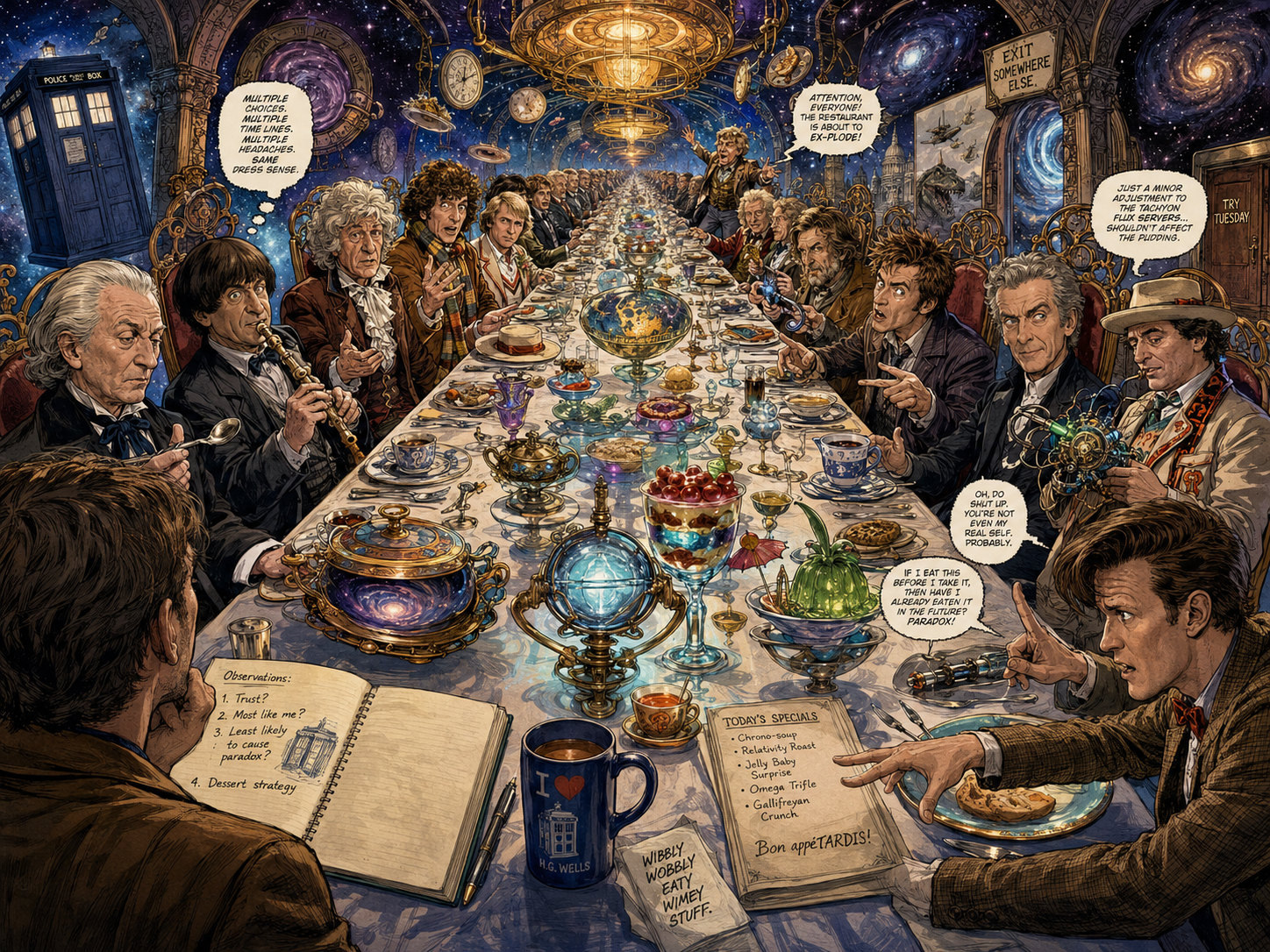
So if I list the people I admire and look to for advice, it is not a fixed pantheon. It is a rotating council, assembled over time—one that began, out of necessity, with a group of boys making things up as they went along. We had some strange ideas … and age nine or ten tou believed at lot of it until proved wrong.


Leave a Reply