
Reading No Talking After Lights by Angela Lambert has been valuable, not because I particularly enjoyed every aspect of it, but because it helps me think about how memoir works and how I might use my own diaries as source material for fiction. It also provides insight into attending an all female boarding school in the mid 20th century.
Lambert writes about growing up in an upper-middle-class family and attending a girls’ boarding school. What remains with me are not so much the events as the people. The headmistress and her companion are memorable creations. A number of teachers and pupils emerge vividly through small observations and anecdotes rather than dramatic scenes. It is a useful reminder that memoir often succeeds through character sketches rather than plot.
The book also captures a closed and rather peculiar world. Like boys’ boarding schools, these schools operated as self-contained societies with their own peculiar rules, assumptions, expressions and hierarchies.
What struck me was how ill-prepared many of the girls seemed to be for the realities of adult life. Menstruation is referred to euphemistically as “the curse”. Sexual matters are largely skirted around. An attempted rape is treated almost as an incident to be endured rather than challenged through the law. A thief who verges on kleptomania is accommodated rather than confronted. The wider world barely intrudes. In some respects, the greatest curse for this generation may have been being born into post-war Britain and educated for a world that was already disappearing.
As social history, the book is fascinating. It preserves details of school routines, friendships, authority, expectations and everyday life that might otherwise be forgotten. In that sense, it reinforces something I have increasingly come to believe about my own diaries. The value may not lie in dramatic events. Future readers may learn more from ordinary details, habits, routines and attitudes than from anything sensational.
I am not convinced the book would find a publisher in quite the same form today. Contemporary memoirs often require a stronger narrative arc, a clearer conflict, a more obvious transformation or a sharper focus on trauma. Lambert frequently does something different. She trusts that the world she is describing is interesting enough in itself.
As I read, I find myself thinking less about memoir and more about fiction. My own project is not to produce a conventional memoir, nor simply to disguise autobiography with changed names. Since March 2026 I have been publishing diary entries fifty years after the events they describe. Those diaries are becoming a quarry from which I can extract people, places, incidents and emotions.
What interests me is how material like this informs short stories and novels. Lambert demonstrates how a writer can recreate an entire social world through observation and remembered detail. She also shows the importance of preserving eccentric characters and institutional culture. What I take from the book is not a model for structure so much as a model for texture.
The novella The Form Photo is largely complete, but my ambitions are broader than that. I am increasingly interested in building fiction from the accumulated evidence of lived experience. The diaries provide contemporaneous observations. Half a century later I can supply context, interpretation and perspective. Somewhere between the teenager who recorded events and the older man who now revisits them lies the material for stories that are neither memoir nor invention, but something that draws strength from both.
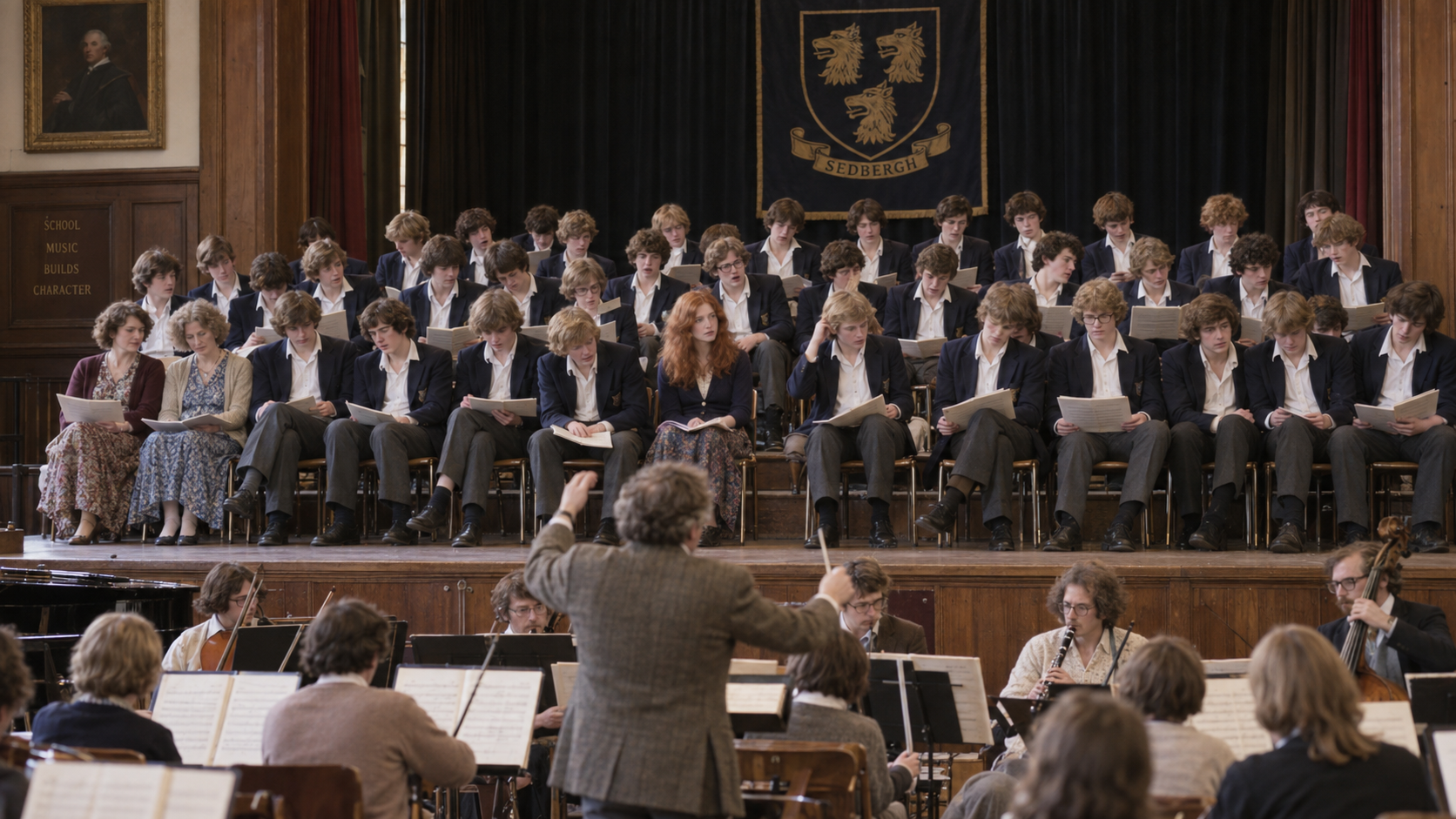
One additional reason for reading No Talking After Lights is that it offers insight into a world I never experienced. As boys at Sedbergh we imagined girls’ boarding schools from a distance, if we thought about them at all. Lambert’s account provides a glimpse of what life may have felt like on the other side of that divide. The details differ, but many of the underlying themes are familiar: isolation, conformity, institutional authority, friendship, longing and the struggle to find an individual identity within a highly regulated environment. In that respect, the girls’ experience may not have been so different from our own.


Leave a Reply