
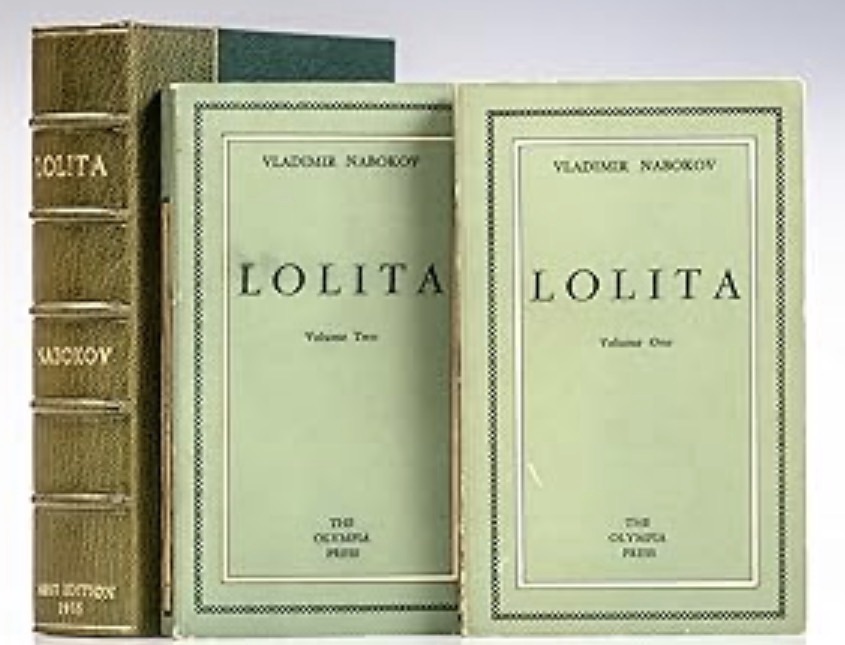
I have just read Lolita from cover to cover over two days, returning to it roughly thirty years after my first reading. It is a different book now because I am a different reader. The first time, I was perhaps more conscious of the novel’s reputation, its forbidden subject and the films made from it. This time I read the 1955 edition as a writer.
What interests me most is not simply what Lolita means, but how Nabokov makes it work.
The novel is driven by an obsession that is morally poisonous but narratively potent. Humbert Humbert’s desire gives the book its line, hook, momentum and focus. Nabokov puts out the bait, catches a powerful fish and then spends the novel battling to bring it in. Once it is on deck, he dissects and dismembers it.
That does not make the obsession defensible. It makes it dramatically productive.
The curtains of the theatre
The Foreword does more than establish authenticity. It takes us through the curtains of a theatre and invites us to engage with the fiction as though it really happened. Names have supposedly been altered. Lives have continued or ended. The manuscript has passed into the hands of an editor. We are not merely opening a novel; we are being handed evidence.
Without the Foreword, Humbert’s famous invocation—“Lolita, light of my life”—would begin a plainly fictional performance. With the Foreword, Nabokov asks us to pretend that the people existed, that the events occurred and that what we are reading is a document left behind by a dead man awaiting judgement.
The device also establishes the intellectual terms on which the book wishes to be received. We are prepared for literature rather than pornography. Nabokov displays the scale of his intelligence before Humbert has even begun. This may repel some readers while making others lick their lips in anticipation. It signals that the book knows exactly what kind of cultural and moral disturbance it is about to create.
The Foreword therefore performs several functions at once. It authenticates, distances, warns, satirises and seduces. It gives the book an institutional voice before surrendering us to Humbert’s private one.
A confession that is also a performance
The manuscript is supposedly written while Humbert awaits trial. This gives him a reason to confess, explain, justify, expose and expunge. The courtroom hovers over the narrative even when it is not explicitly present. Humbert is speaking to a jury, but his jury is also the reader.
He is not, however, simply confessing. He is performing.
His account is an attempt to control how his actions will be remembered. He wants to be both defendant and author of the definitive case against himself. Even when he admits guilt, he arranges the admission. Even when he seems candid, he controls the lighting.
I never entirely stopped believing Humbert’s version of his own truth. That is not the same as accepting his interpretation of events. A narrator can be factually revealing while remaining morally dishonest. Humbert may tell us what happened while manipulating the language through which we understand it.
He is simultaneously truthful and dishonest because his dishonesty is part of the truth he reveals. He struggles to disclose himself and appears to believe that rhetorical distortion will somehow help him do so.
In that respect, the novel is not a simple puzzle in which we must decide when Humbert is lying. The more important question is what language permits him to avoid seeing.
Nabokov’s literary cigar
Nabokov is smoking a literary cigar and describing the swirls of smoke as a poet and linguist. He is showing off. He wraps his fingers into the reader’s hair and draws us closer.
Humbert’s eloquence is not decorative. It is his principal instrument of possession. He mythologises, aestheticises, jokes, digresses and euphemises. His language attempts to transform abuse into destiny, appetite into romance and possession into artistic devotion.
The reader’s difficulty is that the prose may be beautiful even when the consciousness producing it is corrupt.
The pleasure often lies in the language, but the language cannot be separated from the event. The prose is the delicious food set out before us; the event is its consumption. Nabokov repeatedly forces us to notice the distance between verbal beauty and human damage.
That distance creates much of the novel’s moral unease.
The most memorable passages are not those that describe sexual activity crudely. They are those in which lurid or forbidden thoughts are displaced into mythology, allusion, wordplay and euphemism. Sex does not have to become pornography. Indeed, the avoidance of bluntness makes the book more psychologically revealing. Humbert’s elaborate language tells us how desperately he needs to remake reality.
Another writer could tell the same sequence of events and produce an entirely different novel. A pornographer would flatten the story into acts. Henry Miller might have claimed lived experience and risked prosecution or scandal. Nabokov instead chooses a forbidden but plausible obsession and subjects it to the full pressure of literary invention.
The long fuse
Humbert’s obsession is established instantly. That is why the book could only be called Lolita. The title is already an act of possession: Dolores Haze has been replaced by the name Humbert gives her.
The obsession is the long fuse of the novel. It is lit in the opening sentence and burns through the first part until Humbert attains what he thinks he wants. In another kind of story, consummation might provide fulfilment or conclusion. Here it creates fragmentation.
After pages of wanting come pages of movement, concealment, coercion, fear and flight from consequence.
Every chapter serves the obsession. Apparent digressions reinforce it, differentiate it or place it in context. The central desire simplifies the architecture of the book while allowing Nabokov to enrich every room, road, motel, object and recollection within it.
This is one of the clearest lessons for a writer: give a protagonist one overwhelming desire and the novel acquires direction. The desire need not be admirable. It needs to exert gravity.
Readers must physically turn the page. The story will not roll past them on a screen. Something must pull them onwards, whether like a quickening brook, a fast river or the fuse of a bomb.
The attainment that destroys the fantasy
Nabokov persuades us to continue partly by making us wait for the culmination of Humbert’s desire. There is an uncomfortable element of prurience in this. The reader knows that a boundary will be crossed and reads towards it with apprehension, dread or curiosity.
But once Humbert believes he has achieved his objective, the novel does not settle. It breaks apart.
His fantasy cannot survive contact with Dolores as a person. He has imagined an aesthetic and mythological creature; he is confronted instead by a young girl with wants, moods, appetites, grievances, boredom and plans of her own.
The act that Humbert has elevated into destiny is, from Dolores’s perspective, practical, transactional, confusing and sometimes treated as part of a game she cannot fully control. Their direct conversations frequently puncture his mythology. When they speak, the language between them is often ordinary, awkward or logistical. The gulf between Humbert’s narration and their actual exchanges is one of the principal ways Dolores escapes his control.
There is no reciprocal, tender physicality here. On rereading, I was struck by how little the novel is really about sex. It is about ownership, fantasy, displacement, self-deception and the damage caused when another person is reduced to a role in somebody else’s story.
Dolores beyond “Lolita”
Once Humbert’s narration is stripped away, we know surprisingly little about Dolores Haze. This is deliberate. We see her through the eyes of someone who idolises her, classifies her and tries to possess her.
Yet her personality leaks through.
She is intelligent, practical, demanding, indulgent, observant and capable of tactical behaviour. She understands more than Humbert wishes to admit, but less than she would need to escape the situation safely. She is not the timeless creature Humbert names a “nymphet”. She fits his category because he designed the category to fit her.
Her clothes, posture, lipstick, bathing costume, slang, moods and movements become evidence of her existence beyond his abstractions. Nabokov allows the concrete girl to resist the invented icon.
This is why the name Dolores matters. “Lolita” belongs to Humbert. Dolores belongs, however precariously, to herself.
Charlotte, Quilty and the distorted triangle
Charlotte becomes increasingly tragic when reread outside Humbert’s contempt. Humbert presents her as vulgar, pretentious, sexually inconvenient and intellectually limited because that presentation serves his purpose. She stands between him and Dolores.
But Charlotte is also lonely, hopeful, insecure and vulnerable to manipulation. Her mistake is not simply that she fails to understand Humbert. It is that she mistakes his performance for emotional availability.
Her death is narratively convenient for Humbert, and this convenience ought to disturb us. He does not need to murder her directly for the novel to expose how completely he has wished her out of the way.
Quilty is Humbert’s double, but not merely his duplicate. He represents a less self-romanticising form of predation. Humbert aestheticises himself; Quilty theatricalises everything. Humbert wants to believe in the uniqueness of his passion, while Quilty reveals its sordid reproducibility.
Quilty therefore threatens Humbert not simply because he takes Dolores, but because he steals Humbert’s claim to singularity. Humbert’s grand obsession turns out not to be unique, metaphysical or fated. It exists within a wider world of exploitation.
The murder closes a chapter, but it does not resolve the novel morally. It completes Humbert’s self-created mythology by allowing him to cast himself as avenger, lover and tragic hero. Quilty’s death is less a restoration of justice than Humbert’s final attempt to control the genre of his own life.
Comedy and horror
The humour often comes from precise observations of parents, children and precocious adolescents, as well as from Humbert’s vanity, jealousy and absurdity.
Nabokov balances comedy with horror by refusing to let either cancel the other. Humour humanises the social world around Humbert while also revealing the grotesque self-importance of Humbert’s narration. We laugh at his pretensions, his misreadings and his theatricality. Then we realise that his absurdity does not make him harmless.
The comedy can increase discomfort because laughter briefly places us beside the narrator. We respond to his timing or insight before remembering what he is doing. Nabokov makes complicity momentary and unstable.
The result is not that humour excuses the horror. It removes the moral comfort of imagining that evil must always appear solemn, humourless or visibly monstrous.
Places and objects
The motels are among the novel’s most memorable locations. They form a shifting architecture of secrecy: interchangeable rooms, roads, swimming pools, signs and car parks. They offer apparent freedom while creating confinement.
The American road itself becomes a character. Its vastness promises escape, yet Humbert’s journey repeatedly circles back into repetition. He travels enormous distances without escaping himself.
Other significant locations include the Haze house, Camp Q, the Enchanted Hunters hotel, Beardsley, the school, the theatre and the final meeting with the married and pregnant Dolores. Each place modifies the power relationship. Camp Q represents temporary separation and opportunity. The hotel transforms anticipation into irreversible action. Beardsley imitates domestic normality. The theatre opens a route towards Quilty and another life. Dolores’s final home reveals a reality Humbert neither created nor controls.
Objects provide the structure and architecture of the book as much as abstract description does. Humbert’s tweed jacket, his pyjamas, Dolores’s lipstick, bathing costume, magazines, sweets, tennis racket, clothes and records all carry character.
Her lipstick is especially revealing because its application can signal imitation, self-invention and an emerging identity that Humbert watches but cannot truly understand. Her bathing costume becomes charged because he charges it; the object exposes the pressure of his gaze. Humbert’s clothes, by contrast, express his efforts to appear civilised, educated and controlled.
These details do not merely decorate scenes. They establish the material resistance of the world to Humbert’s fantasies.
Scenes that stand alone
Camp Q and the road journey function almost as stories in themselves.
Other sequences with similar autonomy include Humbert’s arrival at the Haze house; Charlotte’s courtship and proposal; the discovery of Humbert’s diary; the Enchanted Hunters episode; the Beardsley school period; the visit to the theatre; Dolores’s disappearance; the pursuit of Quilty; the grotesque murder scene; and Humbert’s final meeting with Dolores.
Each has its own dramatic shape, atmosphere and reversal.
The opening chapter offers the sharpest lesson in pacing: straight to the gateau. There is no cautious throat-clearing. The Foreword has already positioned us; Humbert begins at full intensity.
Nabokov demonstrates that exposition need not precede drama. Exposition can be embedded within voice. Humbert’s first paragraph gives us appetite, history, self-dramatisation, rhythm and danger before the conventional narrative has begun.
Bookending and aftermath
The novel begins and ends beneath the shadow of incarceration, confession and death. The criminality of Humbert’s behaviour is therefore bookended even while his language repeatedly tries to obscure it.
The ending is not simply Quilty’s death, Dolores’s farewell or Humbert’s acceptance of mortality. It arrives when everything that can be said has been said and the structure can sustain no further movement.
The long fuse has reached the bomb. The smoke, debris and aftermath gradually disperse.
Humbert gains a degree of understanding, experience and insight, but this does not undo the harm. His final awareness reaches a full stop because he is approaching both legal judgement and death.
The Addendum changes the resonance of this ending. Nabokov is candid, amused and perhaps grandiose about his own talent. He understands the creative process and the commercial game into which the book has entered. He offers knowing glimpses into the invention and fabrication of the story, partly to disabuse anyone who took the documentary frame literally, but also to give his creative faculties their due.
This is how it came about. This is why it matters. Nabokov knows what he has achieved.
The Addendum lifts us out of Humbert’s smoke-filled room and returns us to the novelist’s workshop.
What the novel taught me about writing
The most useful lesson is the power of the hook.
Nabokov gives Humbert one overwhelming desire and allows everything to organise itself around it. The supporting cast is controlled. The line of action remains clear even when the prose is dense. Characters are amalgamated by function, scenes are selected for dramatic value and dull continuities are omitted.
This is not diary writing.
A diary may preserve succession, accident, repetition and uneventful days. A novel must dramatise. Events have to be selected, compressed, combined and given weight. A writer must know what drives the protagonist and why the reader should turn one more page.
Nabokov also demonstrates the value of beginning near the end. We know from the framing that Humbert is awaiting trial, that deaths have occurred and that the manuscript belongs to a concluded sequence of events. The question is not simply what will happen, but how this man arrived there.
Dialogue and narration perform different functions. Humbert’s narration creates the mythology; dialogue often punctures it. His language does the heavy lifting of seduction and self-deception. Conversation restores friction, banality and resistance.
The novel also teaches that sympathy can be controlled without becoming forgiveness. Nabokov allows us to understand Humbert’s consciousness, vanity, jealousy, humour and self-awareness. He does not require us to absolve him.
Life may offer temptations. That does not mean one takes them.
The reader’s sympathy is kept mobile. We may recognise a thought, laugh at a phrase or understand a humiliation. Then the facts reassert themselves. Humbert’s humanity does not cancel his culpability.
Thirty years later
My younger self may have been more aware of the scandal of Lolita. My present self is more aware of how little it is about reciprocal sexuality and how much it is about narrative possession.
Decades of reading memoir, diaries, Knausgård and David Nicholls have made me more attentive to selection, compression and architecture. Life happens sequentially. Literature creates significance.
You leave out dull stretches. You amalgamate characters. You identify the learning events and emotional drivers. You simplify without making the result simple.
In a word, you dramatise.
This time I was interested equally in what happened and in how Nabokov made it happen. Lolita is not a novella. It is dense as fruit cake and warrants a third or fourth reading before I can claim to have got under its skin.
It is becoming less, for me, a controversial story and more a masterclass in narrative craft.
That does not neutralise its subject. It clarifies Nabokov’s achievement. He built a novel in which dazzling language cannot erase criminal behaviour, but criminal behaviour cannot prevent us from examining the dazzling and dangerous uses of language.
The lasting subject may therefore be self-deception and obsession: the stories people construct in order to convert appetite into destiny, guilt into art and possession into love


Leave a Reply