Tell us about your morning routine.

I’m an early riser. Five o’clock is typical, provided I’ve had my seven hours of sleep. I don’t need an alarm. My brain wakes up and immediately goes looking for something to do.
It might be an idea I was working on the previous evening, a problem I have yet to resolve, or a dream that needs recording before it evaporates. I’ve kept a dream diary for years. Dreams fascinate me, not least because of the extraordinary things the sleeping mind comes up with. I like to get them down while they are still fresh, then return to them for analysis. Sometimes the connection to waking life is obvious. Sometimes it takes a little detective work. Occasionally, a dream raises questions I hadn’t thought to ask.
At five in the morning, I’m usually on the sofa with a decaffeinated coffee, my laptop open, following whatever thread has captured my imagination.
At present, that is largely my teenage self.
I kept diaries from thirteen to thirty, beginning with a five-year diary in the mid-1970s. I subsequently kept online diaries on Diaryland from 1999 and, from 2010, a substantial blog as a Master’s student with the Open University. There are thousands of entries. Revisiting, researching, expanding and rewriting them could occupy me for another decade.
I’m in no hurry.
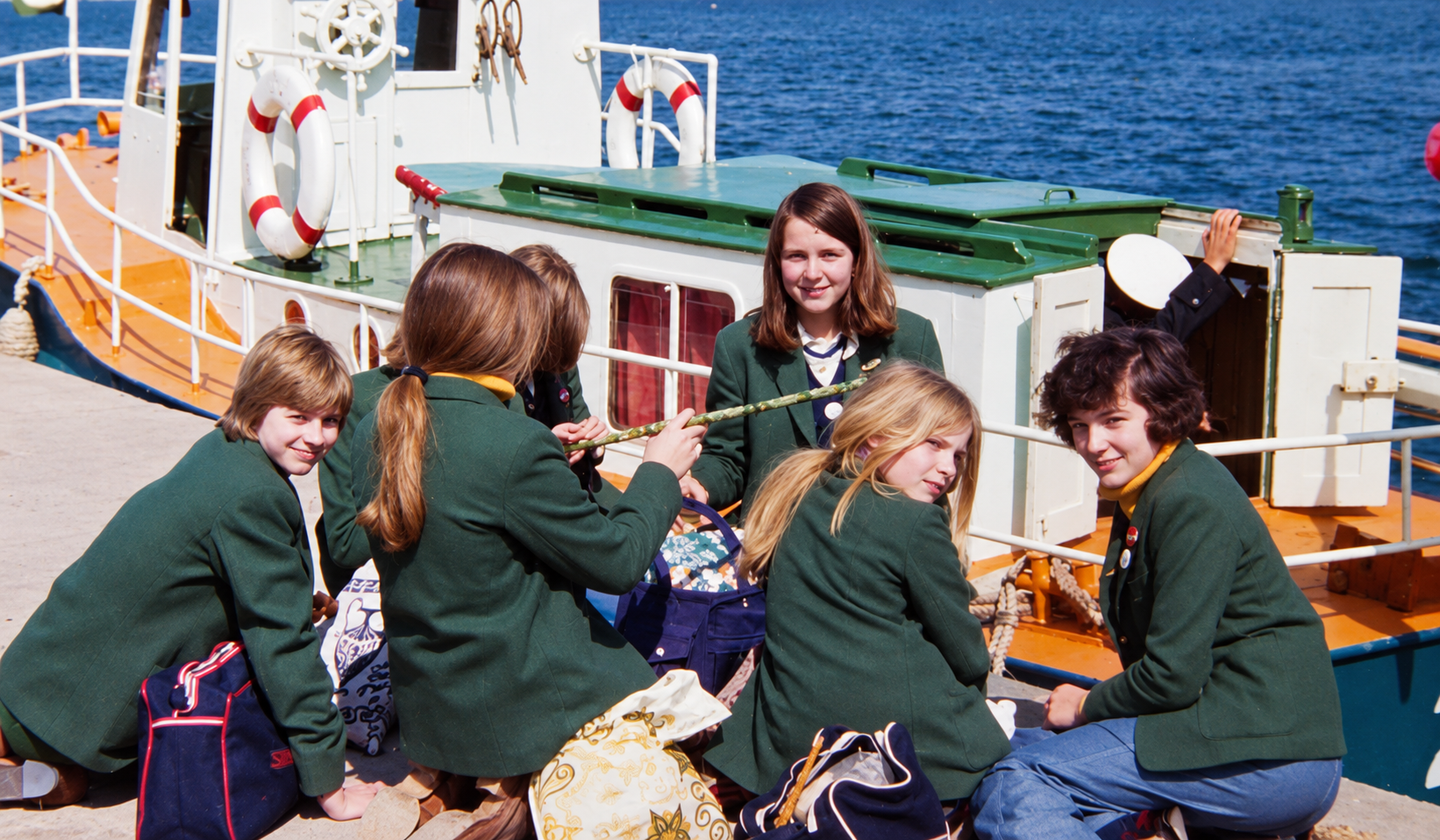
For now, I’m researching the life and times of a teenage boy at a British boarding school in the 1970s. That boy happens to be me.
My first five-year diary gives me several entries to work with for each calendar date. At present, I’m concentrating on 1976, 1977 and 1978, taking one date at a time, fifty years on. Each entry is a primary source, a little piece of evidence about a life I remember imperfectly and a world that has changed enormously.
What was I studying? What was I reading? Who was I writing to? What was happening in the wider world? Why was I so concerned about my hair? Why did I think that girl was interested in me? What exactly did I mean by that cryptic remark?
The entries range from the utterly mundane to the surprisingly revealing. Swimming training, rugby matches, Chemistry homework, school plays, music, friendships, adolescent infatuations and the endless quest for a girlfriend. Behind them lie changing attitudes to education, religion, authority, relationships and childhood itself.
Then there’s my family story, the gradual discovery of who I was becoming and my distinctly uncertain trajectory towards lasting love.
I find the whole exercise enormously entertaining. There are days when I want to give my teenage self a good talking-to. On others, I admire his nerve, enthusiasm or determination. Occasionally, he surprises me with an insight that has survived fifty years.
An entry can take between two and a half and four hours to complete. I preserve the original words, investigate the references, recover what I can remember and gradually reconstruct a narrative. It is part historical research, part autobiography, part detective story and part conversation with a younger version of myself.
By about half past six, I may have exhausted that first burst of concentration. I go back to bed for another half-hour or hour. This is one of the pleasures of being able to organise my own time. Why force myself to stay awake when another little sleep might be just what I need?
Then I make my wife a cup of tea in bed.
Breakfast is usually an omelette or yoghurt with fruit. I’ve become increasingly attentive to what I eat, preparing most meals from scratch and favouring vegetables, pulses, nuts, seeds and fermented foods. I like to start the day feeling I’ve done something useful for both my brain and my body.
Then it’s back to writing.
I can happily continue until lunchtime, particularly when an entry has opened up an unexpected line of inquiry. One reference leads to another. A school textbook mentioned in 1977 sends me hunting for the original edition. A line about swimming prompts me to investigate training methods. A teacher, a play, a song, a political event or an old photograph can open an entirely new avenue of research.
This curiosity spills into other parts of my life.
As a swimming coach with Mid Sussex Marlins, I might use the morning to review a swimmer’s progress, examine competition times or plan a training session. I’m interested in how young people learn, develop confidence and make the transition from simply swimming to becoming purposeful competitive swimmers. The coach in me is never far removed from the educator. I want to know what works, why it works and how to make it work better.
My work as a Lewes Town Councillor requires a different kind of thinking. There might be a committee paper to read, a proposal to draft or an environmental question to investigate. Trees, biodiversity, public spaces, transport, community participation and the practicalities of local government all compete for attention.
I’ve found myself researching everything from the rights of trees to the ecology of Markstakes Common. The challenge is not simply to have ideas, but to turn them into something constructive, achievable and worth doing.
There is a common thread running through these activities: curiosity, enquiry and the desire to make connections.
My background in history, geography, education and communications probably explains some of this. I rarely encounter a question without wanting to investigate it. The diaries allow me to explore the past, swimming coaching keeps me engaged with learning and human development, and local government provides opportunities to put ideas into practice.
And the dreams? They provide an entirely different source of material, often stranger than anything I might consciously invent.
I enjoy the freedom to move between these worlds.
The danger, of course, is that I become so absorbed in what I’m doing that the morning disappears. Lunch may be prepared, but just as often it isn’t. Dinner is another matter. I enjoy cooking, particularly when I’ve been sitting and writing for hours.
There is something satisfying about ending a day of largely cerebral activity by chopping vegetables, combining ingredients and producing something tangible.
What makes my morning routine work is not rigid discipline. It is having the freedom to follow my curiosity while giving it enough structure to achieve something.
Five o’clock is not a heroic hour. I’m not getting up early to demonstrate productivity, complete a punishing exercise regime or squeeze more work into the day.
I’m awake because my brain has found something interesting to do.
And, fifty years after I began keeping a diary, I’m still wondering what happened yesterday, what I dreamt last night and what I might discover today.


Leave a Reply