Tuesday 11th March 1975


Fifty years ago I wrote.
‘Fr. story. Science circuits. Break. History read, Maths test. Lunch. Minse (sic), curry potato, beans, gravy. Letter from G.V. Rugby. Missing lesson. 3. Plunge. Play rehearsal. I go and paint sheep part for ‘Alice’. Supper. Carry On. Feed locusts, give them water. They hadn’t had any for weeks! That’s why so many died. Stroked guinea pigs of M.T. Painted. Read book on dioramas and models. Another woodwind practice. Like last night, but without Mr D.’
KAI: That’s quite a full day—science circuits, a maths test, rugby, a plunge (presumably swimming?), a play rehearsal, and even painting props for Alice in Wonderland. You also had a letter from G.V. (a relative? A friend?), a Carry On film for entertainment, and a moment of realisation about the poor locusts.
It’s interesting how you moved between structured and creative school activities—painting, making models, and reading about dioramas. The guinea pigs of M.T. must have been a source of comfort.
Here are some prompts to help jog more memories:
Fr. story—Was this French, or something else? Did you enjoy it, or was it just another subject to get through?
Science circuits—Do you recall what kind of circuits these were? Was this an experiment with bulbs and batteries, or something more complex?
History read—Was this a lesson or independent reading? Do you remember what the topic was?
Maths test—How did it go? Were you confident in maths, or did tests make you anxious?
The play — What was your role in Alice? Did you enjoy painting props? How involved were you in the production?
Were the locusts part of a science experiment, or did someone keep them as pets? Was their care neglected, or did it just slip people’s minds?
Woodwind practice—Were you playing the flute? What were you practicing?
Also, were dioramas something you were particularly interested in? Did this interest relate to model-making or set design? For you, creativity was an outlet.
JV: Making Airfix and Tamiya Models was a major undertaking as we recreated WWII dioramas in the cellars. These were painstaking reconstructions with battles, tanks, buildings, and planes, often a joint effort.
Just thinking about the locusts brings back the smell. Their lifecycle was a feature of science classes, as were worms in a wormery. We made electric circuits, linked wires on a board, and drew them. The ‘science labs’ happened to be separate from the school – we thought because they might blow up! I recall the teacher in a lab coat, setting us a task and then doing his fingernails with a penknife. He had a storeroom full of jars of liquids and chemicals.

Plays were put on in the old Village Hall in Newton Village. It had something of the Second World War, something very Dad’s Army. Did the Women’s Institute use it? We went here once a year, in a crocodile I would think. It was a different space, dressing up, with make-up, lights and music, and then an audience hidden in the dark. The only role of substance I ever had was as the Station Master in The Ghost Train. Why did we never do a play that suited our ages and gender? Like a stage version of The Lord of the Flies?
Science circuits meant small circuit boards and torch bulbs, I’m sure.
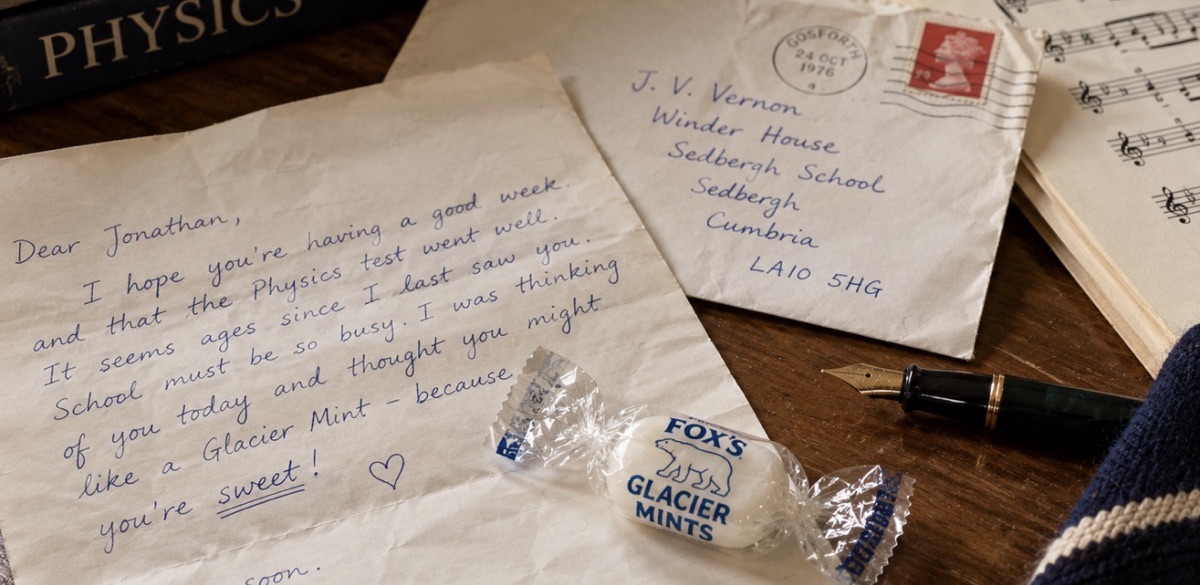
I received a letter from Granny Vernon in March. I wonder what she had to say. I may have the letter somewhere. I kept most of it.

Leave a Reply