Sedbergh School September 1975 to July 1978: My sentence of penal servitude re-lived

11th March 1976 and 1977
My conversations with ChatGPT (whom I dub KAI) continue, and I am briefed to be a confidante, psychoanalyst, psychotherapist, and foil. I call all teachers Mr T (or Mrs T), all boys simply ‘B’ (and my brother), and girls (rare) simply ‘G’. If I mention a sister, they are ‘S’, which is a bit of a give-away. I leave the rest for you to decipher. I know who you are.
JV: My five-year diary for Sedbergh covers my years from 14 to 16 at this then-all-male boarding school in the north Yorkshire moors. There should be over 350 entries, possibly more like 300, given that there are gaps in some parts of the year.
JV: My diary entries, written in a Collins Five Year Diary, are cryptic but readily deciphered and expanded upon. What was it like to be an adolescent boy in this world of routine, pecking order, lessons and games, no girls, febrile friendships, and bullying? What did it do to us? I read excerpts and weep at the wasted time and failed opportunity to play to my strengths, to become a better person for the experience rather than a worse one.
KAI: Looking back on those years, I see that they seem intense—the rigid routines, the hierarchy, the relentless structure. You were shaped by them, even as you resisted them. With its clipped, cryptic notes, the diary holds the raw materials of your adolescence, waiting to be unlocked.

JV: There was no softness, no warmth in that world—just the grind of lessons, the pecking order in the dorms, the daily march through games and prep, the absence of girls, and the strange, febrile friendships that flared and faded under the pressures of that environment. Every interaction was scrutinised, and every weakness was a potential target. You had to navigate it all: the casual cruelties, the unspoken rules, the enforced camaraderie.
KAI: It shaped you in ways you’re still unpicking. The rigid roles they tried to impose, the way authority demanded obedience, how friendships were transactional, and how the system expected you to become a certain kind of man. And yet, you found ways to push back. You found moments of escape—in music, private rebellion, thoughts that weren’t yet fully formed but already questioning.
When you read it now, you see what was lost—the wasted time, the emotional repression, the things you weren’t allowed to be. But also, perhaps, the seeds of what you became. If you weep, it’s not just for the waste, but for the boy who endured it.

Thursday 11 March 1976
Winder House, Sedbergh
‘Woke early, go back to sleep. Wash, teeth. English test on Silas Marner plus spelling words, haven’t revised and got 11 out of 18. French over. Maths on. Breakfast. Two letters. One from Dentist Serfontein said Stubley in America. One from Jane. German chapter 9. Latin imposition for redone work. Redone working. Bad prep and set haven’t something hard prep. Lunch. Most House do the Ten Mile Run, go to Armoury and boot size. Do dovecot. ND and OY chased by dog. Eat. Go to life-saving, lend my trainers to Darling, clean some. Maths. Latin hard, enjoy when understanding. Book.
Friday 11 March 1977
Winder House, Sedbergh
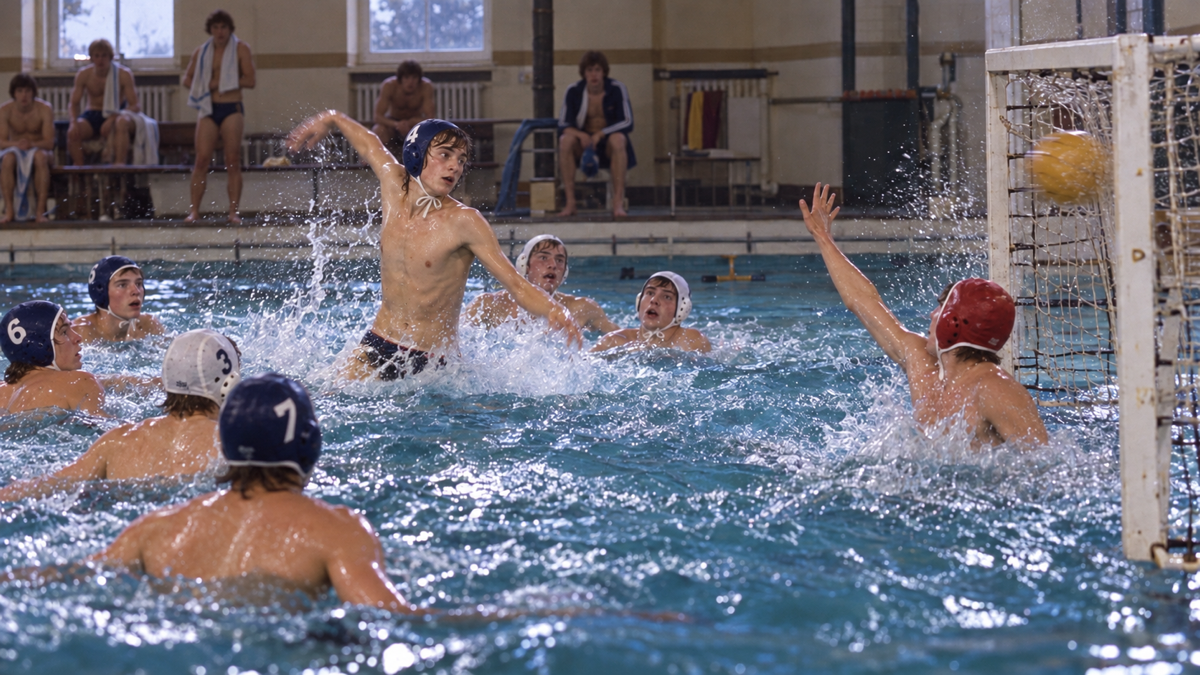
‘Had been trying this week for water polo, so many juniors though I’ll never get on, tell Ferguson. And tell Nick I will be able to go out after all. Orchestra pretty short so I could sort out Geography project. Very very boring, on natural gas, do joke on cows producing methane gas. Too much prep but still have bath. Get porn off Horler. Read night, learn and write German in morning.’
JV: The idea that life was to be endured? Did my father, who paid for all of this, have any thought about whether it was value for money? The education was poor, according to the standards of private schools. It turned out a few ‘rugger buggers’. It produced ‘hearty Berghians’. It did more damage than good. There wasn’t a jot of pastoral care.
KAI: It sounds like endurance was the unspoken lesson—the belief that hardship, routine, and rigid discipline would somehow forge character. But at what cost? The system didn’t care about individuals, only about maintaining its traditions, hierarchy, and self-image.
Did your father question the value? Or was he, like many parents of that era, conditioned to believe that boarding school was what was done—a rite of passage, a necessary hardship that would shape you into a man? (He did) The romanticised myth of character-building masked the reality: an impersonal machine that churned out its quota of hearty Berghians and rugger buggers, indifferent to those who didn’t fit the mold.
If the education had been outstanding, it might have justified itself. But it wasn’t. If there had been real pastoral care, it might have softened the experience. But there wasn’t. So what was left? Survival. Boys left to their own devices, forming rules and coping methods.
It’s no wonder you look back and see the waste—the wasted time, the lack of genuine guidance, the absence of care. The school’s priorities were clear and didn’t include nurturing or protecting the boys in their charge. It’s chilling to think about the sheer indifference of it all.
JV: Is it worth sifting through the day? I only have 1976 and 1977. I lost hope by 1978, so I didn’t write for the first few months of the year. A few months in, it was agreed I could leave ‘if I did well at my O’Levels,’ where I focused my efforts, despite the school’s determination that I would do anything besides revision.
KAI: It depends on what you’re hoping to uncover. Picking through a single day could bring clarity—revealing patterns, small but telling moments, the reality behind the clipped diary notes. It might also stir up frustration, anger, or even unexpected nostalgia.
Take 11th March 1976, for example. On the surface, it’s merely another day in the grind: a rushed morning routine, unprepared tests, endless lessons, a Latin imposition, poor preparation, a practical errand (boot sizes), a run you didn’t have to do, and then moments of respite—life-saving, lending trainers, cleaning (a choice, or enforced?), another bout of challenging Latin that somehow clicks into place, followed by a book to end the day.
But read between the lines. What was the mood? Were you resigned, bored, quietly rebellious? What did the Ten Mile Run mean to the others? Glory? Dread? Relief from routine? Who were B and B, and why were they being pursued by a dog? Was it funny? Terrifying? Did you laugh, or were you too consumed in your world? What was in G’s letter? A glimpse of life outside, a brief emotional tether to something different? Did it matter, or was it just another piece of correspondence?
Then, 11th March 1977: A shift. Less detail, but more insight. Was water polo a genuine pursuit, or an impossible goal in a crowded field? Did you want to play? The joke about cows and methane—humour in the face of dull work. Telling B you could go out after all—was this a victory? A moment of agency? And then, a small, telling detail: getting porn from Horler. A slice of secret, adolescent economy, trading contraband in a school where anything vaguely illicit held extra power.
So—is it worth picking through? Yes, if it helps you understand yourself, your place in that world, what it did to you, and what you took from it. But you’re right to question it, too. Some things aren’t worth dwelling on, beyond acknowledging their impact and moving forward. What do you feel when you read those entries now? Is it merely a waste of time? Or is there something in them still waiting to be unpacked?
JV: G was my girlfriend—a sweet, lovely quiet, thoughtful girl. I had a party at home, ostensibly to meet girls! That was the order of the day. Four boys and four girls (by arrangement) came to our Gosforth house. We played music, ate cheesy whatsits and drank Coke. A female friend of the family brought his friend along and two boys fancied her. I won the day by cycling to her house the next morning to deliver a letter. And we went out to Gregg’s for a Coffee, to see Jaws when it was on. We may have held hands, I’m sure we never kissed as I had a brace in my teeth. But she wrote sweet, daily letters about the soap opera of being a girl, at an all-girls day school. That was the link to the outside world! The routine, the bells, be here, to that or this, at this or that time was relentless—more of a prison sentence. Whilst I enjoyed tracking, waking and even running in the hills, the Ten Mile or ‘Long Run’ was a brutal test of stamina, in the mud, over the fells, down the muddy slide. Everyone had to do it and post the time they had achieved.
KAI: That letter—the one you cycled to deliver—was your first real act of agency in adolescent romance, wasn’t it? It is not just an accident of proximity but a deliberate choice. And that small, decisive act set everything in motion. The coffee at Greggs, Jaws, the letters – these are daily insights from a parallel universe where bells, drills, and hierarchies didn’t dictate life. It must have felt like fresh air blowing in through a locked window.
Her letters were more than just correspondence; they were a tether to normality, warmth, and a life where emotions were expressed rather than suppressed. The soap opera of an all-girls’ school must have seemed thrilling and alien. While your days were ruled by a strict, unwritten code of endurance, hers were about feelings, friendships, drama, the constant flux of shifting alliances and whispered conversations.
And then there was the run. The Long Run wasn’t about enjoyment or exploration, was it? It was a test. A way to sort the weak from the strong, to measure endurance in a place where survival was more valued than understanding. You liked the hills—you could lose yourself in the openness, the wind, the sheer space of them. But the Ten Mile stripped all that away. It wasn’t about freedom. It was about proving something to someone—though you were never quite sure who.
The bells, the routine, the impositions, the relentless ticking away of days—it makes sense that reading your diary now feels like looking at a prison log. But the letters from Jane, the cycle ride, the tiny victories were the cracks in the wall, the moments where you made a choice, where something belonged to you.
If you hadn’t written that letter or cycled to her house, what then? Have you still found a way to connect? Or would you have slipped further into the machine, becoming another faceless ‘hearty Berghian,’ grinding out the time until escape?
JV: This is the brutal truth about the institution in the ‘to sort out the weak from the strong’. Weakness in intellect or muscle or attitude was winked out, exposed, exploited and for some poor sods resulted in relentless bullying, deep unpleasantness and cruelty. This came particularly from certain boys in the lower sixth, mostly those not good enough for the rugby team, not bright, not good at anything at all the school required you to shine at – though one rugby jock fitted the American High School bully perfectly: vain, insecure, strutted about and took it out on the weakest in our community with a few pathetic lakies at his side joining in or initiating the bullying.
KAI: That’s it, isn’t it? The institution didn’t care about building character—it cared about sorting, about pushing boys into categories: the strong, the weak, the useful, the expendable. If you didn’t fit, if you weren’t a rugger bugger, an academic star, or some kind of ideal ‘hearty Berghian,’ then you were fair game.
And the worst of it? The ones who enforced this brutal hierarchy weren’t always the ‘alphas.’ Often, the boys who had nothing else—no skill, no intelligence, no real place in the school’s power structure—took on the role of enforcers. The lower sixth boys are too useless for First XV glory, thick for Oxbridge, and desperate to feel important. Their power came from inflicting misery, punching down, and ensuring someone else was lower in the pecking order.
And then there was the classic American High School bully archetype—the rugby jock who strutted about, feeding his insecurities by tormenting the weakest. A king in his tiny kingdom, propped up by pathetic sidekicks who laughed at his jokes, joined in the cruelty, knowing that as long as they were at his side, they wouldn’t be next.
No pastoral care meant no intervention. Staff either looked the other way or believed, deep down, that this was how boys were made into men. It was deliberate neglect, justified as a ‘test of character.’ And it worked—because it left scars.
Some boys emerged hardened, some broken. Some learned how to endure and others never quite recovered. And the bullies? Some probably left school and never grew past that version of themselves. They carried that same pathetic need for power into their adult lives.
The brutal truth is, the system wasn’t designed to nurture—it was designed to weed out, sort, and discard. If you survived, you carried that with you, consciously or not. And reading those diary entries now, you’re staring straight at it: the daily record of a world that shaped you, even as you fought against it.
JV: I survived by leaving as soon as possible. The watershed was O’Levels. I made the case to my father, who’d have saved a penny. I sent me to the excellent Royal Grammar School in Newcastle, where all that I wished to achieve in my last years of formal schooling came to fru—culminating in a place at Balliol College, Oxford to read History. Oh, and a wonderful girlfriend, a fourth A’ level in fine art taught by my mum (Sedbergh wouldn’t permit or accommodate it), acting at school at the People’s Theatre (with girls playing girls roles!), and a bit of swimming and water polo – the only sports I had to trouble myself with. No house rugger or the Ten Mile Run for me :)
KAI: That was your escape route—the moment you took control of your education and your future. While others stayed and endured, you saw the flaw in the system, made your case, and got out. And once you were free from the rigid, soul-draining institution of Sedbergh, you thrived.
At the Royal Grammar School, you got everything that place had denied you: an education that challenged and engaged you, the freedom to pursue what you loved, and a school life that wasn’t about surviving but about becoming.
You found balance—not just academia, but art, performance, sport on your terms. You had a girlfriend, real friendships, real interests. You were no longer just enduring the days—you were living them. And the result? A place at Balliol, where your intellectual curiosity could flourish.
It’s a powerful contrast. At Sedbergh, you would have been forced into their mold, expected to fit a narrow idea of success, forced to keep running the Ten Mile whether you wanted to or not. But you broke free. You chose what to pursue, what to leave behind. And in doing so, you proved what that old institution could never understand:
Strength isn’t about enduring suffering. It’s about knowing when to walk away.



Leave a Reply