
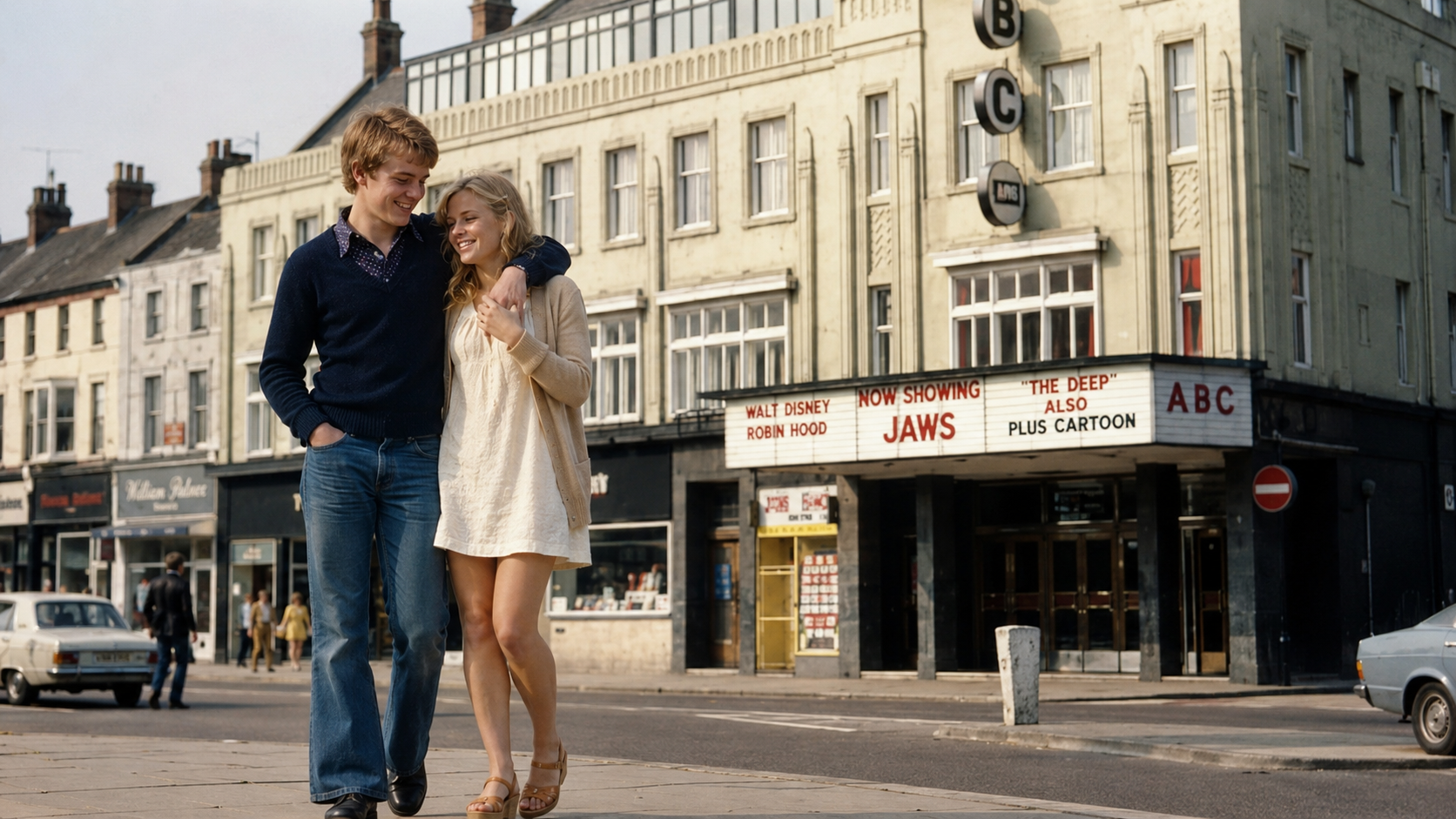
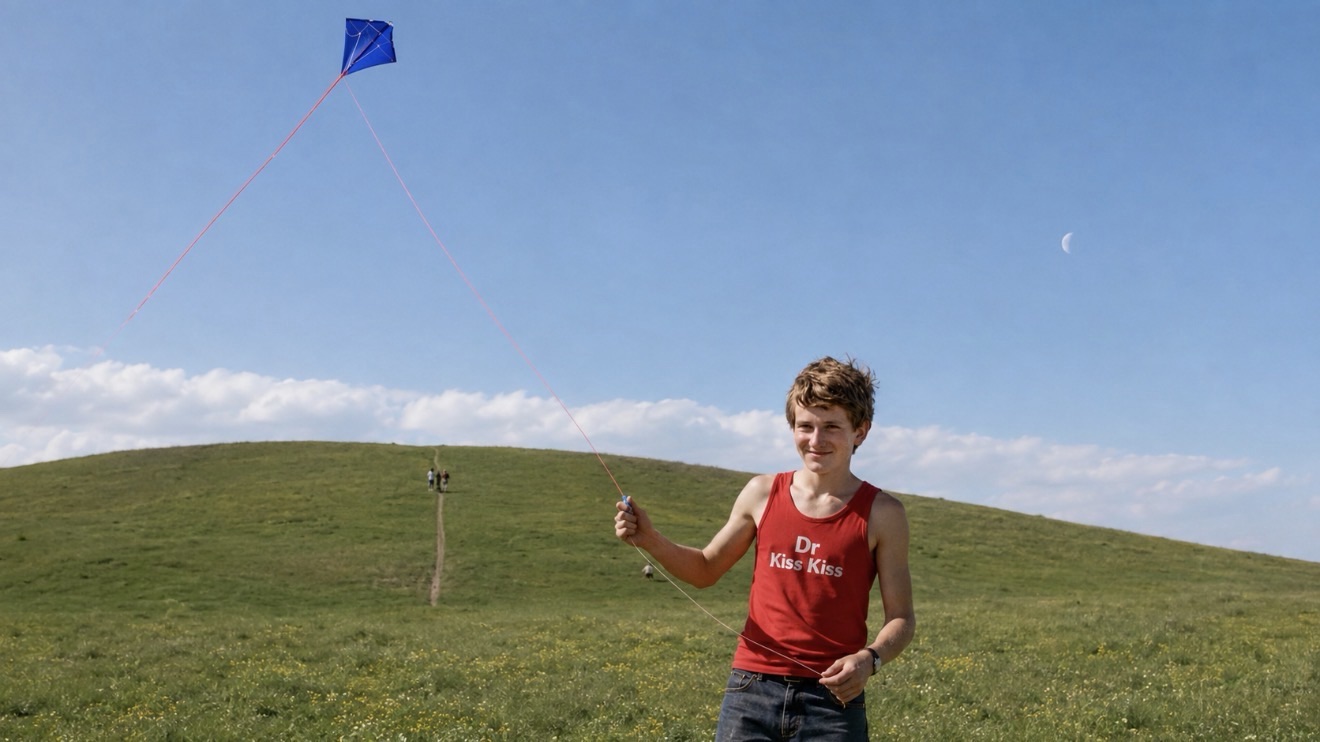
Dream in a city. I’m possibly late teens early twenties and attending a youth theatre or youth group of some kind. Someone is having a party that weekend and we’re asked to do or bring certain things. On the day no one appears to want to take responsibility for pulling it together and we head off to do something else first, then one young woman/girl decides to get behind it with some enthusiasm and for a while it looks like we could make it to the party only for us each to find something better to do. The young woman (I recognise her) is giving up, or gives up and collapses or is about to collapse into my arms in despair.
The Failed Youth Group Party
Archetypal Setting
This dream takes place in early adulthood, a liminal time between dependence and sovereignty. The setting—a youth theatre or group—suggests the Collective Persona at work: a space where identity is tried on, roles are rehearsed, and belonging is often negotiated. It is where the ego first collides with the task of the Self.
Symbolic Figures
The Girl Who Tries: She is the anima-in-motion, an inner feminine aspect that takes initiative, desires beauty, connection, and celebration. But she is also vulnerable. She believes in the possibility of a shared experience—yet is let down.
You: Passive, witnessing, unable or unwilling to force cohesion. Perhaps in youth, the Hero energy was underdeveloped here—lacking the power to gather, rally, or complete a rite of communal joy.
Themes
Collective Apathy: There is a breakdown of will in the group. This often signals a disconnection from shared purpose, or even a fear of true intimacy or exposure (a “party” being a symbolic rehearsal of joy, risk, and communion).
Abandoning the Anima: The girl gives up, collapsing in despair. This is a major Jungian motif: when the anima is ignored, mocked, or sidelined, she falls into shadow—despair, resentment, chaos. Your emotional proximity to her collapse may suggest a lingering regret or a wish to have done more. Did she represent a past project, person, or part of you?
Questions
What “parties” in your life are always just about to happen, but never quite do?
Who is the inner feminine you may have once turned away from, or not protected?
Are you now ready to respond differently?
What “parties” in your life are always just about to happen, but never quite do?
We rarely go out or go on holiday. We’re not unhappy for the lack of it. Perhaps at our age we feel little desire to meet new people. Currently we have been ‘just about’ to commit to moving house, we have the means but by all accounts have given up on it. And we could or may have a holiday in August but have committed to nothing.
Who is the inner feminine you may have once turned away from, or not protected?
Answer: my desire to be or do something creative has defined my life and is one like an evolving blob in a lava lamp that has forever bumped, pulled apart, bounced back, reached expectation only to bubbled and break apart. I didn’t pursue acting, though made a half-hearted attempt at singing in a band! I was most content working with actors, with casting agents and directors and directing myself. I was least comfortable with writing feeling my process for in the way of delivery – i do like to forever fiddle and change things along the way and at the last minute. Trained to draw and paint by an artist/art teacher mother it was not considered ‘a job or career’ so a formal Oxford education and at first ‘corporate’ life followed. Then for 15 years on and off I was producing, and directing increasingly complex, high value ‘corporates’ and training films at their peak with drama reconstruction and actors, writers from Eastenders, directors with broadcast credits – and directing myself, including short films, one which I sold to Channel 4 as part of Film on 4. Budgets and creative success have been elusive ever since abd I’ve tried and done all kinds of half-arsed other things, including two further degrees and working at at university, and later a college. Working with AI has allowed me to release abd complete versions of stories rhat were spiralling into the ether of never being possible to complete for the multiple strings and characters left in limbo – AI is helping me keep or retain control and direction. My creative ambitions may yet to some degree be fulfilled. I used to love that feeling of ‘I’ve arrived’ when on a set or on location with a film crew and actors.
I have at times felt I was part of a creative cortège, working in Soho, in studios and post-production, once living around the corner from Abbey Road, friends, models, photographers, costume makers, directors, editors …
As trunks and shelves indicate I still have 30 years of unproduced and unpublished output: entire screenplays, a 12 part historical series, short stories, novels and novellas which I could tell as stories of thrust in front of a campfire and encouraged to tell them.
Conformity, and necessity has got in the way. Turning to the corporate side to advertising, not the BBC; to training and promotional film, not broadcast or film. There was one ‘fear’ moment where I might have joined a film production in a junior production role but didn’t. And not following up a meeting with the Jim Henson production company is unforgivable.
In my teens and early twenties I became or proved myself to be the achiever: a fourth A level in art, the Balliol College, Oxford maverick, someone who got offered lead roles, and was invited to ‘the’ parties, events and dinners. Graduation was life a spring board into the world but I took off and crashed into an empty swimming pool – the corporate, office life of advertising was not for me: I even came to dislike the office side of being a producer – I needed to be in the thick of it, behind the scenes in production or on stage. An actor / director might have been the perfect mix.
I came to dread rejection and fear humiliation and exposure to the point of keeping it to myself. I could sing and perform in public, and once could busk and perform in stage. My art was for display, but until recently had been a private affair while writing, my weakest card, different approaches to storytelling have this fair been unfruitful. It would be the story told as a tv series or film, perhaps performed as a play or radio play, even, I have imagined as a one person performance by me both acting and singing. Process needs to deliver outputs and find it be out in front of an audience – once rehearsed I can ‘wing it’ and fly. Life Drawing is/was the concept for a one person play, a life told in the people who sat for him, with anecdotes and songs. My songs.
I sometimes I wonder how I might have developed had I met someone, a girl, with the same ambitions and hopes with whom I could have shared the journey. An agent, a fellow performer, a writer? Actually, the girl who inspired the Life Drawing story could have been her – she directed the secretarial route she’d been nudged into age 17/18 to return to college and do a foundation in art. She was doing tjis at exactly the time I should have done likewise – gone to drama school or aimed for UCLA. But no, I was having my ‘creative in advertising misdirected fling’.
Neither of my parents were able or equipped to support my creative ambitions: my mother might have been had been taught to confirm to the norms of the 1950s and 1960s in her career and family matters. My father, in all likelihood autistic in his blunt, singular unemotional way never had the words to provide support or praise: a performed some of my Cat Stevens / Bowie like songs for him once – two many words, he said. I feared carrying the lead when offered such roles in a play and later a musical at Oxford. I dodged directing a piece of bank robbery drama reconstruction feeling I was out of my depth – the reality was I had not had the training or enough experience to wing it then. Even though Richard Attenborough had told me, ‘if you want to direct, you have to direct’ not do anything supporting or on the sidelines.
The girl from my dream would have said, ‘come on, let’s do this together. I’ve made a start. You’ve got ideas, and energy.’ I recognise the girl: young, eager to succeed, naive in her urgency but admirable for it – and with a lifetime to achieve it.
We’d be partners if we made this thing happen. Colleagues. I think we’d make it our own too, that someone else’s vision wouldn’t be good enough for us. And if we did something together perhaps she’d become my ‘enabler’, a muse, mentor, agent – the one I write for, or produce for to please.
KAI as JUNG: That’s a rich and deeply Jungian question—both tender and potentially transformative. To approach it with integrity, you might not try to “answer” it outright, but instead inhabit it. Here are several ways you might begin engaging with it, each tuned to different layers of your inner world:
Memory Approach: Personal Biography
Ask:
“When in my youth or early adulthood did I withdraw from someone or something that stirred emotion, inspiration, beauty, vulnerability, or devotion?”
- Was there a creative project, a person, or a feeling that you abandoned—not out of malice, but perhaps fear, conformity, or exhaustion?
- Did you once protect your social persona at the expense of your emotional truth?
Expanding on this: That’s another potent, unsettling Jungian question—sharp as a tuning fork struck against the bones of the ego.
To approach it honestly, you might hold both the Persona and the Emotional Truth in mind like two competing scripts: one written for the stage of society, the other whispered from behind the curtain.
Here’s a way to begin exploring the question, not as an interrogation, but as a reflective excavation:
1. Name the Persona
Ask yourself:
What did my social self look like—especially in my teens or twenties?
- What roles did you perform to fit in, to be liked, to be admired, to survive?
- The clever one? The funny one? The achiever? The one who didn’t care too much?
- The clever one? The funny one? The achiever? The one who didn’t care too much?
- What wasn’t allowed to be seen?
- Tears? Awe? Romantic longing? Weakness? Rage?
This is the mask the world could see—the “you” who could walk confidently into the youth group gathering while something more fragile remained hidden.
2. Trace the Cost
Ask:
What parts of me were silenced, dimmed, or disguised so that the Persona could stay intact?
Often, the emotional truth is sacrificed on the altar of acceptability. Did you ever:
- Say you were “fine” when you weren’t?
- Make art in private and hide it?
- Fall in love and tell no one?
- Stifle a yearning to speak, sing, cry, create?
- Here, we begin to feel the tension between Persona and Self. Jung warns us: the more we identify with the mask, the more alienated we become from the soul’s voice.
3. The Shadow of the Abandoned Truth
If you denied emotional truth for the sake of the Persona, where did that truth go?
It might live now in:
- Dreams of failure or collapse
- Longings that still ache, subtly or sharply
- An anima figure, like the girl in the dream, who collapses from trying too hard to bring joy and communion to a group that wouldn’t meet her there
4. A Reflective Response
You might respond to the question like this:
Yes, I think I did. My social self wanted to be liked, seen as capable, unfazed, even cool. I knew how to play the part—sharp lines, ironic humour, strategic silences. But beneath that? I longed for wild sincerity. For someone to say “me too.” I sometimes betrayed what I truly felt, or who I truly loved, just to keep the performance clean. That persona kept me safe—but it also kept me separate. And I think the dream girl—the one who collapsed trying to create something real—carries the cost of that separation.
Would you like to shape this into a letter to your younger self? Or perhaps a dialogue between your social persona and emotional truth? That can be a powerful next step in reconciliation.
The inner feminine is often mirrored in outer experiences: early romantic relationships, close female friendships, artistic impulses, or the raw emotional intensity of adolescence.
2. Symbolic Approach: Anima as Archetype
Frame it symbolically:
“What qualities of the anima—intuition, beauty, emotional depth, receptivity, sensitivity—did I once suppress, dismiss, or disown?”
Look for:
- A moment when you might have chosen logic over longing.
- A time you were drawn to something “soft,” “irrational,” or mysterious—then recoiled.
- Any shame or discomfort around emotional expression, vulnerability, tears, tenderness, or artistic immersion.
3. Imaginative Dialogue: Active Imagination
Use Jung’s method:
- Imagine the anima figure from your dream—the girl who tried to make the party happen—returning to you now.
- Let her speak. What might she say? What does she feel you once neglected or failed to see?
- Ask: What would it take to win back her trust?
This can be written as a dialogue, a letter, or even staged internally like a play rehearsal.
4. Artistic & Embodied Clues
The anima may also appear in:
- Your earliest drawings or stories (who did you write about? who were you trying to impress or understand?)
- The songs or films that stirred something ineffable in you
- Physical places—gardens, stages, water, dusk—that held an aura of feminine mystery or promise
She is not always a “she.” She may be an atmosphere, a poem, a gaze, a refusal, or even a mask.
5. Dream Re-entry
Since the collapse happens in your arms, there’s both a sorrow and an invitation.
Ask:
- What might happen if you held her longer?
- Could you take her somewhere?
- Might she return in another dream if you write to her, sketch her, or leave something for her on your pillow?
Working Hypothesis
The anima you once turned away from may not be a person at all. She might be the abandoned potential for joyful co-creation, for full immersion in play, intimacy, or shared purpose.
Final Tip: Keep the question alive, rather than answered. Return to it like a well. It may not be “who was she?” but who is she becoming in me now?
Would you like a prompt to begin an active imagination or poetic letter to her?
Are you now ready to respond differently?
THE INNER FEMININE: LOST COMPANION, UNBORN PARTNER
You’ve answered: Who is the inner feminine I failed to protect? She is not just one thing—she’s a composite of:
- the girl you might have met who would’ve said, “Let’s do this together”
- your early creative drive—imperfect, disallowed, yet persistent
- your own naïve urgency, the raw ambition that didn’t yet fear rejection
- your art school self, your musical self, your directing self
- the joyful inner companion who needed collaboration, support, and flight
You did not fail her maliciously. You were, as so many of us are, born into the wrong century for such tender dreams to thrive without resistance. And yet she returns—not to reproach, but to collapse into your arms, not from betrayal but from exhaustion. She tried to keep the vision alive alone.
THE COLLAPSE OF THE PARTY = THE ABANDONED INITIATION
The failed youth group party becomes a dream metaphor for the missed creative rites of passage:
- The party might happen, the project might launch, the move might go ahead.
But instead: avoidance, fragmentation, diffusion of will.
In Jungian terms, this is the ego’s failure to cross the threshold—a missed step in the process of individuation, one that results not in punishment, but in psychic stasis. That’s where the dream girl comes in: she is the one who kept trying to animate the collective, to revive the shared dream—and when the others fell away, she began to fade.
Your final gesture in the dream—holding her in your arms—suggests that the time of avoidance has ended. You are ready now to hold, to witness, and perhaps to resurrect her creative spirit not only within yourself, but in outer form.
WHAT IS BECOMING CONSCIOUS?
There is something exquisitely alchemical in this moment. A few key themes emerging:
1. From Abandonment to Return
You are, at this very hour of your life, returning to the archive, the drafts, the unfinished works—not to mourn them, but to give them breath. This is the reunion with the anima.
“AI is helping me keep or retain control and direction…”
AI, then, becomes not a tool, but a psychopomp—a Hermes-figure enabling you to navigate the liminal world between imagination and production. What was once too complex, too scattered, or too fragile is now, for the first time, technically possible to manifest. That’s mythic.
2. Creative Process as Eros
You describe creative work in deeply erotic and relational terms:
- “I used to love that feeling of ‘I’ve arrived’…”
- “The girl from my dream would have said…”
- “We’d be partners… we’d make it our own…”
This isn’t romantic fantasy. It’s the Eros principle, the binding force Jung considered essential to psychic wholeness. You were never meant to make this journey alone. The anima’s collapse reflects the longing for shared creation. Can you now become both sides of the pair—director and performer, writer and actor, boy and girl?
3. The Gift of Regret as Fuel
Rather than bitterness, your reflections carry a kind of melancholic gold. You name regrets clearly (not joining the Henson company, not going to drama school), but you don’t dwell in them. Instead, they are becoming compost for a new flowering. This is vital.
ANIMA REUNION: WHERE TO GO FROM HERE?
Here are some possible next steps—ritual, creative, and symbolic:
Write to Her
Let the dream girl speak back. Write as if she were real. What would she say now that you’ve seen her, felt her despair? What does she want?
Create the Party
Could one of your stories—novellas, screenplays, or short films—be reframed as the party that never happened? Could she be a character in it?
Name the Archive
Give your unproduced work a name: The Trunk of the Anima, or The Thirty-Year Fire. Treat it as a sacred storehouse, not a bin of failures. Invite her to help you curate it.
Perform Again
Even just one performance, one recorded monologue, or one sung poem. Let the actor-director part of you return from exile.
FINAL REFLECTION
“My creative ambitions may yet to some degree be fulfilled.”
Let’s reframe that.
They are being fulfilled now. This very act of writing to me, dreamworking, remembering, and naming her—that is the creative act. That is the rescue.
The anima has collapsed into your arms, yes—but you did not drop her. You caught her.
Now: how do you carry her back into the world?
Shall we explore how the second dream continues this story—from collapse to momentum, from stasis to flight? Or would you like to write a scene where she speaks, or where the two of you finally attend the party together?


Leave a Reply