
Five-Year Diary: Wednesday, 21st January 1976
Woken at night.
Get a new history book on the Tolpuddle Martyrs. The injustice in the story struck me. I went over work in French.
Then music lesson. I forgot some music. I wanted to drop the flute because of my brace. Piano instead.
Latin.
Music School. Class music theory.
Lunch.
I had to play rugby. Sleet.
Further classes:
Maths Loci.
Biology new books.
Eng: my choice to read. One Day in the Life of Ivan Denisovich. Solzhenitsyn
Supper.
Had to Read Silas Marner in prep:
Notes. German revised.
Bath. Wash hair.
Cereal.
Bed.
Talk.
Read Solzhenitsyn.
Look at the picture of Jane.
Woken seven or so times. Nearly (dup) breathing. Don’t bother sleeping.
Dream of being chased by cops.
Night wakings: the body before the boy
You’re woken repeatedly before dawn. That’s nothing.
Q1. Where are you when you wake? Bed, dorm, corridor light bleeding under the door, or total dark?
J> After one term in a dormitory, I’d been given a cubicle, a space demarcated by wooden panelling in what was otherwise a ward-sized dormitory with windows running along both the north and south sides.
Q2. Is the disturbance internal (breathing, panic, braces, growth pain) or external (another boy, a matron, pipes, wind)?
J> A dormitory was a noisy place early in the evening as older boys came to bed later, and others returned from evening activities. If there was a cold going aroundanynumberof boys could be coughing or sneezing, let alone whatever random Bullying might be going on.
Q3. What does “nearly (dup) breathing” feel like in the chest—tight, shallow, fast, obstructed?
J> I was only diagnosed as asthmatic in 1979. Until then I suffered from wheeziness and a tight chest, alongside whatever cold was doing the rounds.
Q4. At what point do you decide not to bother sleeping? Is that defiance, resignation, or relief?
J> If sleepless I had long ago learned not to fight it; I’d get up, go exploring, read a book. I’d not lie in bed fretting about it.
Stay with the body here before moving on. This sets the tone for everything that follows.
The new history book: injustice as ignition
You note this as if it mattered. It did.
Q5. Where do you get the book on the Tolpuddle Martyrs—library issue desk, classroom hand-out, bookshop parcel?
J> Books were purchased from a school shop. These might be second-hand books being recycled, or new books. You, or rather your father, paid accordingly.
Q6. What exactly strikes you as unjust: the punishment, the law, the tone of authority, or the fact that adults made it happen?
J> The history, politics and society as well as the human story.
Q7. Do you connect it—consciously or not—to boarding school rules, punishments, or obedience?
J> You learn that rules can be an arse and should be challenged and changed.
This is a political feeling before politics has language.
French revision: work as refuge
Q8. Where are you revising—desk, bed, library, or classroom early?
J> We had a junior common room, we had a locker and perhaps an assigned space at a desk, with a shelf for books. We had a library too.I’d read hear or on bed, or in summer out on the tennis court or somewhere on the fells.
Q9. Is French comforting because it’s structured, or irritating because it’s forced?
J> I had this romantic notion of having a French girlfriend; I found the language sexy. I also liked to think with a name like Vernon I had French ancestry, albeit a thousand years old and Norman French.
Q10. Do you revise to stay awake, to stay calm, or to stay invisible?
J> I revise because I want to do well in a test or because I’m bored and cannot get to sleep.
Music lesson: the mouth, the brace, the instrument
This is a quietly big moment.
Q11. What does the brace do to your mouth when you try to play the flute—pain, saliva, frustration, embarrassment?
J> it cuts into the gum, food gets trapped behind the wires.
Q12. Who do you want to stop? A teacher, yourself, or no one?
J> I’d been bamboozled into sitting a music scholarship without having out in the hours, having the talent or inclination.
Q13. How does the idea of the piano feel by comparison—cleaner, more adult, less bodily exposed?
J> I was angling for pop music and tunes, not sight reading and classical pieces with graded exams.
Music here is about control and dignity, not sound.
Music School & theory: institutional sound
Q14. Describe the smell of the Music School—polish, damp coats, brass, old paper.
J> it was a large detached Edwardian town house. Like the large houses in the posh suburban of gosforth where I came from.
Q15. Are you alert or foggy in theory class after a broken night?
J> foggy even at the best of times. I’d never properly for my head around music theory.
Q16. Who else is in the room, and where do you place yourself among them?
J> Boys my age with whom I felt I had little in common.
Lunch: the unnoticed meal
You don’t comment on lunch. That’s revealing.
J> we sat in year groups. Sometimes a random more senior boy would join us. I don’t know why. They were checking us out? There were no other places available? They were monitoring us?
Rugby in sleet: compulsory weather
This is the most physical line in the entry.
Q17. What does sleet feel like on bare thighs, fingers, face?
J> we were ‘hearty Berghians’ who could take a little cold. I’d had this all the way through boarding prep school playing rugby in all weathers and being expected to grit it out.
Q18. Are you angry at having to play, or numb enough not to be?
J> I feel I am becoming old enough to make my own choices. I was a good swimmer and should focus on that.
Q19. Do you remember a single moment—impact, slip, breath knocked out—that anchors the whole match?
J> I needed to wear a gumshield, rare in those days, because of my brace. I couldn’t find the joy for the sport I’d had age 10-13.
Notice whether the injustice of the Tolpuddle Martyrs echoes here.
Afternoon classes: intellect under fatigue
Q20. English: how do you respond to One Day in the Life of Ivan Denisovich—recognition
J> I wonder if I had already read this. My mother had recommended it. She may have bought me a box set of Solzhenitsyn for Christmas.
Wednesday 21 January 1976 — revised entry (prose)
I wake repeatedly in the night. I’m no longer in a full dorm but in a cubicle—wooden panelling marking out a private rectangle inside what is still a ward-sized room, windows running the length of the building on both the north and south sides. Privacy is relative. The dorm is never truly quiet: older boys coming in later, others drifting back from evening activities, coughing, sneezing, the occasional bit of bullying flaring and subsiding. There’s often a cold going round. I have a tight, wheezy chest—what I later learn is asthma, though no one calls it that yet—made worse by whatever infection is in circulation. Breathing feels shallow and constrained, as if the air isn’t quite doing what it’s meant to do.
When sleep won’t come, I don’t fight it. I learned early not to. I get up, read, explore. Lying awake and fretting feels pointless; better to use the time.
I get a new history book on the Tolpuddle Martyrs, bought through the school shop—second-hand or new, paid for by my father either way. The story hits hard. Not just the human suffering, but the politics, the society that made it possible, the way authority dressed injustice up as law. It confirms something I already suspect: rules can be an arse, and sometimes they deserve to be challenged and changed.
I go over French. I revise in all sorts of places—the junior common room, at a desk with its shelf of books, on my bed, in the library. In summer I’ll read outside, on the tennis courts or out on the fells. French appeals to me. I have a romantic notion of a French girlfriend; the language feels sexy. With a name like Vernon I like to imagine ancient Norman roots, even if they’re a thousand years old. I revise either because I want to do well in a test, or because I’m bored and can’t sleep.
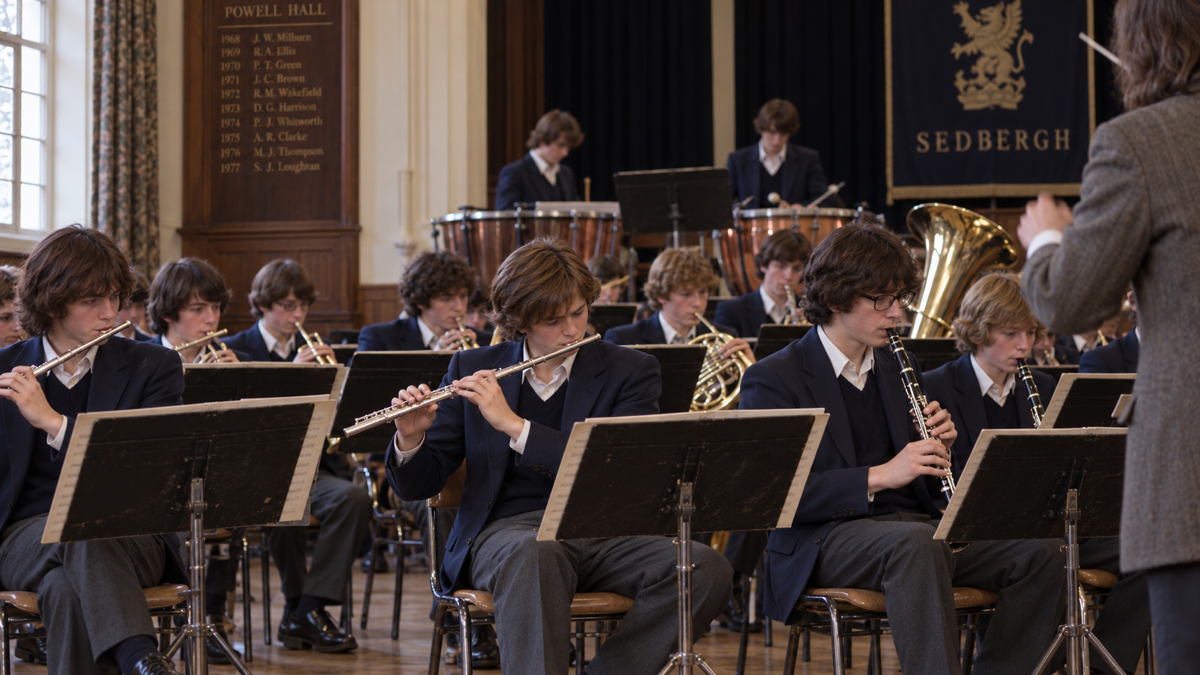
Music is a problem. My brace cuts into my gums; food gets trapped behind the wires, and playing the flute is uncomfortable and faintly humiliating. I’d been bamboozled into sitting a music scholarship without the hours, the inclination, or the particular talent required. I start angling for the piano instead, really for pop tunes rather than sight-reading classical pieces and climbing graded exams. It feels like a way of reclaiming some control and dignity.
The Music School itself is a large detached Edwardian house, very like the big posh homes in Gosforth where I grew up. Music theory leaves me foggy—truthfully, it always does. I never quite get my head around it. The room is full of boys my age I feel I have little in common with.
Lunch passes almost without comment. We sit in year groups. Occasionally an older boy joins us at the table for reasons that are never clear—no other space, quiet surveillance, curiosity. It’s hard to tell.
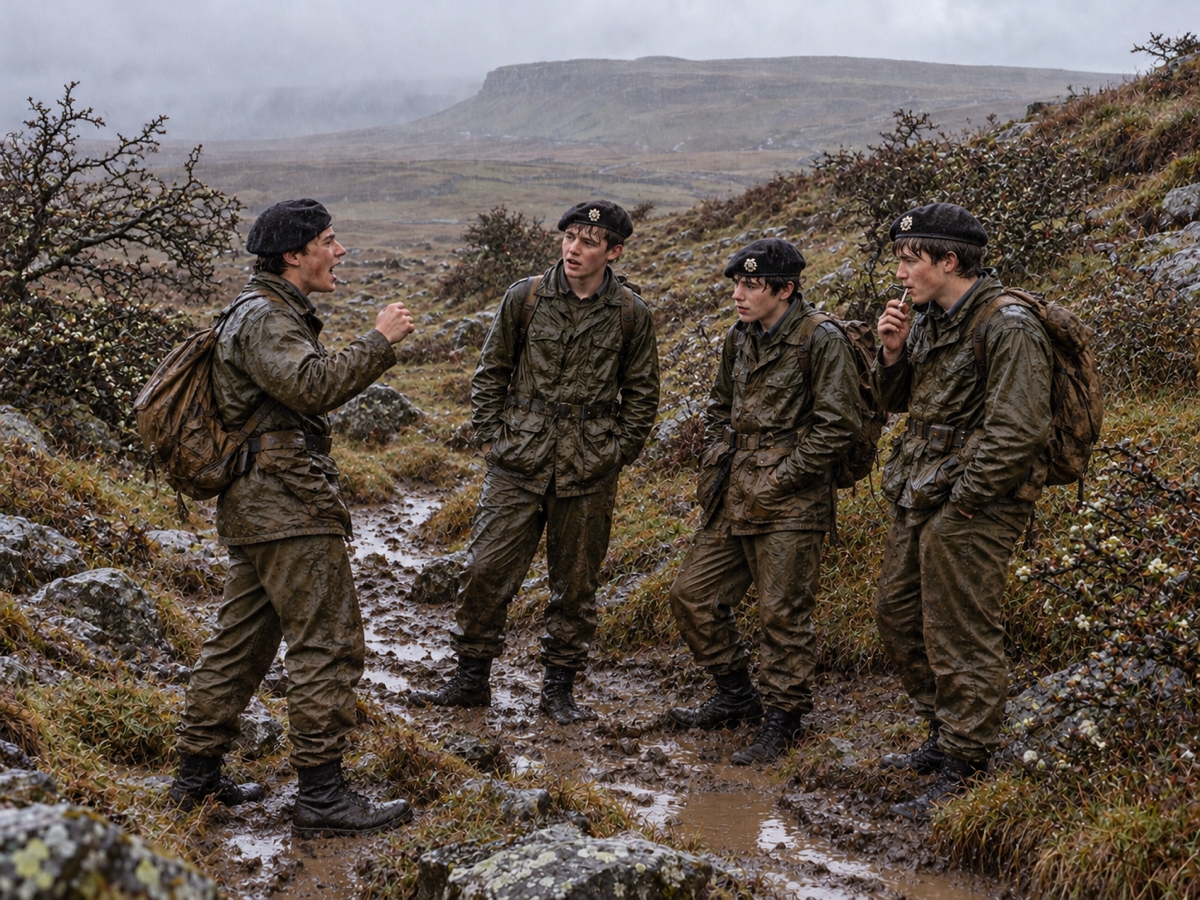
Rugby follows, in sleet. We’re meant to be hearty Berghians, able to take a bit of cold. I’ve been conditioned for this since prep school: play in all weathers, grit it out. But something has shifted. I’m old enough now to feel I should be making my own choices. I’m a good swimmer; that’s where my energy ought to go. I wear a gumshield—still rare—because of the brace, and I can’t find the joy I had for the game between ten and thirteen.
Afternoon classes blur slightly. Maths, loci. Biology, new books with that fresh-paper promise. In English we read One Day in the Life of Ivan Denisovich. I wonder if I’ve already read it. My mother recommended Solzhenitsyn and may even have bought me a box set for Christmas. Prison, endurance, arbitrary power—it all feels uncomfortably familiar.
Supper. Prep. I read Silas Marner, make notes, revise German. Bath, wash my hair. Cereal. Bed. Talking, reading more Solzhenitsyn. I look at the picture of Jane.
I’m woken again and again—seven times or so. Breathing never quite settles. Eventually I don’t bother trying to sleep at all. I dream of being chased by the cops.


Leave a Reply