What are five everyday things that bring you happiness?
What do I return to, again and again?
Not one thing—never one thing.
I return to a small constellation of practices that, taken together, feel like a life.
Writing

I write—because it is how I think.
Not in the abstract, but daily, materially. I’ve kept diaries for over fifty years. I’m currently revisiting entries written at thirteen, expanding a few cryptic lines into full scenes—hospital wards, bus journeys, half-understood relationships. Alongside this sits ongoing fiction: The Form Photo, a long-evolving narrative built around memory, misinterpretation, and what we fail to understand at the time.
There are moments where something begins.
On Sunday, 28th March 1976, I sit down at a manual typewriter and start a story that will later become Adam and Evie. In early drafts she has other names—Helen, Sophie. The premise is simple enough: an interstellar craft crashes on an inhabitable planet. But even then it is already becoming something else—a creation story. Not just narrative, but orientation. Writing, for me, has always been a way of placing myself in a world, real or imagined.
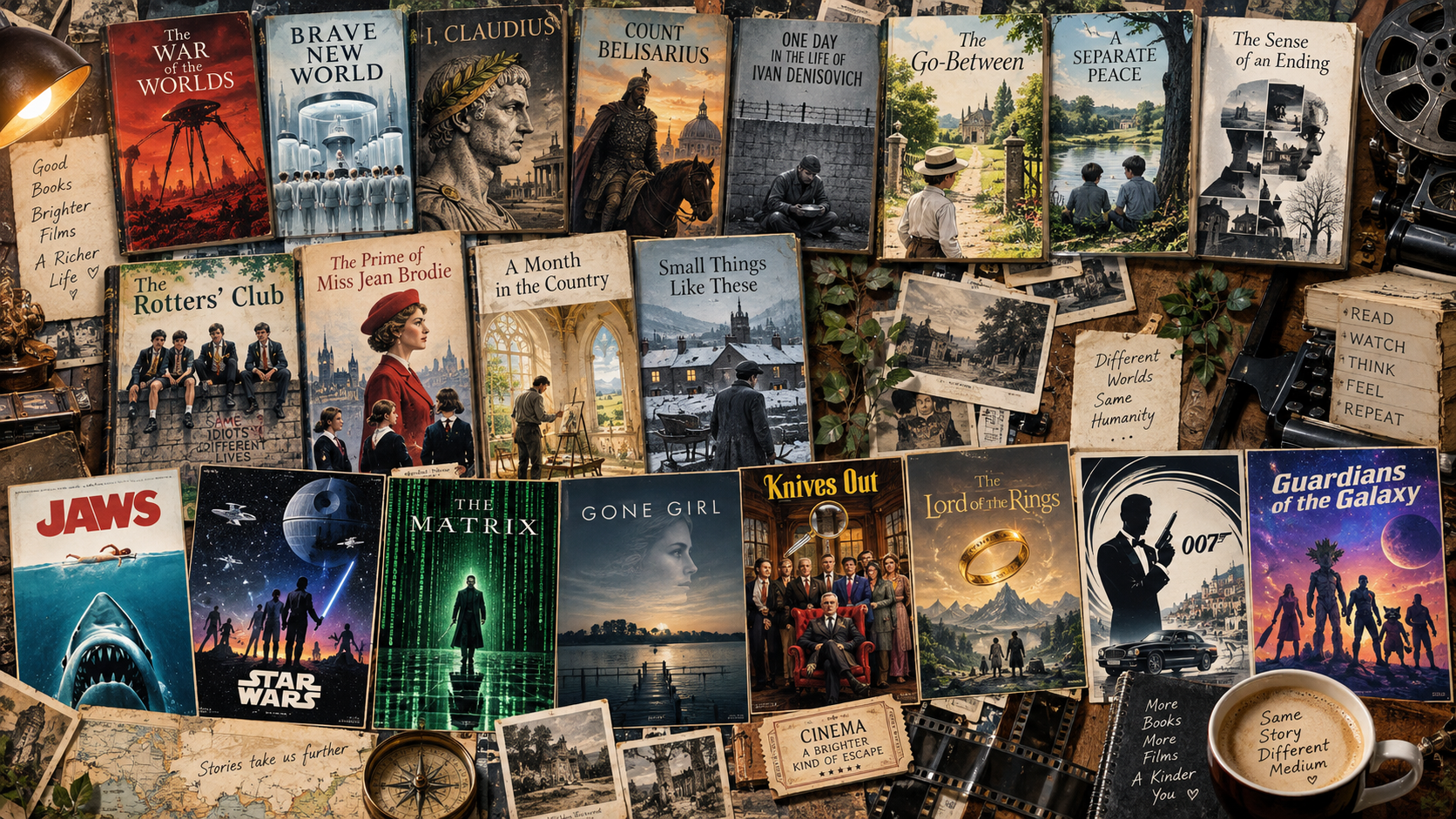
Reading

I read as much for escape, as for calibration and something intelligent.
I return to writers who solve problems I recognise, and whose work continues to provoke. Ken Follett for narrative drive and structural discipline—something always happening, stakes always rising. David Nicholls for emotional precision over time. George Saunders for his forensic sense of what makes a story move. Jorge Luis Borges for the architecture of ideas. Anton Chekhov for restraint and observation. And Philip Roth for psychological intensity. Also Nabakov, Henry Miller, Anais Nin…
These are not comforts; they are working models—each offering a different answer to the same question: how do you hold a reader inside a constructed world?
Swim Coaching

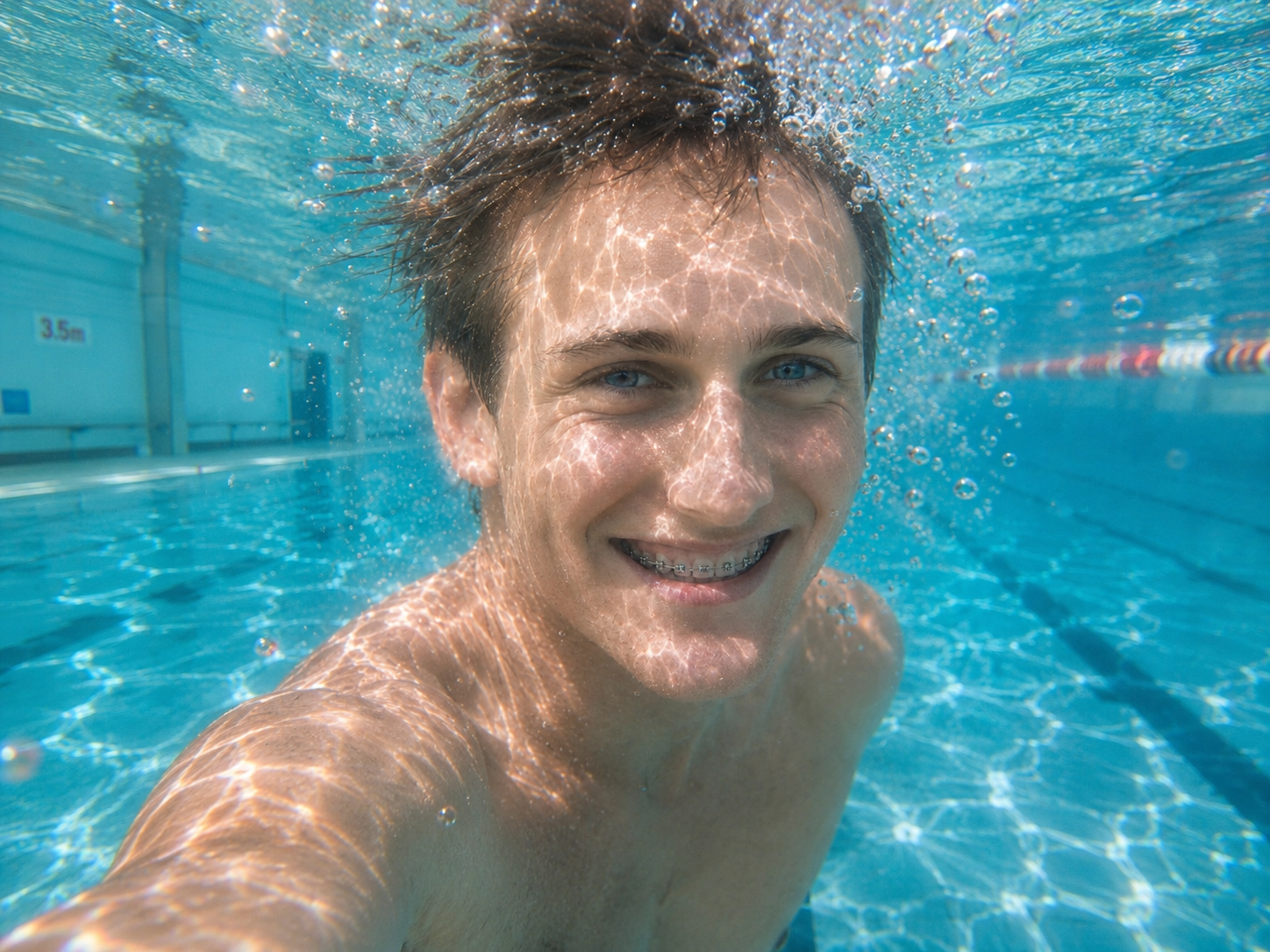
I coach swimmers—especially age-group athletes—because it is immediate, physical, and honest.
I work with county- and regional-level swimmers, designing sessions, tracking stroke counts, adjusting technique under fatigue. Much of it is incremental. Occasionally, it isn’t.
During a week-long butterfly clinic with newly promoted swimmers, I focus on fundamentals—timing, rhythm, recovery. One swimmer struggles with the straight-arm recovery. It should be simple; it isn’t. Then, after a careful demonstration, she gets it—clean, correct, repeatable. The change is immediate. She is thrilled. So am I—not just at the correction, but at her coachability. The moment where understanding becomes embodied.
Art

I make things—prints, drawings, and food—because not everything should be verbal.
For six years I’ve attended life drawing sessions, working from observation: proportion, weight, line. More recently I’ve returned to relief printmaking.
A print of Lewes Castle went through the full discipline of the process—measured, adjusted, redrawn, resolved into a single block. Then, in printing, something unexpected: using chine-collé, I introduced non-naturalistic papers for the stone, mound, and trees. Not planned. A decision made in the moment. The result was moodier, slightly surreal. A reminder that control and accident are partners in making.
Cooking

Alongside this, over the past decade, I’ve learnt to cook properly—not just to prepare meals, but to compose them. Guided in part by the ZOE Health Study App, I think in terms of balance, diversity, and response.
A simple breakfast: a mushroom omelette, spinach, a dollop of kefir, a sprinkle of seeds.
Protein, fibre, fermentation, texture. Nothing elaborate—but considered. A plate assembled with the same attention as a print or a sentence.
Veteran and Ancient Trees

I work with trees—systematically, as a volunteer surveyor for the Woodland Trust.
I’ve recorded hundreds of veteran and ancient trees for the Ancient Tree Inventory—measuring girth, noting condition, mapping precise locations.
Sometimes it is not a single tree that holds the attention, but a relationship.
In Markstakes Common, I return to companion trees—beech and oak growing together over decades, even centuries, sharing space, light, and constraint. Depending on timing and context, the beech will often come to dominate. It is not dramatic. It is gradual, structural, inevitable. A long negotiation written in wood.
What ties these together is not productivity, or even creativity in the usual sense.
It is attention.
Each of these practices asks me to look more closely, to stay longer than is comfortable, to notice what is actually there rather than what I assume to be there.
Writing, coaching, drawing, cooking, surveying—they are all, in different ways, exercises in seeing.
And perhaps that is the common thread – not what I do, but how I seek meaning in what I see.

Leave a Reply