Forty-eight years ago: Monday, 1st May 1978

(Sedbergh, age 16)
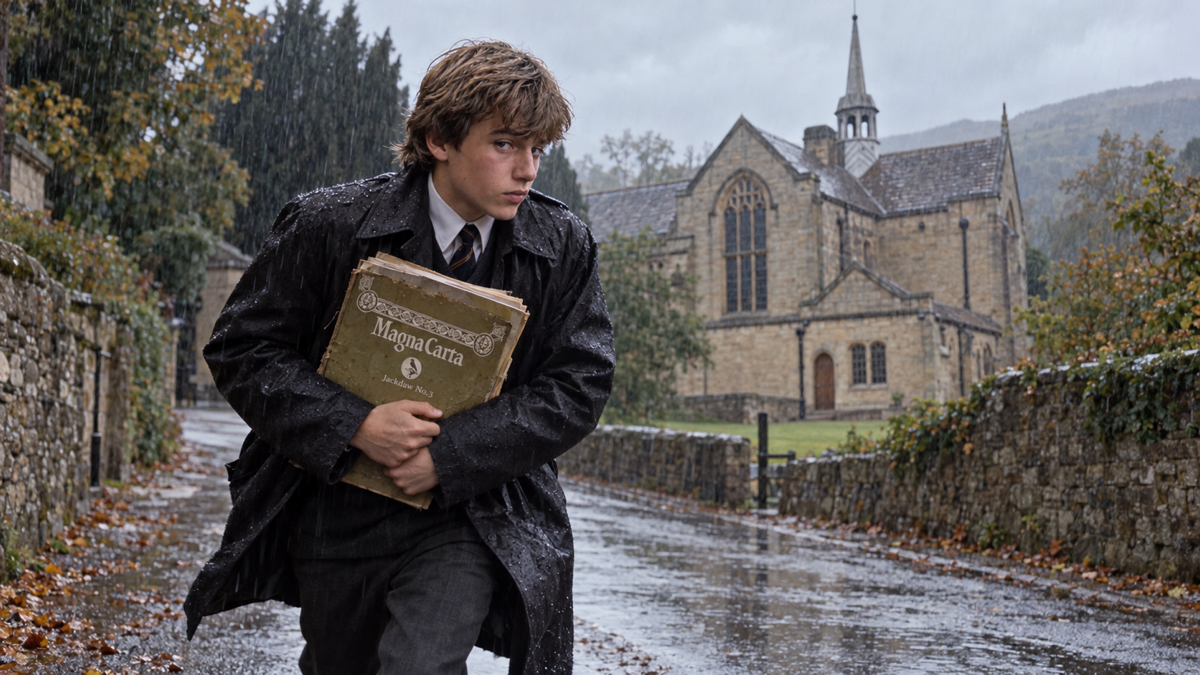
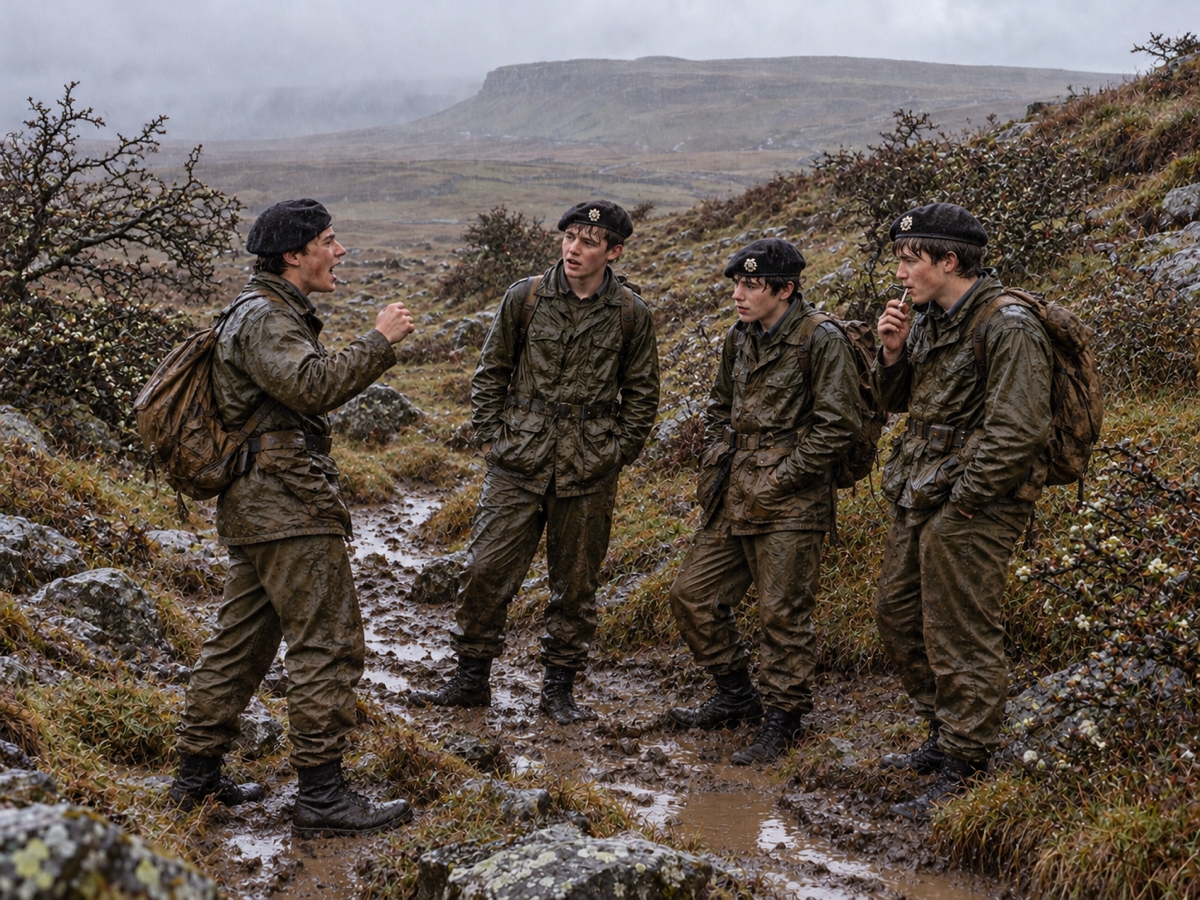
Five-Year Diary: School beds are good for dreams.

Last night I dreamt about fishing on a lake, with friends from home.
Early to rise
I am into the rhythm of getting up ten minutes before the breakfast bell, washing and dressing, then getting down to breakfast. Because I’m in early, I eat plenty, because if a group of older boys arrive first, they will finish everything.
Chemistry: I finished a few notes, and we now have eight weeks of revision.
English: We plan the term’s essays and prepare for a test on Henry IV.
French: We do a dictée.
I am distracted by thoughts of what the Gosforth girls might be saying to each other. Their attending four different schools around town hasn’t stopped a few meetings for coffee to compare notes, and possibly my letters.
I see my French teacher about my Encore du Nicola test—11 out of 20. I will see him again with two others on Sunday afternoon. He’s trying to help, not punish – rare. It isn’t that I’m not motivated to learn, but adhering to one book about a primary school boy and rote-learning grammar and spelling kills the joy of it for me. Rather, I should have been reading about the French movie director Francois Truffaut, listening to Francois Hardy, or acting in a Moliere play.
It is very windy, and I am sneezing all the time. Several years later, I will be diagnosed with asthma and allergies to House dust mite, hay fever, and more.
Physics: We are finally given the term papers. We can begin learning properly: two papers a week until the exam. I find the teacher distant. I feel avoided. Perhaps because I give the impression that I understand what I’m doing or can figure it out. I rarely ask for help. Still, encouragement would be welcome.
I continue sneezing. After lunch, I feel better.
I go into town with Brown-Fumes. I collect my fruit order and buy 20 Marlboro.
I have mislaid—or rather forgotten—my notebook. We are told that we’ve nearly completed the maths syllabus – just as well, the exams are only a few weeks away.
Geography: I fall asleep as we begin to go over last term’s essays. I find it very dull. It seems that any worthwhile revision will be done by me alone. I’ll find my own way: briefly rewriting essays, extracting key points, imagining variations on the question, and creating diagrams.
Chemistry: I finish notes on Organics and start O’Level questions.
Games: I played squash against Nick Wilson and won 2–1.
Bath.
Some work on music.
I work all evening. It feels good to be busy all day, unlike at home, where I can become bored. But I wonder if I equate being busy with being occupied, not always with an activity of your choice.
My head is blocked. Hay fever, or dust.
Fifty years on, my lungs have had enough of it.
50 Years On — Reflection: Education Then and Now
What strikes me now is not the workload, but its structure.
The system in the 1970s was organised around delivery and compliance. Content was broken into units, then tasks. You moved through them, whether they connected or not. Success depended on your ability to adapt to the system, not the system adapting to how you learned.
In French, I could already see the flaw. Language was taught in fragments—dictées, grammar, set texts—rather than as something lived. I instinctively understood that fluency comes from immersion, from meaning, from context. I needed to live in France. But there was no mechanism to act on that insight. You either complied or you underperformed.
In Physics, the problem was not the material but the relationship. A “cold” teacher, minimal feedback, and an assumption that if you appeared competent, you required nothing further. There was no sense of formative coaching, no recognition that encouragement is not remedial—it is developmental.
Geography revealed something else: the absence of engagement. Repetition of past essays induced sleep rather than understanding. So I built my own system—summarising, extracting, and varying questions. In modern terms, I was intuitively applying active recall and retrieval practice, but without guidance or validation.
What the system did provide was structure and volume. You were busy. Constantly. There was little room for drift. But busyness is not the same as learning. It can just as easily be a way of keeping boys occupied.
By contrast, best practice now—at least in theory—is built around:
- Learner-centred approaches: adapting to different cognitive styles
- Interleaving and retrieval practice: making memory durable
- Feedback loops: frequent, specific, developmental
- Intrinsic motivation: connecting learning to purpose
- Wellbeing awareness: recognising physical and mental states (something entirely absent in a boy sneezing his way through dust-filled classrooms)
Looking back, I can see that I survived—and in some areas thrived—not because of the system, but by working around it. I found my own methods, my own motivations, my own ways of making sense of things.
The question I asked then still holds:
Was I learning—or simply being kept busy


Leave a Reply