If you had to change your name, what would your new name be?
If I had to change my name, I think I’d take my wife’s maiden name. After all, for more than thirty years she’s carried my paternal surname, with all the history and inheritance that comes with it. There’s something appealing — and fair — about reversing that direction for once.
This makes me: Jonathan Ferguson Vernon-Pelczynski, or Jonathan Pelczynski-Vernon? JPV (sounds like an industrial plastic coating).
With “Vernon” comes a whole chain of associations: northern England, Northumberland and Cumbria, family stories tied to Scotland (Ferguson and Stewart via my paternal grandmother and grandfather) and further back the Norman echo of 1066 itself. Roger and Richard de Vernon were given large swathes of Shropshire and Cheshire 1000 years ago. The name carries centuries of English and Norman identity inside it. I value that history enormously, but I’m also conscious that it is only one side of the family story. My maternal line is from Cumberland: tenant farmers, blacksmiths and wheelwrights.
My wife’s family name, Pelczynski, opens an entirely different landscape. Instantly the sound of it shifts eastward into Poland (her father the academic, war veteran and activist for democracy in Eastern Europe Zbigniew A. Pelczynski), and Kyiv for her parental grandmother who age 16 ran away from the Bolsheviks to Warsaw obly to find herself ensnared by the Nazis then Soviets in WWI into Eastern Europe. Through her mother there is also Malta — an older Mediterranean thread woven into the family line, the Cremona’s from Gozo. Her mother left Mussolini’s Italy with her parents when she was 11 to escape fascinated – so migration, upheaval and resilience. The combination feels rich, layered and outward-looking in a way I increasingly appreciate as I get older.
At one point, we considered adding Pelczynski to our children’s names so that the connection would remain visible into the next generation. Our children may yet do that themselves by deed poll. I rather like the idea of names evolving as families evolve, carrying traces of journeys, marriages, borders and histories within them. A surname is never just a label; it’s a map of where people have come from and what survives through them.
I’d keep my first name.
I’ve grown into “Jonathan” over the years and it feels comfortably mine now. At different times people have shortened it to Jono or Jonny, depending on the age, setting and version of me they happened to know. Each carries a slightly different flavour: Jonny feels youthful and informal, Jono more easygoing and contemporary, while Jonathan is the version that has endured through school, work, parenthood and public life.
Jonathan Joe
With a mouth like an O
And a wheelbarrow full of surprises.
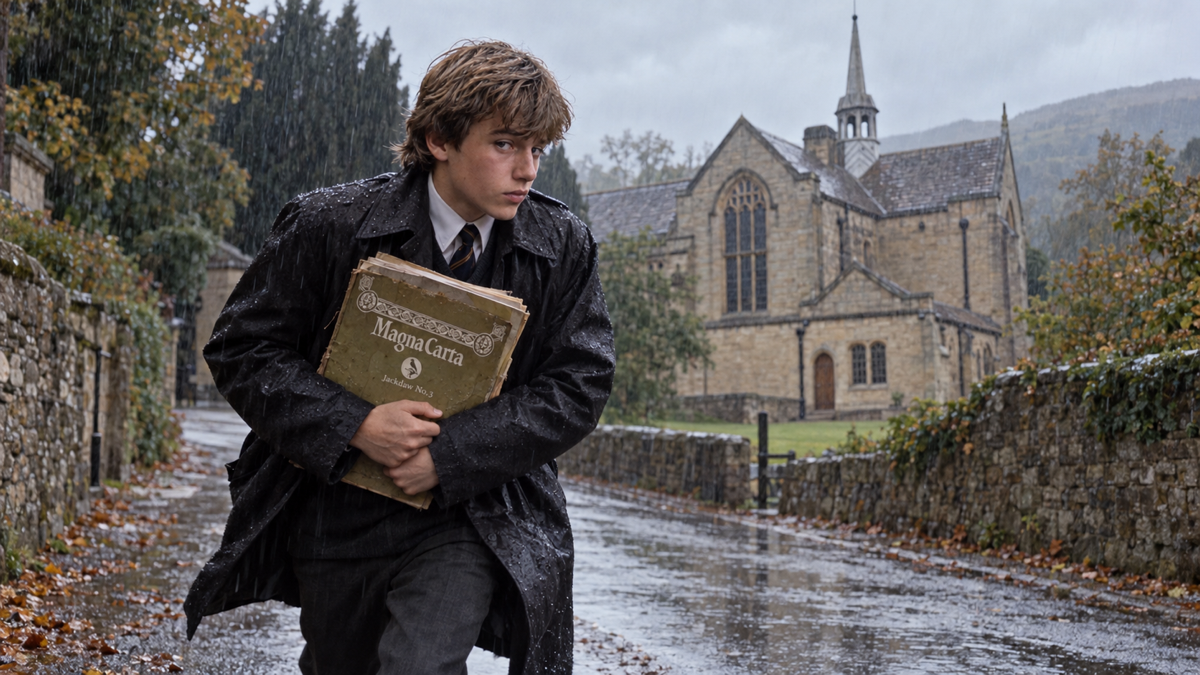
Apparently I might have been christened Peregrine. Part of me rather likes it now — the literary and wandering quality of it, the falcon, the traveller, the medieval undertone — but I suspect it would have been a difficult thing to carry as a child, especially at boarding school. There is something undeniably grand and faintly theatrical about it. Perhaps too pompous, or at least too self-consciously unusual for everyday use in 1970s England.
It also feels strongly tied to my father’s passions, particularly ornithology and the natural world. “Jonathan” feels like the name I was meant to be, Jonathan Joe, had a mouth like an ‘O’ and a wheelbarrow full of suprises’ sounds apt; “Peregrine” feels more like the name someone else imagined for me before I had any say in the matter.
Do middle names help? They can add an element of distinction.


Leave a Reply