
Fifty Years Ago: Sunday, 20th June 1976
(Sedbergh School, Age 14.9)
It was already bright at five in the morning – a north yorks midsummer sharpness that pierces curtains and unsettles boys asleep behind dormitory partitions. England was deep in drought and a heatwave. Weeks of unfamiliar blue sky and bright sun had made it feel normal – it wasn’t. The grass was yellowing. The river was piddling. Cattle kicked up dust like they were in Texas. Only the fondly tendered cricket square looked green. Another cloudless day no longer felt like the exception.
Few boys got up willingly that on a Sunday, but Alfred Britten already had. AB headed off up Winder before most people had even stirred. Even those going to Holy Communion. Hiking up Winder had something of the feel of a punishment detail about it — a hard trudge imposed upon boys by the school’s cult of endurance and character-building — yet for some boys it also represented freedom. AB was one of the loners, like me in many ways, though harder edged and more self-contained. He was waiting to finish his final O Level exams before, as he intended, running off to join the Army. Even at fourteen or fifteen, some boys had already decided who they would become – or who they did not want to be.
There were few birds near the house – a lack of trees and shrubbery. The river fell over the weir somewhere to the south – close enough to hear, just, it was running low. Somewhere out in the valley a tractor droned into life. The Yorkshire fells at dawn had an alien beauty- it felt like looking out from a landing craft.
I slept in later than usual and woke with the lingering curiosity of the previous day: large bananas! Normally we were rationed to one banana, but I’d had three – the House kitchen couldn’t get rid of them. A glut? It coudn’t have been down to the weather. Or were bananas now frown on southern England? At fourteen three banands felt like gluttony.
I had a fourth banana sliced into my breakfast cereal that morning.
Band practice: school brass band, nothing rock and roll. Not miners, but the sons of mine owners and investors role playing working class on their brass trumpets and trombones.
Branston (Pickles) went off to Holy Communion. There were always a handful of genuinely religious boys. Most drifted away from it eventually, but a few clung to faith with remarkable seriousness. One boy in particular — utterly unlike his brother — attended obsessively.
In Chapel I sang hymns loudly with a fellow inmate who had like me been Head Chorister back at Mowden, our prep: school. Like me he had felt no inclination to be in the Sedbergh Chapel choir. Singing beside him unearthed complicated feelings. Part of me felt grief and anger at having turned my back on that earlier version of myself. Five years as a chorister. Learning sight reading, harmonies, solos. Learning flute and piano. Becoming Head Chorister. Adults had clearly imagined a future for me within that world. And yet by fourteen I wanted away from it.
I loved music. I loved singing. I loved performing. But I no longer wanted any part of the institutional machinery surrounding it. Too many adults were invested in shaping children into extensions of their own ambitions. Every hymn carried memories attached to it: a particular chapel service, a Christmas concert, a prep school assembly, a music competition, a cold church on a winter morning.
I stood there. I mouthed words. I could harmonise any line intuitively if I chose to, but I chose to close my ears. Nobody challenged me. At Sedbergh attendance mattered more than belief. They could compel you to attend chapel, but they could not make you sing, nor could they make you believe in God. By then I no longer did.
I attempted Geography prep but gradually “lazed out”. The phrase fascinates me now because it captures something peculiarly adolescent. It reminds of Harry Enfield’s Kevin & Perry sketches — that sense of the teenage brain drifting uncontrollably in and out of engagement and disengagement.
It did not feel like ordinary laziness.
It felt neurological. Transformative. As though my circuits were briefly snapping loose and flapping in the breeze going through my mind. Like being suspended in water while a wave passed invisibly beneath you. Like my brain had become a shaken snow globe with thoughts and emotions swirling chaotically before settling like dandruff. I could feel adolescence altering me from within even if I had no language for what was going on. Sometimes a daydream felt more compelling than studying a geography diagram of the Nile Delta.
French passed without leaving much trace at all.
At lunch many boys were absent, out with parents or on walks.
Sundays never felt like a day of rest because you were still at school. Looking back, it strikes me that being at boarding school was rather like spending months at a workplace without ever leaving. Even a day out with parents could feel stressful because you remained trapped inside the institution’s rules: Sunday best clothes, timetables, best behaviour, distances too great to actually go home.
In Projects I finished my cassette rack. MDF sides, beech dowels. The dowels didn’t align properly top and bottom, leaving the whole thing slightly skew-whiff. That bothered the DT teacher far more than it bothered me. It worked. The cassettes fitted. They stayed upright. That was enough.
And those cassettes mattered.
Mixtapes I had made myself. Tapes copied by friends. Albums bought from older boys. Recordings made for me by my older sister. Music felt like an escape into another identity entirely, another future self that might one day exist beyond Sedbergh.
Supper: beef risotto.
Then in the evening we watched The Battle of Britain on television in the House.
Film nights were the nearest boarding school ever came to feeling remotely like home. Boys gathered instinctively around the television. Older boys commandeered the best chairs but somehow that merely added to the atmosphere, almost like being in a family sitting room with older brothers or parents nearby. People wandered in and out making tea, coffee or hot chocolate. There was banter and occasional shouting, but what I remember most clearly is the temporary suspension of cruelty. The petty bullying, name-calling and hierarchy softened during films. Everyone relaxed fractionally into shared attention.
Watching The Battle of Britain always transported me somewhere else entirely.
Not to war, but to one of the rare genuinely happy family outings before my parents separated and divorced.
Dad drove us into Newcastle from Gosforth in the Rover. We parked in the multi-storey car park on New Bridge Street and walked through the city to the Odeon on Northumberland Street. Before the film we ate at the Milkmaid restaurant nearby — one of those slightly futuristic late-1960s American-influenced places with bright lights, chrome fittings and the smell of banana milkshakes, chips and sugary coffee. Then around the corner, into a cue, and up the stairs through the fancy auditorium and into the Odeon’s Royal Circle, which to a small boy felt unimaginably luxurious. I was in awe of the fixtures and fittings, like being in church, but with red carpet glued to the walls and gold fittings dangling from the ceiling!
I can still remember the scale of the cinema. The thick carpets. The usherettes with torches. The Kiora orange drink in the interval. The enormous curtains. The sense that going to the pictures was not merely entertainment but an occasion.
And one scene from the film disturbed me then and still lingers now: the bodies of the WAAF women laid out beside the airfield after the German bombing raid. Something about their stillness, and wearing skirts like my grandmother wore – death in that scene profoundly shook me as a child. I must have been seven or eight — perhaps September or October 1969 — sitting there with parents and siblings.
So on that Sunday evening in Sedbergh, watching the same film again as a fourteen-year-old boarder, memories were awoken : wartime heroism, lost childhood, family memory, masculinity, Englishness, institutional life, loneliness.
By then I already sensed that many of the worlds adults tried to induct boys into — church, school, the golf club, tennis club, shooting all came with specific tags and expectations
Looking back fifty years later, “enthusiasms denied” feels like my two-word summary of my three years at Sedbergh School.
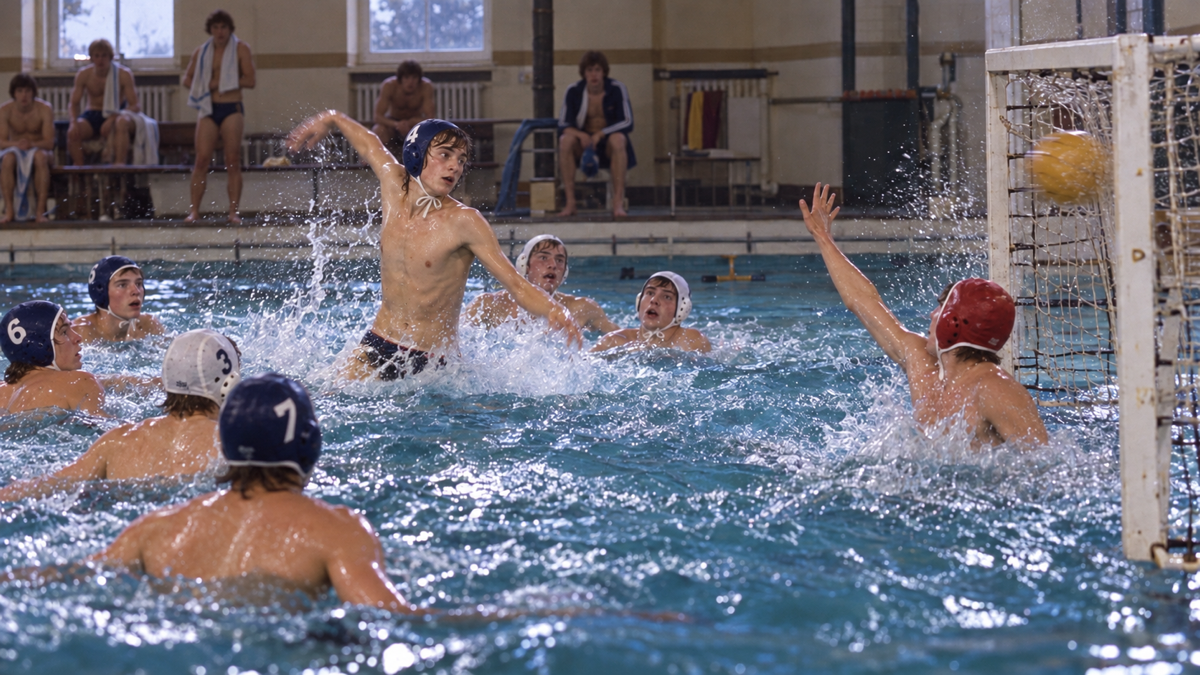
Too much time was spent doing things of no worth or interest to me. Too little time was spent doing what I genuinely craved: swimming, creation — particularly art — and performance: singing, playing, acting. And doing these things in diverse company — girls certainly, but also across race, culture and class.


Leave a Reply