
Dream: I drive from East Sussex to Kirby Stephen to see a music specialist. Somewhat quizzical about why I am in the town, I ask some friendly sixth-formers for the Music Centre and am directed to a retail outlet. I can’t believe this is right. They point out that it is a back room behind the window displays. I’m somewhat disbelieving, but go in.
I am thinking I’d be playing the flute but find instead a market town audiologist and her mother’s assistant. She is a foreigner – maybe Spanish or Rumanian. She looks in my ears as I am there and is quite horrified. At which point she transforms into a Anya Taylor-Joy-like beauty.
I use a ChatGPT Project Folder, I have set up use Jungian Dream Analysis – the source being his ‘Man and his Symbols’. The prompts seeks context based questions to help elicit meaning. A few passes and I feel comfortable with a full analysis.
Completed Jungian Analysis
This dream is not primarily about music. It begins with music, but the psyche redirects me toward hearing. In Jungian terms, the dream compensates the conscious attitude: I set out to perform, play, express, perhaps recover the boy with the flute; the unconscious says, first, listen. As the Jung text notes, dreams are not generic codes but personal communications from the unconscious, requiring an individual key.
The structureis coherent:
Long whimsical journey → modest market town → youthful guides → retail front → hidden back room → expected flute → examined ears → foreign female professional → astonishment → otherworldly beauty.
1. East Sussex to Kirkby Stephen: the absurd pilgrimage
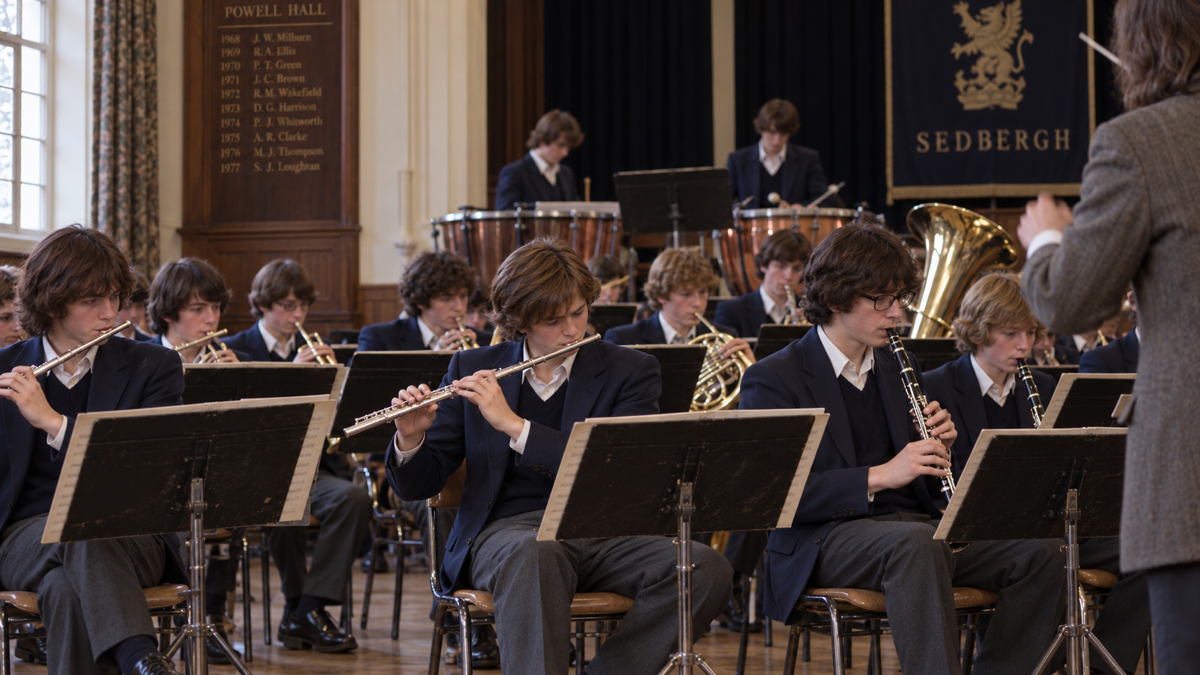
The 260-mile drive is extravagant. I have gone to a sleepy, safe, unprepossessing South Lakes market town “on a whim,” with “absurd hope and great expectations.” This is important. The psyche chooses not London, Oxford, Sedbergh, or Appleby, but a by-water associated with adolescence, rare visits, and the notorious purchase of The Hite Report at sixteen.
So Kirkby Stephen becomes a threshold-town: modest on the outside, charged with hidden adolescent knowledge. The dream says: the significant thing will not be found in grand cultural institutions. It is hidden in an ordinary place, as much of your own psychic treasure is hidden in old diaries, half-remembered journeys, obscure shops, teenage purchases, and private embarrassments.
2. The sixth formers: youthful psychopomps
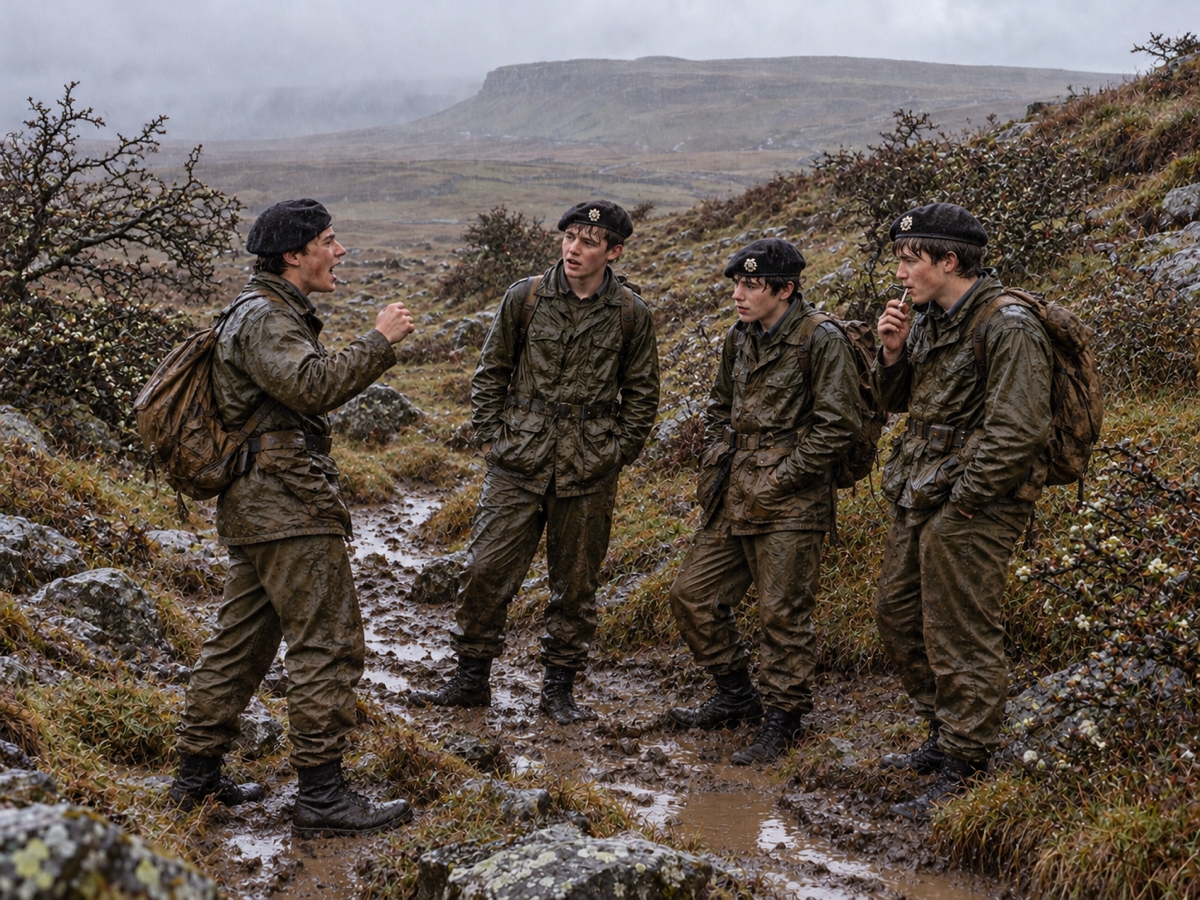
The three boys and one girl are not random extras. They are late adolescents, 16 or 17, the age at which much of your current inner excavation is set. They are in uniform, but softened—jumpers rather than jackets. Institution, but informal.
I feel at ease with them. I am “like a grandfather figure,” respected, not threatened. This matters: the adolescent self is no longer an enemy, rival, or embarrassment. He is now approachable. The young people guide me to the hidden back room.
In Jungian terms, they are threshold guides: figures from the liminal zone between boyhood and adulthood, directing the older dreamer back toward the concealed psychic chamber.
3. The retail outlet and the back room: creativity in disguise
You expect a Music Centre. Instead you are pointed to a retail outlet. This disappoints the grand expectation. But the sixth formers know: it is in the back room.
This is a central image.
My creativity—writing, directing, story-making—does not appear here as a grand studio, theatre, concert hall, university, or cathedral of art. It appears behind commerce, behind the shopfront, in a modest room.
This suggests a psychic truth: my creative life may currently be operating “at the back” of ordinary life. Not absent. Hidden. It may feel secondary, improvised, even faintly ridiculous, but the dream says: this is where the real appointment is.
4. The missing flute: chosen skill versus chosen desire
I expect flute-playing. The flute carries real personal history: practice, escape, pieces known well, being transported away from school and trouble.
But then I add the sharper amplification: the flute was “a skill chosen for me by an institution that made little attempt to understand what I enjoyed.” I would have chosen guitar.
That changes the symbol.
The flute is both refuge and imposition. It is beauty, discipline, and escape—but also institutional selection. The dream therefore interrupts the flute before it can begin. The unconscious may be asking:
Are you still trying to make music through an instrument chosen by others?
Or more broadly:
Are you still expressing yourself through forms that once helped you survive, but were not wholly chosen by you?
5. The ear examination: before expression, receptivity
The audiologist belongs partly to waking life. So the dream borrows contemporary material. But it uses it symbolically.
I come expecting sound outward.
She examines sound inward.
That reversal is the dream’s hinge. The unconscious says:
The issue is not what I can play. The issue is what I can hear.
And this links directly to waking life: listening to my daughter, who is “quite determined to be understood.” This is not passive listening. It challenges me. The dream dramatizes that challenge: the ear is not merely functional; it is a passage into the psyche.
6. What horrifies her: the ear as tunnel into wonder
The audiologist is dumbfounded, as though she had found “pixies or fairies,” a “miniature circus,” a “kaleidoscope,” a brain full of surprises. This is delightful and revealing.
She is not horrified by dirt, decay, deafness, or damage. She is delightfully suprised by marvel.
The dream-ear contains imagination.
This implies that what may appear clinically as “hearing” is really access to the fantastical, theatrical, Wes Anderson-like inner world: symmetrical, eccentric, miniature, curated, absurd, colourful.
So the ear becomes an aperture into your creative unconscious.
7. The mother / older assistant: generational transmission
The assistant seems to be the audiologist’s mother, early seventies, healthy but old.
This introduces a generational feminine pair: older woman and younger woman. I associate this immediately with my fascination with youth: my own youth fifty years ago, and the young people I coach. Girls I dated had mothers; it helped when we got along!
The dream therefore stages a triangle:
older feminine witness → younger feminine professional → older male dreamer → adolescent guides.
This is a dream about transmission across generations. It is about what is heard, misheard, preserved, passed on, translated, and rediscovered.
8. The foreign woman: the unfamiliar feminine intelligence
She may be Spanish or Romanian. My associations are professional, attractive, medically competent, and marked by sacrifice—women who have left one culture to make a life in another.
So she is not merely exotic. She represents competence from elsewhere: a form of knowledge outside my native psychic territory.
This is important. The dream does not give me a familiar English matron, school music teacher, or local GP. It gives me the foreign professional woman: disciplined, attractive, displaced, intelligent. She is the psyche’s emissary from abroad.
In Jungian terms, she is close to an anima figure, but not merely erotic. She is diagnostic. She sees into me.
9. The transformation: inner beauty visualised
She becomes not literally Anya Taylor-Joy, but that ilk: exceptional, otherworldly beauty.
“I could see a person in a different way—her inner beauty visualised by me in her transformation.”
That is the dream’s revelation.
The anima appears first as function: audiologist, professional, examiner.
Then as perception: beauty.
She does not simply become beautiful. I become capable of seeing beauty.
This is not only erotic, though the dream allows that question: “Was this going to be an illicit encounter?” That hesitation is significant. The erotic charge may be the psyche’s way of marking the encounter as numinous, dangerous, alive, and morally ambiguous.
But the deeper movement is from clinical inspection to imaginative transfiguration.
Core Interpretation
This dream seems to say: I am making long, quixotic journeys into the past, into youth, into creativity, into music, into the hidden back rooms of my life. I think I am going there to recover expression—to play the flute, to perform, to make art. But the unconscious redirects me toward hearing: listening to my daughter, listening to youth, listening to memory, listening to the strange foreign feminine intelligence within.
What is found in my ear is not pathology but wonder: miniature theatre, fairies, circus, kaleidoscope. The dream suggests that my inner life is not blocked; it is over-rich, surprising, theatrical, perhaps difficult for others to comprehend.
The beautiful woman is the psyche’s reward for listening. She is the transformation of attention itself.
Condensed Meaning
The dream asks me to stop treating creativity as performance and begin treating it as listening.
Not: “What shall I play?”
But: “What is trying to be heard in me?”


Leave a Reply