If you could live anywhere in the world, where would it be?
I would choose Lewes, East Sussex.

That answer may surprise some people. They expect somewhere exotic: a villa in Tuscany, a chalet in the French Alps, an apartment overlooking Valetta Harbour in Malta, or a Reever’s Castle in the North Tyne Valley. Yet after twenty-six years in Lewes, I have come to realise that what I value most is not novelty but belonging.
We arrived in May 2000 with our children just short of their fourth and second birthdays. We had moved from Warwickshire after I took a job as a web editor in Brighton. I still remember standing in Southover Gardens, the children scrambling about on a veteran mulberry tree while looking at a Victorian cottage to rent. A woman with children the same age as ours struck up a conversation and made us feel welcome. Something clicked. Within weeks we were becoming part of the life of the town. Our eldest started school and our roots began to grow.
Lewes offers almost everything I want from a place. It is a market town with a remarkable history. At its centre stands a Norman castle, something I have always enjoyed in any town in England. Around it are streets and buildings that stretch back through the centuries. The ruined priory speaks of the Reformation and the destruction of the monasteries. The town is bound up with the story of Simon de Montfort and the events of 1264 that helped shape the development of Parliament. It was home to Thomas Paine during six formative years of his life. Nearby, Virginia Woolf remains part of the landscape of memory and literature.
History is not something preserved behind glass here. It is woven into everyday life. Many houses have been lived in continuously for five or six centuries. The town has evolved organically rather than being imposed all at once. With a surname like Vernon, I feel a direct connection to the Norman world that followed 1066. Having visited the site of the Battle of Hastings many times, I never entirely lose sight of how deeply history runs beneath the landscape.
Yet Lewes is not merely a historical curiosity. It is alive. It has a strong independent spirit, shaped by liberal, socialist and environmental traditions. It attracts academics from nearby universities, artists, writers, musicians, campaigners, entrepreneurs and people who simply like to think for themselves. There are many actors too, familiar faces from movies and TV. There are second-hand bookshops, vintage shops, galleries, artisan businesses, cafés and pubs. Plenty of pubs. Over the years I have managed to enjoy a pint of Harvey’s Best Bitter in every pub in town and still have half a dozen favourites depending on whether I want food, conversation, music or atmosphere.
It is also a place where eccentricity is welcomed rather than merely tolerated. We have a Town Crier whose coat was designed by local children. That somehow captures the spirit of the place.
The landscape matters just as much as the town itself. Lewes sits between the South Downs and the sea. We can walk onto the Downs in every direction. The chalk hills, ancient woodland, commons, river valleys and coastline have become part of my mental geography. After fifteen years of daily dog walks, places such as the River Ouse, the Cockshut and the Winterbourne feel as familiar as rooms in my own house.
If I had to choose what I would miss most, it would be the view. The rolling Downs, the estuary, and those glimpses of the English Channel towards Newhaven and Brighton. There is something deeply reassuring about knowing that nature remains close at hand. Lewes is full of parks, gardens, green spaces and riverside walks. Despite its activity, it never feels disconnected from the natural world.
Community is perhaps the strongest reason of all. During seven years as a town councillor I came to know hundreds of people. I discovered how much can be achieved through civic engagement. Sometimes it is something grand; more often it is a pothole repaired, a crossing improved, a playground upgraded or rubbish removed. Those small improvements matter because they shape everyday life.
Lewes has traditions that bind people together. Bonfire Night is nationally famous. Patina marks the transition from primary school to secondary school. The Bonfire Societies organise events throughout the year. Music festivals, rugby tournaments, drama, comedy and public talks fill the calendar. There is always something happening.
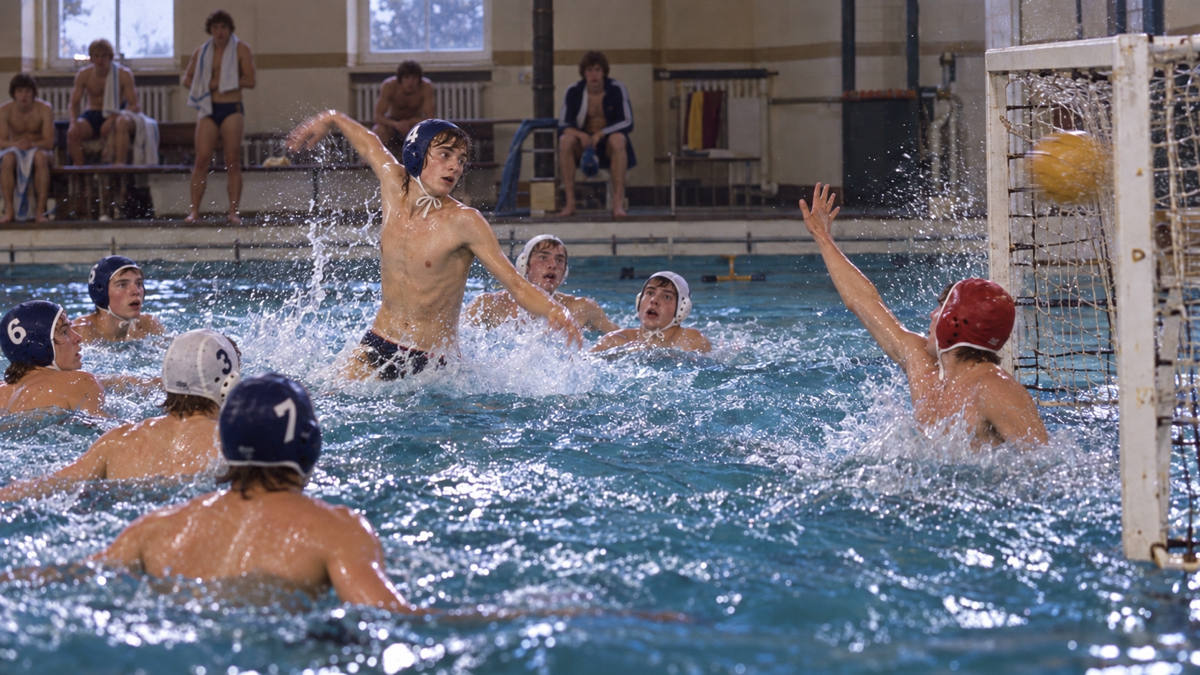
The town has also allowed me to become more fully myself. Here I joined creative writing classes, life-drawing groups and relief-printing workshops. Here I became a swimming teacher and coach. Here I became a councillor. The town has not simply been the backdrop to my life; it has helped shape who I have become.
When I stand on the Downs above Lewes and look down across the rooftops, I feel something I have rarely felt elsewhere. Pride. I know the buildings. I know the stories behind many of them. I know the people who live and work among them. I know children who are now adults. I know where footpaths run, where planning decisions were made, where crossings were installed, where streetlights were replaced and where community campaigns succeeded. It feels less like a place I inhabit and more like a place to which I belong.
Could I be tempted away? Perhaps. If someone offered me a magnificent house elsewhere and the means to maintain it, I would at least listen. But it would have to be somewhere very special indeed, and probably another market town in Britain with many of the same qualities.
What Lewes represents is more important than any particular building or street. It represents history, landscape, community, creativity, environmental awareness, independence of thought and human scale. It is large enough to be stimulating and small enough to remain personal. It is connected to Brighton, London, France and the wider world, yet retains a strong identity of its own.
Most places can offer one or two of those qualities. Very few offer all of them together.
For me, Lewes is not simply where I live. It is the closest thing I have found to home in the fullest sense of the word.


Leave a Reply