What do you think is the future of AI?

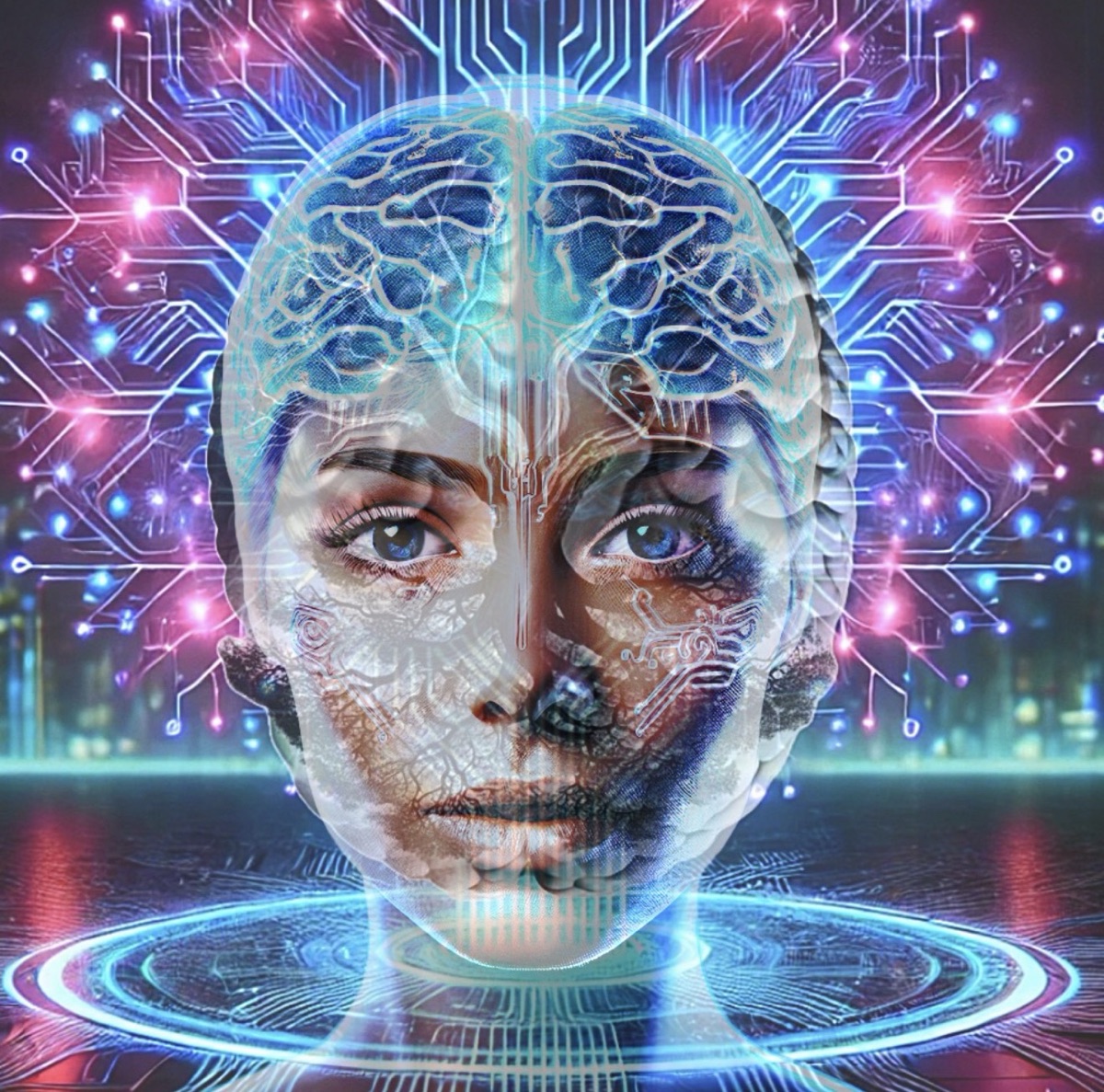
I am an early adopter by inclination – an enthusiast for new technologies and their possibilities. I see AI as one of the most exciting developments of my lifetime, greater in significance to the arrival of personal computers, the internet and or smartphones, but potentially far more transformative.
What excites me is not what AI can do for us, but what it can help us do for ourselves. I don’t want a machine to replace my curiosity, imagination, judgement or creativity. I want it to extend them.
I already use AI in every aspect of my life.
As a writer, I am engaged in an extraordinary exercise in recovering and reconstructing my teenage diaries from the 1970s. AI has become something of a research assistant, interviewer, editor and historical detective. It asks questions that prompt memories I haven’t revisited in fifty years. It helps me reconstruct the social, cultural and educational world I inhabited, while challenging me to distinguish what I remember from what I might be tempted to invent. The result is not a machine writing my autobiography, but a collaboration that allows me to recover far more of my own story based on what I wrote at the time.
As a swimming coach, I use AI to analyse training programmes, develop bespoke sessions for multiple squads, understand technique and think through the different needs of young swimmers. It is particularly useful as a sounding board. I might have an idea for improving a swimmer’s butterfly or developing their endurance, and AI helps me test the thinking behind it. But it doesn’t replace the experience of standing beside a pool, observing a swimmer, recognising their frustration or knowing when encouragement will achieve more than another instruction.
As a town councillor, I see enormous potential for AI to make local democracy more effective and accessible. Council papers, planning documents, financial reports and policy proposals can be formidable. AI can help us interrogate them, identify inconsistencies, compare alternatives and communicate complicated decisions in language residents can understand. It could enable councillors and citizens alike to participate more intelligently in decisions affecting their communities.
At home, AI is becoming an increasingly useful companion in the kitchen and garden. As a cook, I can give it the ingredients I have available and explore what to make, adapt recipes or understand why something hasn’t worked. In the garden, it can help me think about soil, planting combinations, biodiversity, seasonal tasks and how to respond to changing climatic conditions. I particularly enjoy being able to ask why, rather than simply being told what to do.
As a parent, I see another dimension. Family life requires patience, empathy and a willingness to recognise that other people experience the world differently. AI can offer alternative perspectives, help me examine my assumptions and suggest different approaches to difficult conversations. But it cannot love, take responsibility or replace the human relationships that matter.
For me, however, the greatest promise of AI lies in education.
Having spent much of my life as a learner and educator, including postgraduate study in online and distance education, I am convinced that we have barely begun to explore its possibilities.
For centuries, education has been organised around the transmission of knowledge, with teachers explaining and students attempting to absorb and reproduce what they have been told. The internet made information abundantly available. AI offers something fundamentally different: the possibility of an endlessly patient, responsive learning companion.
I don’t want AI simply to tell students the answers. That would be a dreadful waste of its potential. I want it to question them, challenge their assumptions, identify misconceptions, provide feedback and help them apply what they know to unfamiliar problems.
Imagine every student having access to something approaching a personal tutor, one that adapts to their interests, abilities and pace of learning. A student struggling with mathematics could explore a concept through practical examples until it makes sense. A history student could be challenged to interrogate contradictory primary sources rather than merely memorise dates. A young swimmer could explore the physics of propulsion and drag, connecting classroom science to their experience in the pool.
The emphasis would shift from acquiring information to developing understanding, judgement, creativity and the confidence to use knowledge.
This is particularly important because learning is not simply about getting the right answer. It’s about finding joy in learning, relishing the journey and making it your own.
There are serious risks, of course. AI can be wrong, convincingly so. It can reinforce prejudice, undermine privacy, concentrate power and encourage intellectual laziness. I worry about the environmental costs, the disruption to employment and the temptation for governments or corporations to use it to manipulate rather than empower people. Nor do I underestimate the danger of students outsourcing their thinking to machines. Some will; the smart will not.
We’ll need safeguards, transparency, critical literacy and a willingness to challenge the technology. Above all, we must ensure that its benefits are shared rather than confined to those who can afford them.
Nevertheless, I am fundamentally optimistic.
Throughout my life, I’ve found that learning is most rewarding when driven by curiosity, when one discovery prompts another question, and when knowledge acquired in one field unexpectedly illuminates another. As something of a polymath, I find AI particularly appealing because it enables me to move between subjects with such and a growing sense of command.
I can follow an idea wherever it leads.
The danger is that we use AI to do our thinking. The opportunity is that we use AI to stretch, deepen, extend and share our thinking.


Leave a Reply