
Fifty Years Ago: Friday, 9th July 1976
(Sedbergh School, Age 14.9)
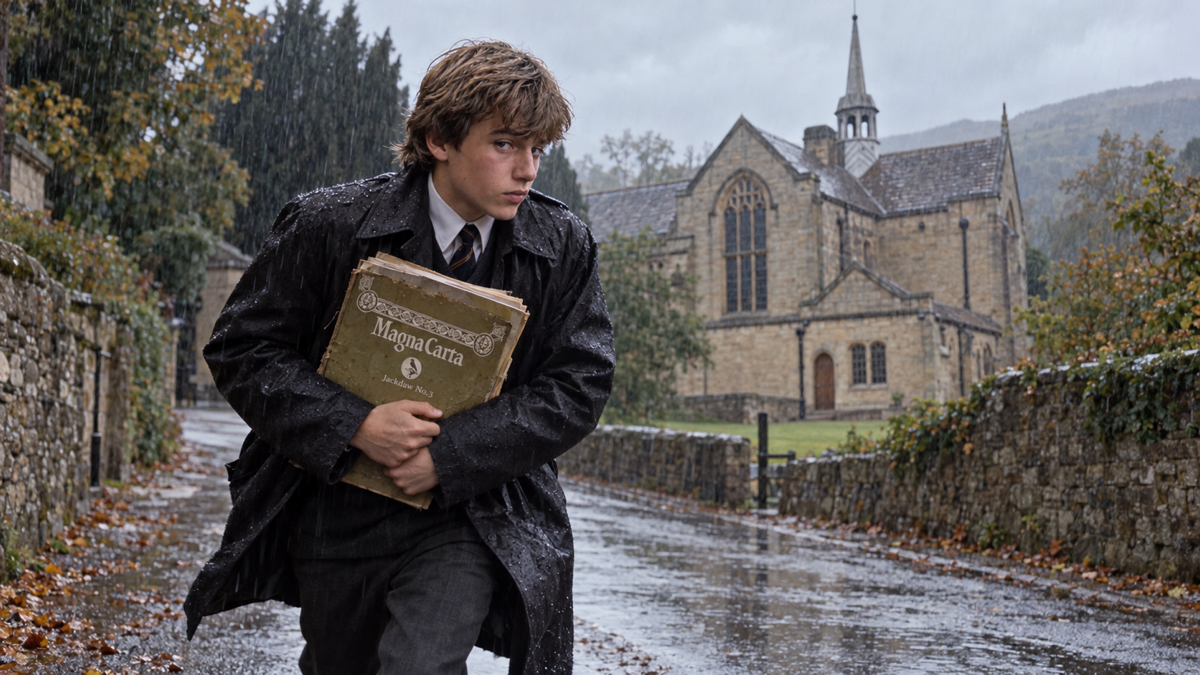
Divinity took us to the end of Man Born to be King. It was the teacher’s last lesson before retiring – in my memory he seemed ancient. Perhaps seventy-seven. Certainly old enough for me to wonder why he was still teaching at all.
He had clerical qualifications, but I am not certain when, or even if, he had formally trained as a teacher. Looking back, I suspect my judgement of him was coloured by what happened to Latin. Under his watch my interest in Latin steadily collapsed. So did my confidence in it. Whether that was his fault, my fault, or simply a mismatch between pupil and teacher, I cannot now say. But the association remains. He loathed me for my blatant atheism; I’d argue about the veracity and origins of Christianity with vehemence and a growing hit list of arguments. I got three kinds of response: at Mowden our Scripture Teacher, the Vicar of Ovington, was lost for words and tearful; the Rev H at Sedbergh appeared to admire my stance and encouraged discussion and appeared not to think the worse of me for it – he thought more of me for stepping back from getting confirmed than boys who went through with confirmation with little belief or understanding of the scriptures. I knew my scripture; all the more to put Christianity and other religions in their historical place.
Once again, worthy literature was being thrust before us without much thought for whether it connected with the lives we were actually living. The school seemed full of books and plays we were expected to admire because previous generations had admired them. I do not remember much of Man Born to be King itself. What I remember is the feeling of having it delivered to us as medicine rather than discovery.
Chemistry: Winnet went over our end of year exam results.
I was annoyed about losing ten marks for writing MgO instead of Magnesium Oxide. There’s right, and that’s an alternative right. I was still right!
The irritation was more than a complaint about marks. I had made the effort to understand what I was doing and to get the answer correct. Yet somehow the answer was judged inadequate because it was not expressed in precisely the approved way. Looking back, I think I felt that my effort was being diminished.
Chemistry never quite recovered from that. Gradually I lost interest in the subject, though that had as much to do with the way it was taught as anything else. Science fascinated me. Scientific ideas fascinated me. But classroom Chemistry often seemed more concerned with rules and conventions than curiosity.
PE: played Gym Pirates, then had a quick swim.
The gym itself was a relic from another age: a traditional Edwardian gymnasium with wooden wall bars, thick ropes stretching up towards the roof, and a wooden horse waiting to be vaulted. Everything smelt faintly of varnished timber, sweat and generations of schoolboys.
What strikes me now is that the swimming pool was effectively regarded as another piece of gym equipment. It was part of Physical Education. A facility. Somewhere for brief instructional swims. It was not yet viewed as a serious training environment in its own right, despite the hours many of us spent in it. Looking back through the eyes of a swimming coach half a century later, that feels almost unimaginable.
Afterwards I went into town to buy toothpaste.
Sedbergh itself was barely larger than the school. One main street, a handful of shops, stone buildings pressed together beneath the fells. Yet even such a modest expedition carried a sense of freedom. Leaving the school grounds, however briefly, always felt like stepping into a different world.
Then came packing.
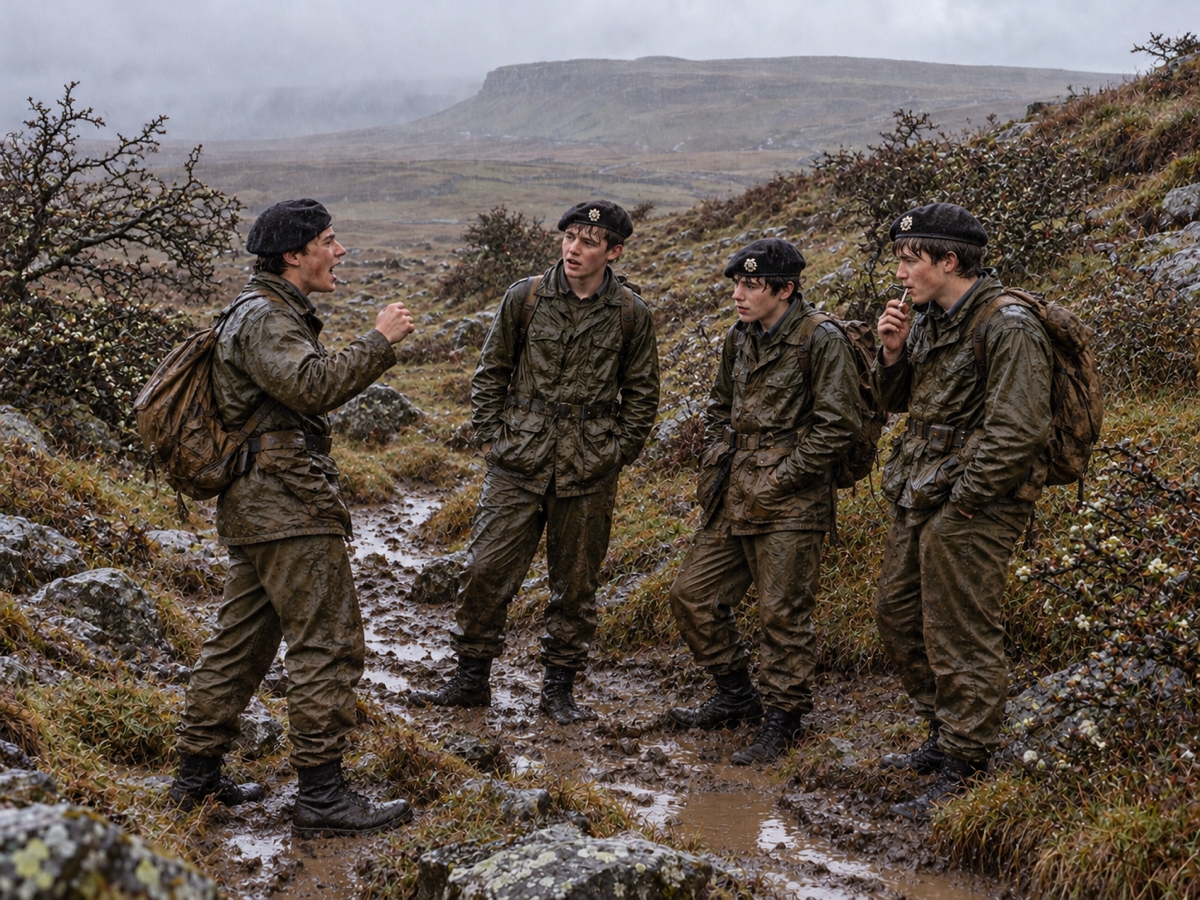
Term was ending, but Corps Camp lay ahead before home. I packed whatever I did not need overnight and whatever I did not want to take with me to camp. Looking back, I find myself wondering about the logistics. What happened to the trunks and tuck boxes? Did they travel separately? Were they sent ahead somehow? Or did I eventually entrust mine to my older brother, two years above me in the school?
I genuinely cannot remember.
Lunch brought something rather more pleasing.
A book token for winning the Geography Prize.
The announcement itself had been made earlier in the term, so there was no surprise. Geography was one of the few subjects where I felt completely at ease. Maps, landscapes, weather systems, rivers, mountains and people all seemed connected in ways that made sense to me. That said, I bought six science fiction books with it!: Foundation,
Foundation and Empire,
Second Foundation by Isaac Asimov Profiles of the Future and Expedition to Earth by Arthur C. Clarke…and David Seltzer’s The Omen.
I took Foundation with me on Corps Camp.
Looking at the list now, I can see the shape of my imagination at fourteen. The future, space, technology, destiny, civilisation, apocalypse. While school attempted to guide me towards approved culture, I was building an inner world from science fiction paperbacks.
The House Swimming Relays were held in the evening.
We came second.
Not quite victory, but not failure either. Just another result in a week increasingly dominated by endings, departures and thoughts of what came next.

Leave a Reply