Which author would you love to have dinner with?
Karl Ove Knausgård.

I’m currently reading My Struggle 2: A Man in Love, having already devoured My Struggle 1: A Death in the Family, My Struggle 3: Boyhood Island, and the one I started with, My Struggle 4: Dancing in the Dark.
I’d want to talk to him about memory: what survives, what changes, what we invent without realising it, and what happens when you have written evidence of the person you once were.
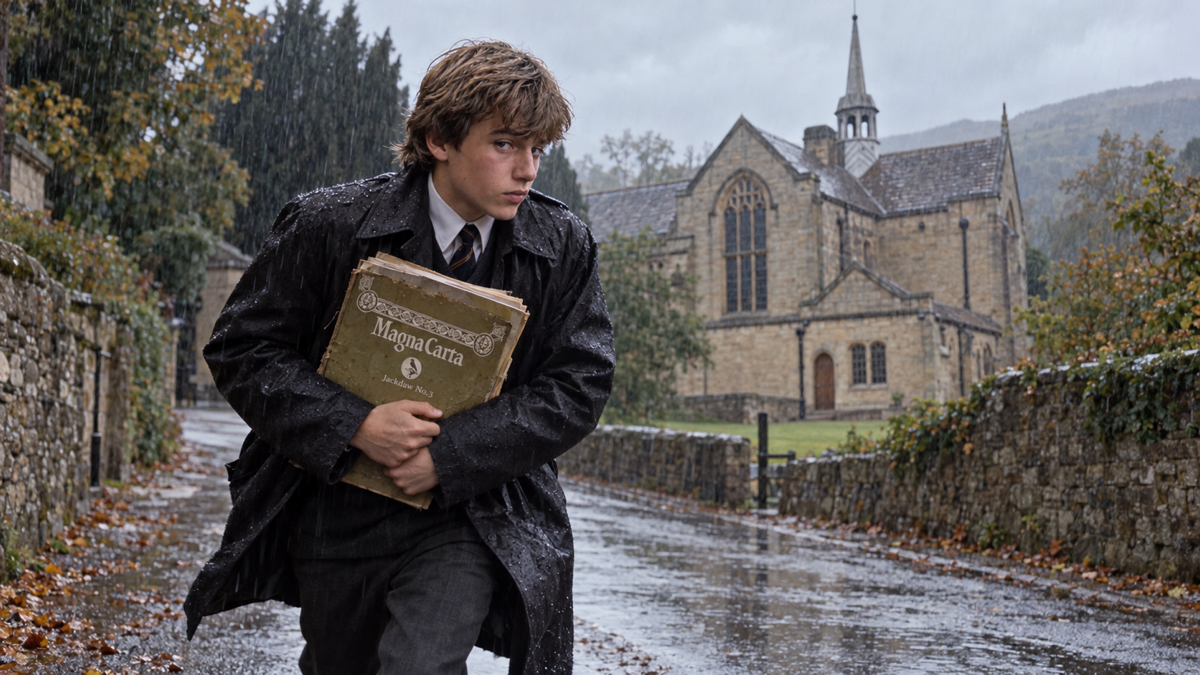
That’s where his work connects so strongly with what I’m doing. I’ve kept diaries across decades, along with letters, photographs, old blog entries and other fragments of a life. I’m now going back into the teenage diaries I wrote fifty years ago, not simply to reproduce what happened, but to excavate what was going on underneath those often brutally compressed entries: friendships, girlfriends, divorced parents, school, swimming, ambition, embarrassment, jealousy, sex, books, music, places, and all the things a fourteen- or sixteen-year-old regarded as enormously important without necessarily having the language to explain why.
Knausgård gives himself permission to stay with apparently insignificant things until they cease to be insignificant. A breakfast, a journey, a room, an awkward conversation, the way somebody looked at you — accumulated over hundreds of pages, these become a life. That fascinates me because my own diaries often give me only the peg: “went swimming”, “rang Julie-Anne”, “Dad called”, “read Second Foundation”. Fifty years later I can pull on the thread and discover that an entire afternoon, relationship or family tension is still attached to it.
I’d also want to ask him how he negotiates the uneasy boundary between candour and betrayal. Writing about yourself inevitably means writing about other people. Memory belongs to you, but the events seldom belong to you alone.
Mostly, though, I think I’d want dinner to run very late. I’d want to talk about whether a life can ever really be written — or whether all you can do is keep circling it, returning to the same people and places from different ages, gradually discovering that the story you thought you were telling was not quite the story at all.


Leave a Reply