
Friday, 17th September 1976
(Winder House, Sedbergh School. Age 14:11)
By September 1976 I was fourteen, two weeks short of fifteen, and back at Winder House, Sedbergh. I had been boarding since I was eight. My parents had been divorced for six years, the old family home at Orchard House was already part of another life, and school could feel remarkably sealed off from everything beyond it. Letters therefore mattered. They came from another world. We got post at Break.
Meanwhile, I tried to revise French before breakfast, but read instead.
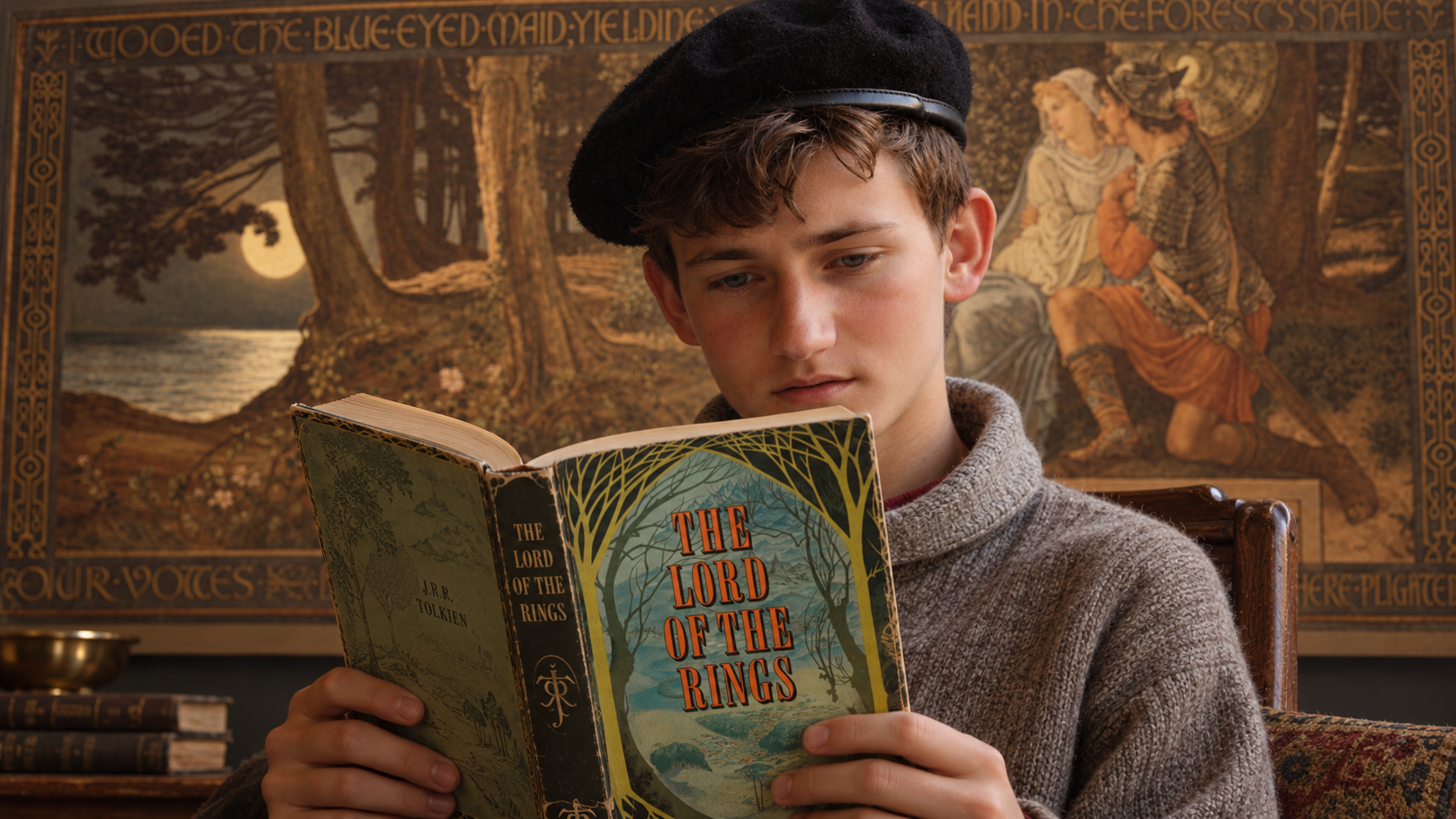
That was the trouble. My mind could turn off for one thing and on for another. I needed to feel enthusiasm for what I was doing, almost compulsively so. French didn’t provide it. Reading did. I was reading Albert Camus, La Peste, Arthur C. Clarke’s Expedition to Earth, and Erich von Däniken’s Chariots of the Gods. Any one of them had a better chance than French revision. I’d read a chapter of each in rotation.
I knew there was going to be a French test. I was really only filling the time before I hit the inevitable: a test I expected to do badly in. I was supposed to revise vocabulary, verbs, grammar, translation, all of it, but I didn’t really know how best to revise. How did I test myself on something I didn’t properly understand in the first place? It was as if I were colour-blind to French.
Something similar happened with Chemistry. If the basics were not in place, I simply got further and further behind. I needed one-to-one help to get back on top of it. Which was ironic, because as a boy I had loved Chemistry. My brother and I had chemistry sets for birthdays, Kits 1 through 7.
With History and Geography I would read around the subject and make connections. French needed time. Lots of it. Time to absorb it. My ardour for France itself never diminished. That was something else entirely: a kind of love affair, a desire, a drive.
Second Orchestra was cancelled, so I went to swimming training. Really, swimming was where I should have been all along. Second Orchestra was thankfully dropped; I’d have been obliged to do that. Every thing took precedence over swimming.
I didn’t enjoy it much, for Dickie and Langley were faster. I wasn’t living up to my potential, and swimming was a competitive world.
Langley had been a club swimmer until he came to Sedbergh at thirteen and was already about six foot three. Technical and physical training had given him an advantage. Dickie concentrated on butterfly and eventually came to dominate it. Another boy took backstroke. I could see the sense in that. I was a front-crawl swimmer: 50 metres or 800 metres and more, sprint or endurance.
Dickie and Langley were not the same kind of rival. One was somebody I thought I should beat; the other somebody I was trying to catch. Usually being beaten drove me to improve. At least I was part of the swimming team. But that day I simply didn’t enjoy it much.
French was no better. I did badly on the test. Properly badly. I knew it myself without Mr Poyet having to tell me.
Of course I understood the connection. I had read instead of revised and then done badly. But revision had seemed futile anyway.
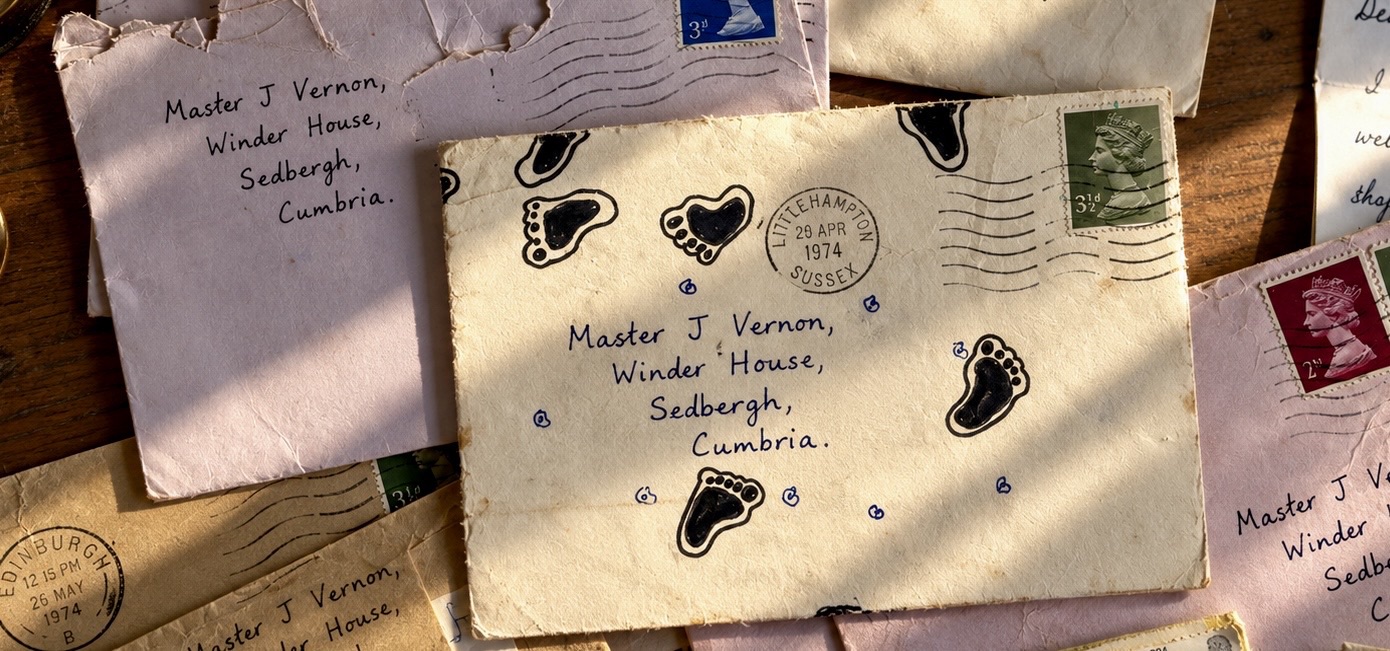
Then I got a letter from Sephy Weeks.
Everything else disappeared.
Miss Persephone Weeks, to give her full name, lived in West Sussex. We’d met in April 1974 on an IAPS school cruise aboard the SS Nevassa age 12. The whole story belongs properly with those prep-school years, but she had caught my eye among all the other girls on the trip as someone I thought I would get along with. At the end-of-holiday dance there had been country dancing, disco, Auld Lang Syne, fireworks over the deck, then a romantic cuddle and kiss.
My first kiss “with meaning”.
We had not seen one another since. We were pen pals. We signed off “love”.
Had Sephy lived in the north of England, perhaps things might have been different. She might have attended a girls’ school nearby. She might even, by some extraordinary chance, have ended up heading for somewhere like Casterton, the girls’ school near Kirkby Lonsdale. Serendipity might have intervened.
It didn’t.
Instead we wrote.
Her letter brought back many wonderful memories. More than anything, it brought back that feeling of falling in love.
Thinking of her trumped all other activity.
I carried the letter around with me and read it at my desk, on my bed, wherever I could. I could not do prep because of it. Somewhere outside Sedbergh somebody cared.
Sedbergh was sealed off from the world. The end of term was a long way off and the end of school further still. At boarding school you never went home. Home itself had become a cold nest, abandoned before we were properly fledged: Dad had gone, Mum had gone, the older children had gone away to school, and Orchard House had long since stopped functioning as the family home it had once been.
So a letter did more than bring news. It was contact with the outside world.
I could make another life out of it too. Perhaps Kathy’s family might somehow come north. Perhaps we might see one another again. They generally holidayed in the West Country, not the Lake District, but that hardly stopped me. As ever, I could live a fantasy existence perfectly well on very little evidence.
I did not want the other boys reading her letter. I did not want her judged, or me. A letter from a girl might have had social value among boys, but its real value was private.
Sephy’s letters mattered enough to preserve. I had been keeping letters since 1972 and hers since 1974. They went into bundles and boxes. I did not sit rereading them afterwards; many would remain unopened for decades.
But I kept them.
Archive. Preservation. Future history. A record.
Even then I had the idea that I might make something of myself and that all this might one day be valuable background material.
So after a morning of avoiding French, a swimming session in which Dickie and Langley were faster, and a French test I knew I had done badly, Sephy’s letter gave me something else entirely.
A little joy on an otherwise miserable day.
Someone out there cared

Leave a Reply