
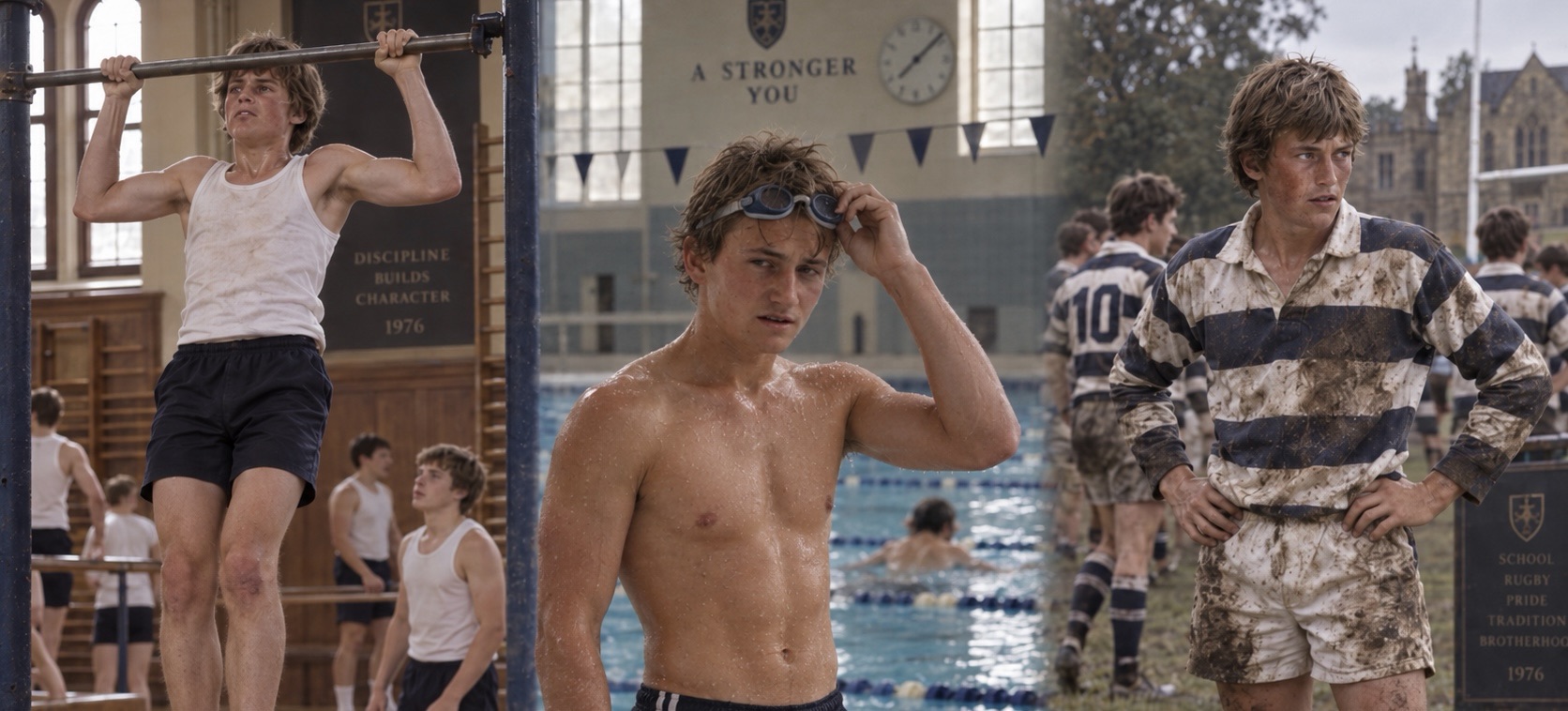
Earl Spencer’s description of the “mindless and often destructive” tradition of boarding school in his memoir of his sister, Diana: Swan Song describes much of what troubles me about the boarding-school tradition I endured. Not because everything about boarding school was bad, but because so much of what happened was done simply because “that was how it had always been done”: the cane, humiliation, bullying, obtuse rules, violence on the rugby pitch, in the gym tears, ambitions curtailed, interests trimmed or refused.
I went away to boarding school at eight.
For the next eight years, first at Mowden Hall and then at Sedbergh, other people decided where I lived, what I wore, when I ate, what I ate, when I slept, what games I played and, for much of the time, and what I was allowed to possess. And who my friends could be (male only). At Mowden we could not have guitars, radios, comics or even biros. Our hair was cut by an Ex-Army barber, “off the collar”, and those who couldn’t swim had to wear girls white knickers for swimming lessons. At Sedbergh the freedoms were greater, but the principle remained and we were as far away from civilisation we had might as well have been on an oil rig in the North Sea. Boarding was something chosen for me.
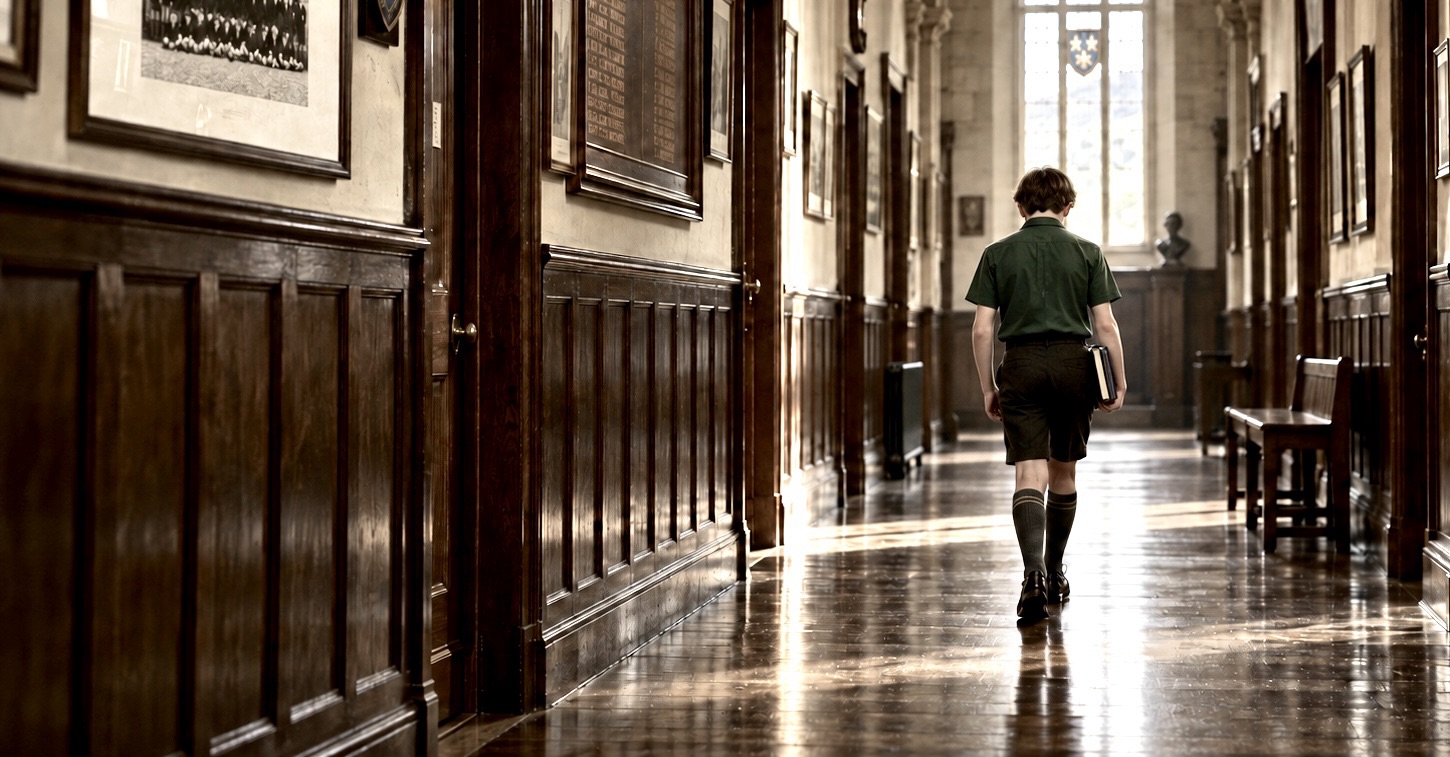
Boarding school was compulsory collectivity. Dormitories, communal meals, public lavatories, chapel, games, roll calls, duties, prefects, housemasters: there was remarkably little opportunity to be alone.
The whole system was hierarchical. When I first arrived at Sedbergh I was once again at the bottom. First years were still “fags”, expected to perform small jobs for senior boys. I had arrived after breaking my leg, wearing a brace and limping. I acquired nicknames — “Hoppety”, “Boots”, “Booties”. I had been a competent rugby player at prep school, eventually playing No. 8 and winning my colours, but injury kept me out of rugby during my first Sedbergh season. In a house where rugby mattered enormously, that removed one of the principal routes into belonging.
That was another feature of the tradition: boys were expected to adapt themselves to the institution, rather than the institution adapting itself to the boy.
The response to difficulty was generally endurance. You did not complain. You did not make a fuss. “Don’t be soft” was implicit in much of the culture. My father had a version of it too: don’t ask why — ask how high. Looking back through my diary, I am struck by how rarely we appear to have questioned things which now seem extraordinary.
Cruelty could consequently be disguised as humour or tradition. Beds were interfered with. Boys were humiliated. Fights could end with broken fingers or dislocations. There was bullying, but reporting it was hardly part of the culture. Boys were supposed to endure it, laugh at it or retaliate. Some ran away. Others simply waited until they could leave.
One episode has stayed with me precisely because of its absurdity. A boy’s bed in Winder House was hoisted about six feet into the air above the dormitory cubicles. Everyone knew what had happened. A housemaster was patrolling. Yet the boys maintained the conspiracy of silence. It was funny, certainly. It was also a perfect little demonstration of the boarding-school world: hierarchy, ingenuity, cruelty, loyalty and fear of authority all operating simultaneously.
Punishment itself was often ritualised. At prep school there were canings and the familiar posture of the boy standing facing a wall with his head bowed. Nobody had to explain why humiliation should be educational. It simply belonged to the tradition. Bad exam results: the cane; throwing a ball on the school drive: the cane; running away because you hated the place: the cane.
Even pleasure could become institutionalised. Sport provided some of my happiest memories. Winning for Winder House mattered. When our swim relay team won and the whole House roared its approval, I felt for a moment that I belonged completely. Theatre, drawing, friendships, swimming, expeditions into the fells and the sheer intensity of living alongside the same people produced experiences I would not willingly erase.
That is why I resist the easy conclusion that boarding school was simply dreadful.
It could even resemble a kind of Shangri-La: beautiful surroundings, excellent facilities, extraordinary opportunities and friendships forged through living together. Sedbergh, sitting beneath the Howgills, could be magnificent.
But it could also feel like an oil rig, an island, Alcatraz, a boot camp or, as I have repeatedly called it, a posh prison.
The contradictions belonged together.
A boy could be privileged and emotionally neglected at the same time.
He could receive a marvellous education while having remarkably little control over his own life.
He could make lifelong friends while desperately wanting to go home.
He could laugh at a prank that, viewed differently, was bullying.
He could become resilient because he had been placed in circumstances in which resilience was required.
And the most destructive part may have been precisely this habit of treating resilience as proof that the system worked.
Birthdays illustrate it for me. A birthday at boarding school was simply another institutional day: lessons, revision, chapel, house routines, perhaps some post, perhaps some sweets. Home existed somewhere else. I have called boarding school a “posh boy prison” partly in jest, but the phrase contains something serious. You lived in a strange bed, with strangers, because adults had decided it was good for you.
By my last days at Sedbergh the authority of the place was already evaporating. I went onto roofs where we were not supposed to go. A reprimand about cowboy boots hardly mattered because I was leaving. Packing my trunks felt less like an emotional farewell than liberation.
When I finally left after my last O-Level, I hitch-hiked towards Newcastle. That journey has remained vivid because the simple act of travelling alone felt like freedom. I was heading home.
Leaving boarding school meant recovering evenings, weekends and half-terms. It meant being able to form relationships in the ordinary world rather than trying to conduct them through letters and occasional exeats from a school hidden among the fells. It meant no longer being permanently supervised and permanently surrounded.
Yet fifty years later I can see what the schools gave me as well as what they took away. They helped make me independent or a loner.
What I question is the assumption that those benefits required the rest of it.
Why did independence require separation from home?
Why did resilience require humiliation?
Why did loyalty require silence?
Why did belonging depend upon conformity?
Why were fear, loneliness and homesickness so often treated as weaknesses to be overcome rather than messages worth listening to?
That, for me, is where the word mindless becomes important. Much of the damage was not necessarily inflicted by malicious people (though some teachers were). It arose from an institution reproducing itself. Masters had been through similar systems. Parents often believed in them. Older boys repeated what older boys had once done to them. Traditions acquired authority simply through age.
Nobody needed to decide deliberately that a thirteen-year-old should learn emotional suppression. The system taught it anyway.
Nobody had to devise a programme for making boys accept arbitrary authority. Daily life accomplished it.
Nobody consciously set out to confuse cruelty with humour, repression with resilience or institutional obedience with character.
Tradition did much of the work.
Perhaps that is the most powerful argument against the old boarding-school model. Its destructiveness was often casual. Ordinary. Unexamined.
We did what we were told.
And for a remarkably long time, almost nobody asked why.

Leave a Reply