
Thursday, 14th October 1976
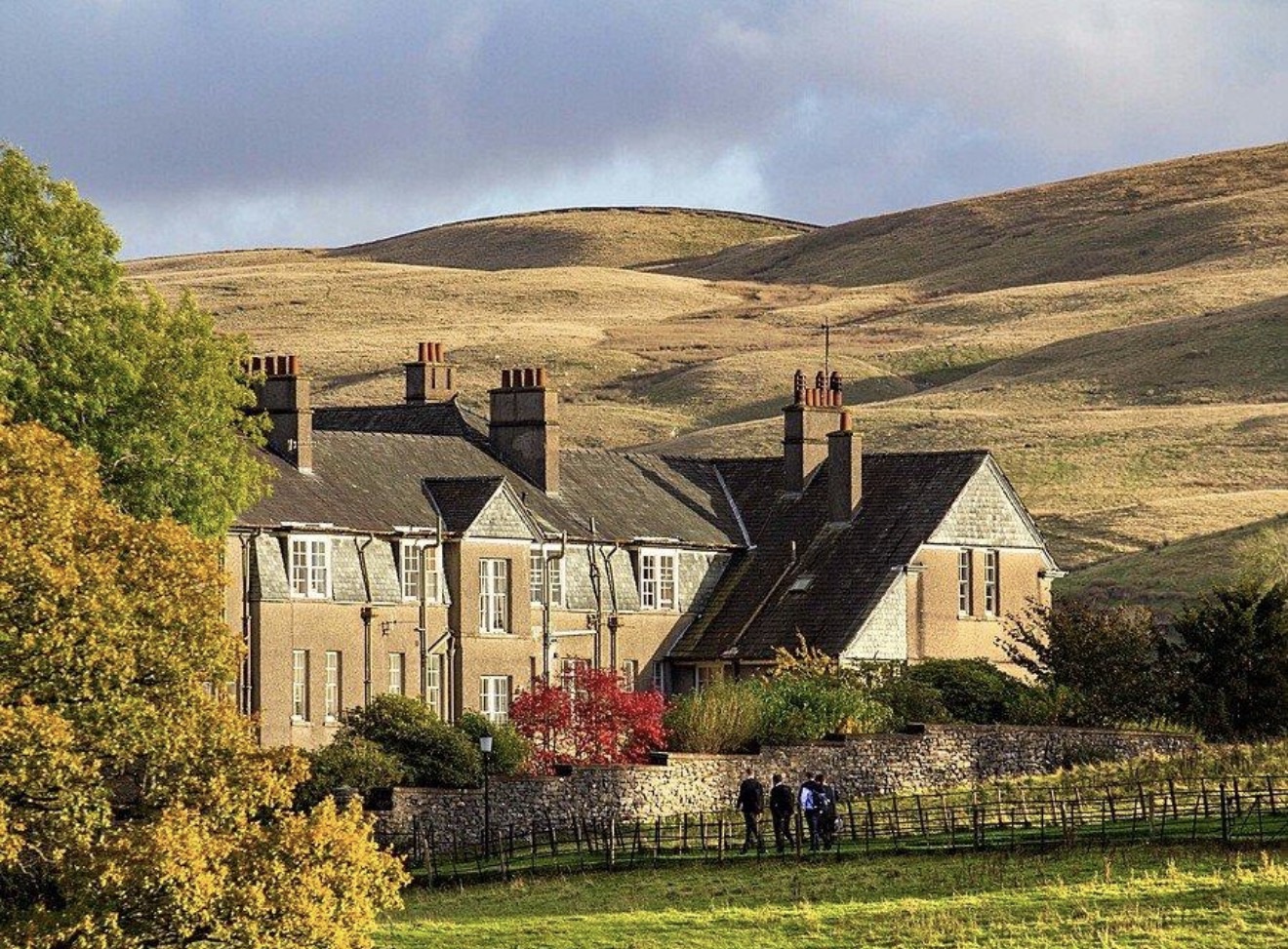
Winder House, Sedbergh School — age 15
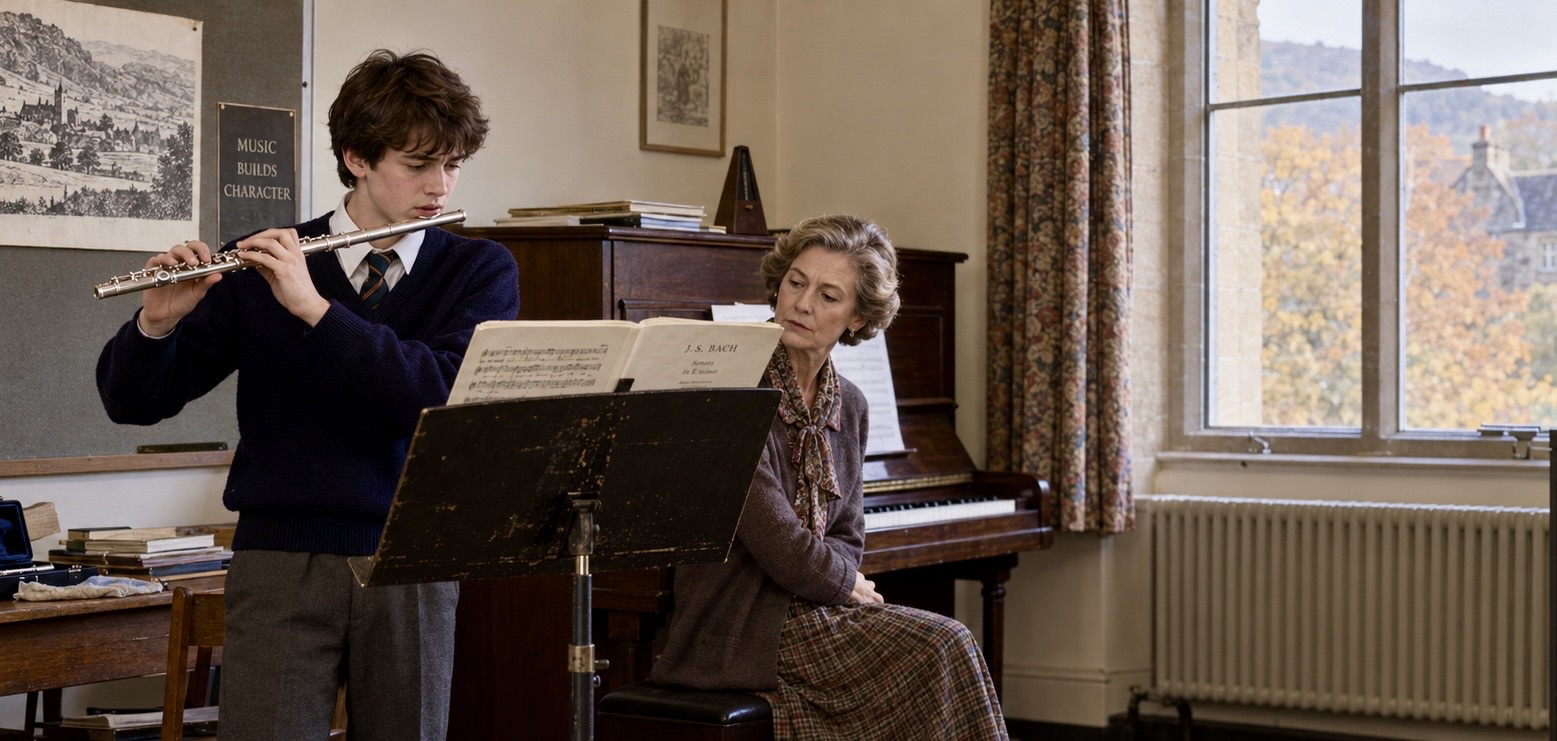
Music was embarrassing. I had a one-to-one flute lesson with Mrs Hawthorn, the retired Headmaster’s wife, and my mouth hurt when I played because of my orthodontic brace. The inside of my lip was rubbing against it and my gums had not yet got used to it.
My enthusiasm for the flute had faded anyway. I had started playing at Mowden because I had been told to. They had apparently wanted another double scholar — academic and music — though nobody had told me that at the time. Now the brace seemed to offer the possibility that perhaps I could get out of playing altogether.
Instead I muddled through.
And did very well.
Mrs Hawthorn told me to enter the senior individual competition.
This was alarming. It was an all-comers competition, which meant I could be playing against music scholars in the Sixth Form. I would have to play a solo piece on my own. Yet the idea grew on me, probably once I had the piece I was going to play. Suddenly there was a point to practising. I had gone into the lesson wondering whether the brace might get me out of the flute and came out committed to playing a solo competition at the end of term.
French: we went through a story selected from Paris Match. It was material on Serge Gainsbourg, whom we all knew as Jane Birkin’s boyfriend. They had re-recorded Je t’aime… moi non plus in 1969, and its explicit groans were very familiar around the studies at Sedbergh. So this was French from somewhere quite different from the ordinary school textbook.
English: I enjoyed after the discussion. We were well into Richard III by then and knew the characters. Earlier in the term we had taken turns reading it and I had played Buckingham and, elsewhere in the work on the play, Richmond. Shakespeare interested me enough for the lesson to become a discussion rather than something I merely sat through. I took an interest and asked questions, which was probably why I wrote that I had enjoyed it.
Geography: The new Geography teacher had no control and we exploited it. A few boys tended to start things and everybody else was pulled in. At one point his chair had even been attached to his desk with bungee-type cord. Geography was one of the subjects I was good at and wanted to do, but refusing to join in the tomfoolery could make you a target yourself. So we mucked around at the beginning until eventually even we got bored. I then settled down, focused and nearly finished the work.
Cadet Parade: it went on until 4.30 p.m. Cadets were compulsory, so everything else had to wait.
This was drill: square bashing in polished Corps boots until we got it right and looked as though we wanted to get it right. Our long hair had to be tucked under our berets. Fooling around might be tried at first, but it was not tolerated. Eventually even the stupidest and most stubborn boys toed the line because there was no alternative. If we didn’t get it right, we could have been there into the evening.
Swimming: I swam 3,000 metres.
The swim washed away the tedium of square bashing. I had always been a serious swimmer, so 3,000 metres was not some extraordinary achievement deserving explanation in the Diary; it was training. Cadets had simply displaced everything until later in the afternoon. I’m sure that after an afternoon of drill followed by 3,000 metres I slept better.
I still managed to finish my preps. Prep was homework by another name, but it was also a fixed period in the day, roughly 7.30 until 8.15 or 8.30, whatever else had happened beforehand. I worked at my desk in the Middle Common Room. After prep the general chaos of common-room life made serious work much harder.
I didn’t do Geography or French revision because I didn’t think I needed to. It was no more than a calculation that they could wait.
After lights out I read Patrick Moore’s The Amateur Astronomer by torch. I had bought the book with birthday or holiday money and had already been reading it secretly after lights out. Astronomy interested me, though I was more interested in science fiction than in the emptiness of space itself. Patrick Moore could take me through constellations, planets, stars and galaxies, but what caught me was where all that could lead: other worlds, other possibilities.
Reading under the bedclothes or by torch after lights out was part of the pattern, even though it contributed to the equally familiar problem of getting up in the morning.
But the day had really turned on the flute lesson. I had thought the orthodontic brace might finally give me a reason to stop. Instead Mrs Hawthorn had put me into an all-comers solo competition against boys who might be music scholars in the Sixth Form.
I now had a reason to practise.

Leave a Reply