What’s the best online course you’ve ever taken?

From the Open University to Lingvist: Learning That Lasts
This is a surprisingly difficult question for someone who has spent much of his professional life designing, creating, delivering and evaluating distance and online learning.
I have an MA in Open and Distance Education (MA ODE) from the Open University, alongside other postgraduate qualifications in education. I’ve also completed numerous online courses through the OU, Coursera, FutureLearn and OpenLearn. I’ve studied everything from learning theory and educational technology to photography, history, neuroscience and creative writing. Clients have included, through production companies and agencies: The Crown Prosecution Service, Land Rover, Ragdoll Productions, the Department of Health, NatWest Bank, the Post Office, Yorkshire Water, and M&S.
I am an enthusiastic lifelong learner, but I’m also a demanding student. It pays dividends to do a real course, for credits towards a degree or genuine certification.
Any course I take, whether blended or entirely online, comes under scrutiny. I can’t help it. I’m constantly evaluating the learning design. Are the objectives clear? Is the content engaging? Are the activities meaningful? Is there sufficient opportunity to practise, reflect, receive feedback and demonstrate understanding?
Rarely are all the elements up to scratch.
Does online learning work? Absolutely. But putting content online isn’t the same as designing learning.
A successful course needs to be structured around how different people learn. It must engage the learner, build upon existing knowledge, provide opportunities for active participation and offer appropriate, timely, meaningful and individual support. Motivation matters enormously. Good learning design should help develop and sustain that motivation rather than simply assume it exists.
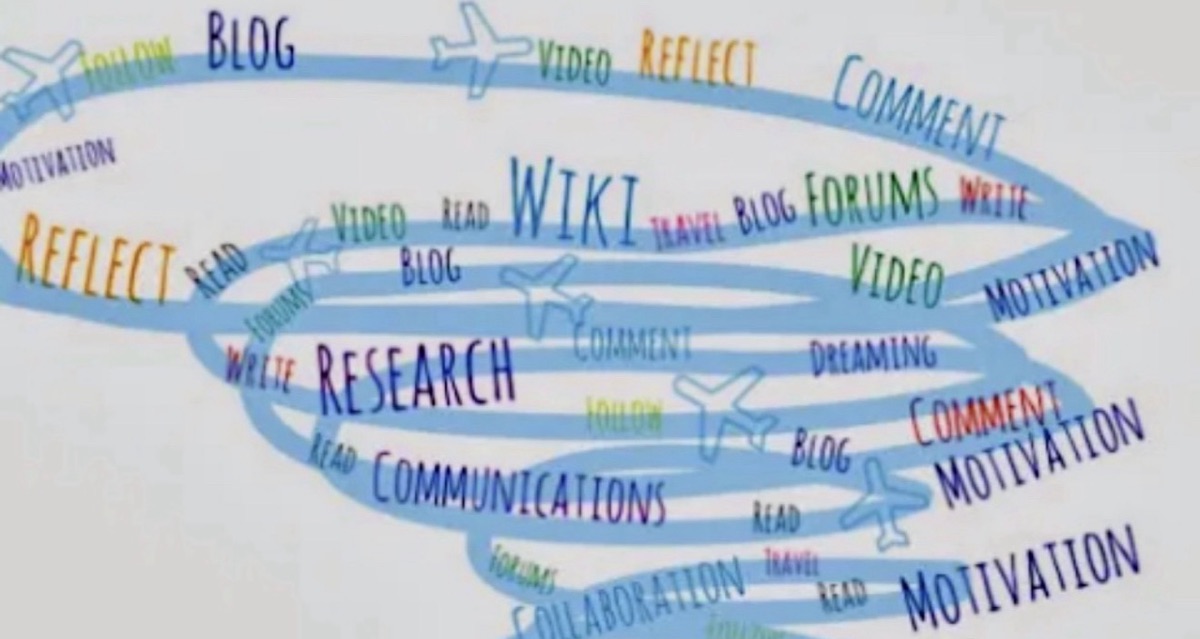
When I was studying for my MA at the Open University, we were encouraged to keep a student blog. Naturally, I embraced the idea. I documented my learning, questioned the theories, evaluated the technologies and reflected on my experiences.
I continued blogging through subsequent courses and have never really stopped.
Yesterday, I completed the export of more than 3,000 posts from that period of my academic and professional life. They form an extraordinary personal archive of learning online. My intention is to work through them systematically, revisiting the courses, ideas, technologies and experiences that shaped my understanding of how we learn.
I suspect I’ll discover that some of the most effective learning experiences were not necessarily those offered by the most prestigious institutions.
Which brings me to another question.
Do apps count as online courses?
If they do, I’d nominate Lingvist.
I used Lingvist to improve my French vocabulary over approximately three years. I began with a working vocabulary of a few hundred words. By the end, that had grown to several thousand. Finally my reading and spoken French was starting to look and sound fluent!
The secret wasn’t glamorous. It was regular practice, repetition, retrieval, immediate feedback and a system that adapted to my progress. Earlier studies had identity ‘spaced learning’ and repetition as vital.
In other words, the application of established principles from cognitive science to a clearly defined learning objective.
Lingvist worked because I kept returning, and the system gave me good reasons to do so. I could see my progress. I was challenged without being overwhelmed. Words I struggled with reappeared until I could retrieve them reliably.
Of course, acquiring vocabulary isn’t the same as becoming fluent in French. But it is an essential component of language learning, and the improvement was substantial.
Perhaps that is my answer.
The best online course isn’t necessarily the one with the most impressive content, charismatic tutor, sophisticated platform or prestigious certificate. It’s the one that changes what you know, what you understand and what you can do — and makes that learning last.
By that measure, Lingvist has a strong claim.
I have another 3,000 blog posts to examine before I make my final judgement! I downloaded the final pages only yesterday.



Leave a Reply