If you could go back in time and give your younger self advice, what would it be?
Find someone to confide in. Find a mentor. Someone who understands who you are, rather than who you are expected to become.
Looking back through my teenage diaries, I see a boy with an extraordinary range of interests, plenty of energy, considerable ambition and remarkably little idea of how these might translate into a working life.
My father took a liberal, largely hands-off approach to my education and personal choices. I had considerable freedom, but freedom without guidance can leave you making decisions without knowing what the alternatives are. My mother was more involved, particularly in encouraging my artistic interests, but I could have shared more of the burden of those decisions with her.
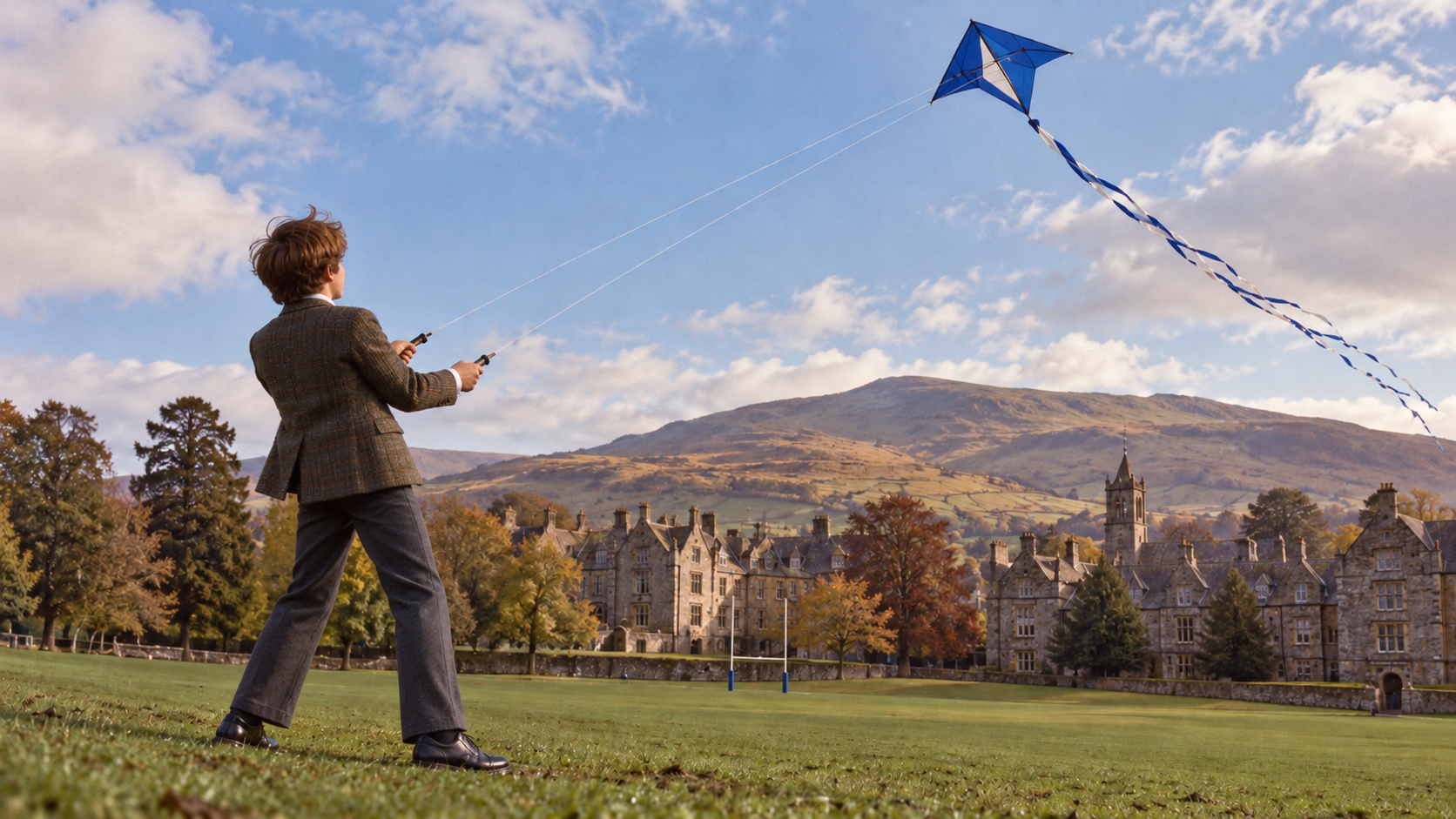
At sixteen, I was increasingly unhappy at Sedbergh, a boys’ boarding school in Yorkshire. I wanted something different: a coeducational sixth form, perhaps the International Baccalaureate, somewhere that recognised interests beyond rugby and the conventional academic curriculum. My diaries record my enthusiasm for St Clare’s in Oxford, my frustration with the school’s restrictions and my determination to leave.
I eventually transferred to the Royal Grammar School in Newcastle. It transformed my prospects.
In October 1978, aged seventeen, I abandoned A-level Economics, which I had taken partly to please my father, and switched to History, seven weeks behind everyone else. My early marks were Cs and Ds. I worked furiously, sought advice from teachers, rewrote essays and gradually turned those results into As and Bs. Meanwhile, I was studying Art largely at home, with my newly qualified art-teacher mother providing much of the teaching.
Two years later, I had an offer from Balliol College, Oxford, to read Modern History.
So what was missing?
Not ambition. Not intelligence. Not determination. What I lacked was someone who could help me make sense of the whole person.
I was a swimmer, musician, actor, artist, writer and historian. I loved photography, theatre and making things. I was curious about almost everything. Yet the educational conveyor belt was carrying me towards a fairly predictable destination: a good degree followed by a respectable graduate career in London.
And I went along with it.
Oxford was a tremendous achievement, and I wouldn’t dismiss the experience or the opportunities it gave me. But by graduation I was already struggling with the prospect of spending my working life in an office, doing something that might be financially rewarding but intellectually and creatively stifling.
My diaries contain the clues. At Oxford, I threw myself into theatre alongside academic work, sometimes to the point of exhaustion. I was never going to be happy doing one thing, in one place, for forty years.
What might a mentor have suggested?
Art school, perhaps. St Martin’s would have suited me. Film school? Theatre? Photography? Writing? Or simply finding a way into television and film production without first attempting to become somebody’s idea of a successful graduate trainee.
Eventually, I found my way into freelance work, producing and directing, writing and creating. Over the decades I’ve reinvented myself repeatedly, working in communications, education, digital media, coaching and history. I’ve accumulated qualifications, developed new skills and followed interests wherever they have taken me.
I learned that I didn’t need a conventional career. I needed a portfolio of activities that would allow me to earn a living while continuing to learn, create and explore.
How much better it would have been to understand that at twenty-two, rather than stumbling into corporate positions that were never a good fit.
The advice I would give my younger self isn’t to abandon Oxford, ignore his parents or pursue some romantic notion of being an artist.
It’s to talk to people. Find someone who has made an unconventional life work. Ask questions. Seek out adults who see possibilities where others see risks. Be willing to disappoint those who have already imagined your future for you.
And perhaps, most importantly, recognise that being interested in everything isn’t necessarily a weakness. It might be your greatest strength.
You don’t have to choose one thing to become. You have to find a way of living that allows you to be yourself.
Leave a Reply