Do you set personal goals for yourself?

Yes, absolutely. Though there is a caveat. I respond particularly well to novelty, spontaneity and a challenge. Give me something new to learn, a problem to solve, a project to get my teeth into, or a deadline that really matters, and I’m away. Give me a vague ambition without a clear purpose or endpoint, and I may struggle to sustain my enthusiasm.
Looking back through my teenage diaries from the 1970s, I recognise this pattern immediately. I was forever setting myself goals, whether improving my swimming times, getting better at rugby, preparing for examinations, learning a piece of music, completing a painting or finding a way out of a school environment that I increasingly found restrictive. Some goals were carefully considered; others were driven by impatience, curiosity or sheer frustration with being bored.
At sixteen, I was investigating alternative schools and sixth-form colleges because I wanted a different kind of education. At seventeen, I was working towards A-levels and the possibility of Oxford. The ultimate goal of getting into Balliol College gave purpose to the examinations and academic work along the way. Passing an exam matters not simply because it measures achievement, but because it can open a door.
I’ve always believed that goals work best when they are SMART: Specific, Measurable, Achievable, Relevant and Time-bound. A goal needs enough structure to turn good intentions into action, with milestones along the way that let you recognise progress.
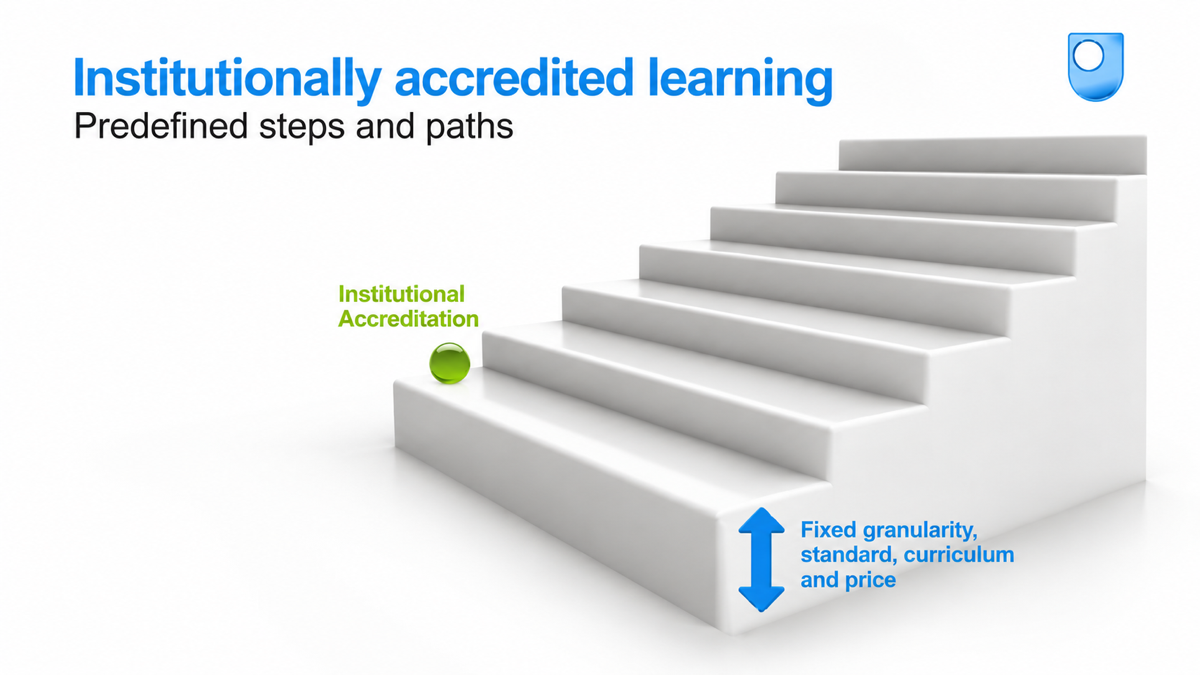
This is one reason I particularly enjoy formal education. I’ve completed several degrees, including postgraduate study with the Open University, and I relish the discipline and scaffolding that a properly designed course provides. The OU is exceptionally good at getting you over the line. There are study materials, activities, tutorials, assignments, feedback, deadlines and examinations. You know what you are working towards, what is expected of you and when it must be completed. Each assignment is another step towards the qualification.
I find that combination of intellectual freedom and external structure enormously satisfying. I can follow my curiosity, explore ideas and make connections, but there is also someone expecting me to deliver something by a particular date!
Theatre taught me something similar. I loved being involved in productions because nothing is allowed to get in the way of the first night. Whatever difficulties arise, the curtain must go up. There is no possibility of indefinitely postponing a performance because somebody hasn’t quite finished learning their lines or painting the scenery. Everyone has a shared goal, and that deadline concentrates minds wonderfully.
The same applies to writing, filmmaking and publishing. A production has a release date; a publication has a deadline. As an artist, I have an annual exhibition to prepare for. Paintings that might otherwise remain unfinished must be completed, framed and ready to hang. Deadlines provide both discipline and a satisfying sense of occasion.
Even my current project of recovering, rewriting and publishing my teenage diaries is structured around a rather unusual goal: revisiting the entries approximately fifty years after the events they describe. The dates impose a rhythm and a discipline. What could have remained an enormous, rather overwhelming archive becomes a succession of manageable daily challenges. Each completed entry is a small achievement contributing to something much larger.
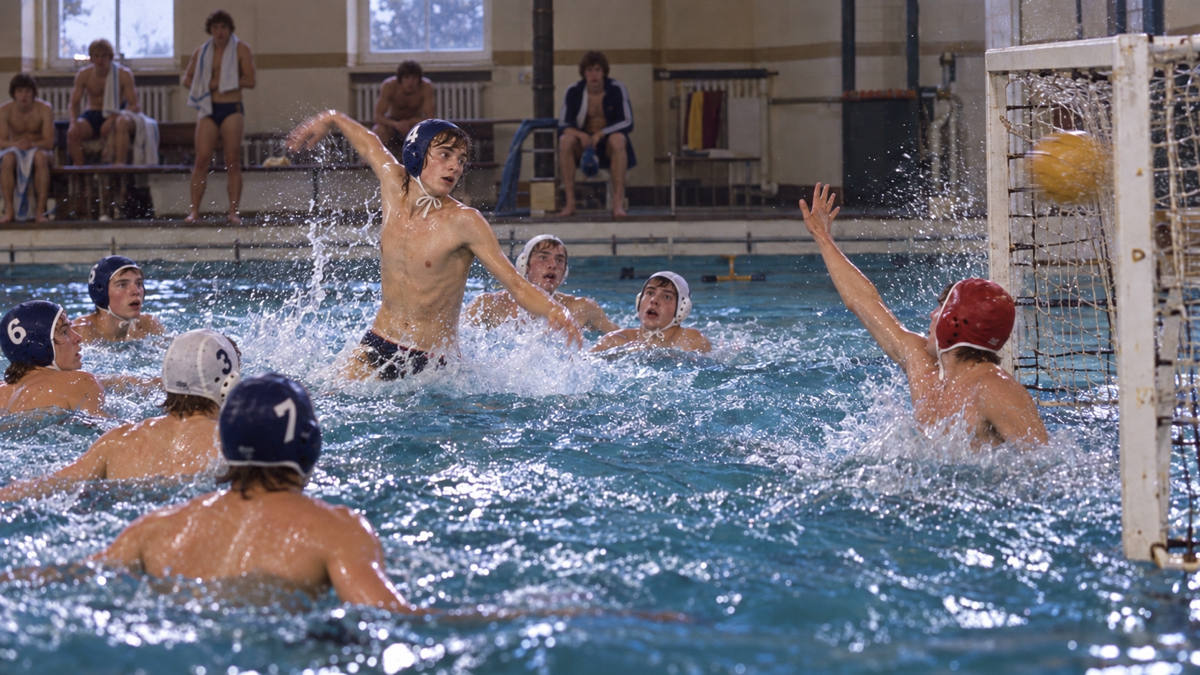
Swimming offers another excellent example. As a teenager, I pursued personal bests; as a swimming coach today, I help young people set and achieve their own targets. There is enormous satisfaction in seeing a swimmer improve their technique, master a difficult skill or knock a second off a personal best. But I also know that progress is rarely linear. Sometimes the goal needs adjusting, sometimes the swimmer needs encouragement, and sometimes the greatest achievement is simply turning up consistently and putting in the work.
Not all goals need to be academic, professional or competitive, of course.
As a young man, I had a rather specific vision of my future. I wanted to be happily married, have children, own a Labrador and drive a Renault Espace.
Well, the car turned out to be a Mazda and the dog a Labradoodle, but otherwise that worked out rather well!
Perhaps that illustrates something important about goals. You need to know what matters to you without becoming so attached to the precise details that you fail to recognise success when it arrives in a slightly different form.
I’ve also learned that goals you set yourself can be far more powerful than those imposed on you. Intrinsic motivation matters. When you genuinely want to achieve something, rather than simply meeting somebody else’s expectations, the work itself can become rewarding.
That’s when you experience what psychologists call flow: becoming so absorbed in an activity that time seems to disappear. I experience this when writing, painting, learning, swimming, skiing or becoming engrossed in a project. The challenge is sufficiently demanding to hold my attention but not so overwhelming that I give up.
And there is another ingredient: consistency. Enthusiasm may get you started, but it doesn’t necessarily get you to the finish line. You have to establish habits, break ambitious goals into manageable tasks and keep going when the novelty has worn off.
I also believe in rewarding yourself. Celebrate the small achievements as well as the big ones. Completing an assignment, finishing a painting, hitting a swimming target or meeting a publishing deadline deserves recognition. That positive reinforcement makes you more likely to keep going.
At the same time, I’ve come to appreciate that spontaneity isn’t the enemy of goal-setting. Some of the most interesting things I’ve done have emerged from following an unexpected opportunity rather than executing a carefully constructed plan. A goal should provide direction, not become a straitjacket.
So yes, I set personal goals. Lots of them. Some are ambitious, some modest, some carefully planned and others almost accidental.
But perhaps the most important thing I’ve learned is that a goal gives me somewhere to go, while curiosity gives me a reason to make the journey.
And if there’s a worthwhile challenge, a bit of novelty, a deadline and the prospect of learning something new along the way, so much the better.


Leave a Reply