
The phrase “young masters” in my diary is not a modern affectation or a piece of teenage irony. It was part of the language of the world in which I grew up.
At prep school and later at boarding school, boys were still formally addressed as Master and by their surname. Letters arriving at school might be addressed to Master Jonathan … and, as boys grew older, formal correspondence might switch to Jonathan … Esq. The transition marked a passage from boyhood towards adulthood, though few of us gave much thought to its medieval origins.
Historically, Master was the proper title for a boy who had not yet reached adulthood. It was the equivalent of Miss for an unmarried girl. Esquire (Esq.) had older and more complex origins. In medieval England an esquire ranked below a knight but above an ordinary gentleman. By the twentieth century it had become a formal courtesy title used in correspondence for men who held no higher title. While most people today simply use Mr, the distinction between Master and Esquire was still familiar in many professional, military, public-school and landed circles during the 1960s and 1970s.
Some boys occupied an even more elevated place in this hierarchy. Among the sons of the aristocracy and landed gentry, titles and courtesy titles were woven into everyday life. A future duke, earl, viscount or baron might arrive at school carrying a title of his own, or be known by a courtesy title derived from his father’s peerage.
What intrigues me now is not so much the titles themselves as the importance attached to them by our mothers.
My own mother came from humble origins but attended a prestigious girls’ school where such conventions were taught as part of a wider social education. Correct forms of address, letter writing, introductions and etiquette were regarded as marks of good upbringing and social competence. Knowing when to use Master, Mr, Esq., The Reverend or Major was part of being educated.
A daughter of one of Northumberland’s aristocratic families might grew up in a world where these distinctions were not learned so much as inherited. She may have spent her early years with a nanny and then a governess before being sent to one of the country’s most exclusive girls’ boarding schools. In such circles, titles, forms of address and social conventions were part of the furniture of daily life.
They were a language that allowed people from very different backgrounds to navigate the same world. Everyone knew their ‘station’.
Private schools reinforced this constantly.
From the age of eight, every Sunday after Chapel, we sat down for supervised letter writing. This was not an occasional exercise. It happened every week. We learned how to lay out a letter, address an envelope, begin a formal correspondence and sign off correctly. Over eight years a boy might write hundreds of letters.
The same institutions that regulated hair length, collar height, shoe polishing and uniform also taught correspondence. Looking back, these were not separate concerns. The haircut, the polished shoes, the hymn book and the addressed envelope all belonged to the same educational philosophy. Schools were not simply teaching Maths, Latin and Divinity They were teaching boys how to present themselves, how to behave, how to write and how to understand their place within a hierarchy.
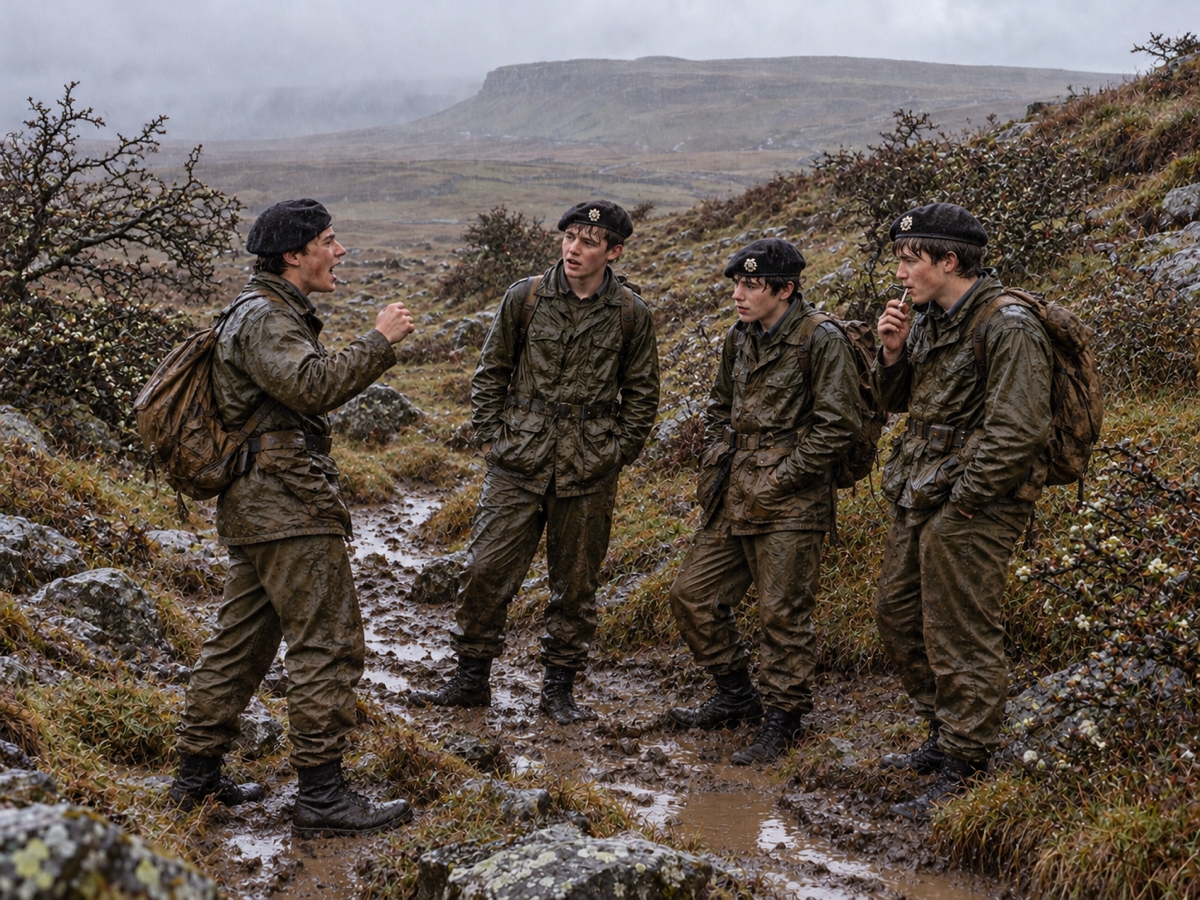
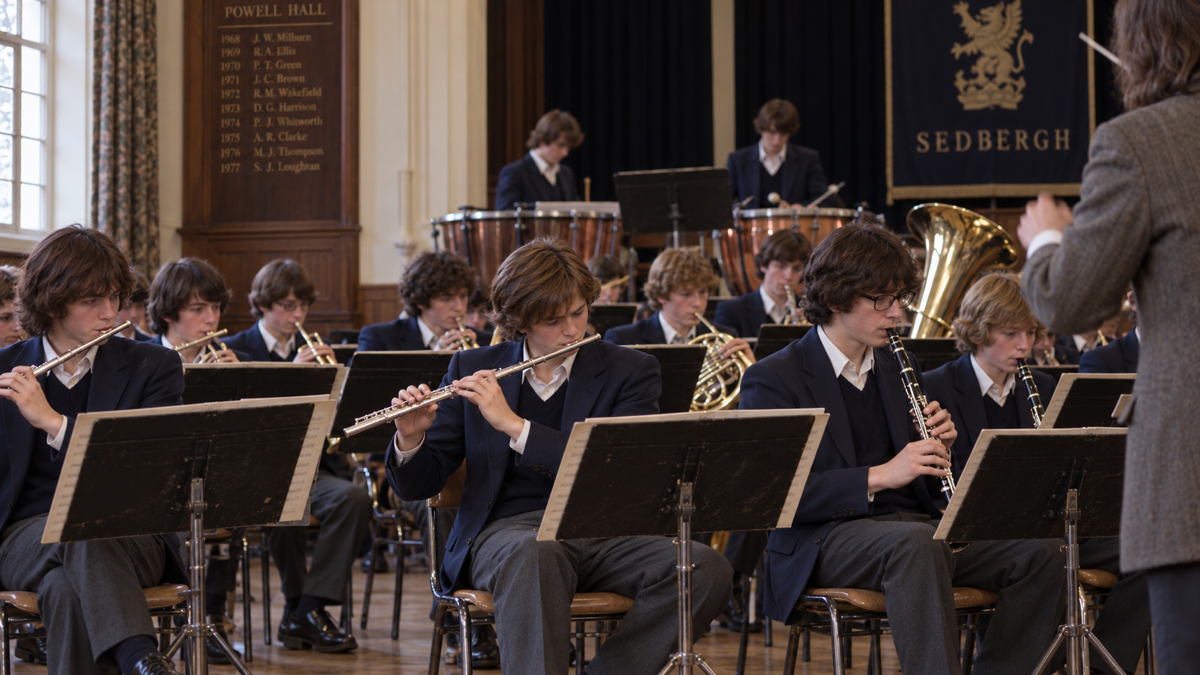
Schools like Mowden and Sedbergh were engaged in producing a recognisable type of young man. Appearance, manners, correspondence, confidence and conduct all formed part of that process.
Whether one regards that as education, social conditioning or class consciousness probably depends on where one stood in the hierarchy. For a boy growing up within it, however, it was simply the way things were. We learned the rules long before we understood what they meant. And by the time we began asking questions about them, they had already become part of us. You then have to decide whether to conform or rebel.


Leave a Reply