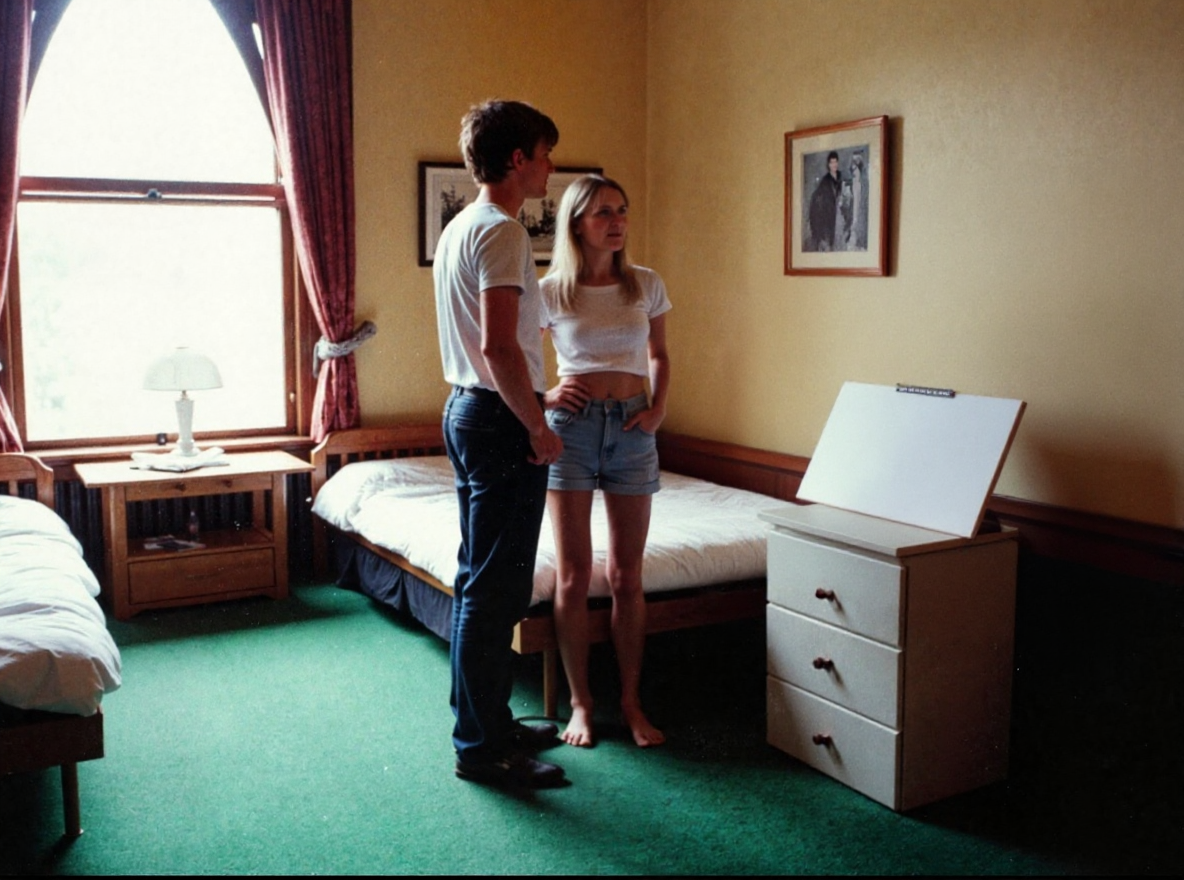
I used to go to life drawing classes.
Still do sometimes. Every first Tuesday of the month, Charleston Farmhouse—Sussex countryside, a platform in front of a large barn window, and a model politely and professionally undressing in a room full of strangers with easels, sheets of paper and a variety of drawing implements and approaches to execution, from tortured to stuck in their rut, to the random and the deluded. I’m tethered to the end of this spectrum, trained by an art teacher mother. Life drawing like this is not erotic. It’s more akin to theatre dissection, the host standing beside a living body and providing direction to the model and guidance to the artists, rather than attacking her (the model is more often female than male) with a dissecting knife and pulling out her organs or entrails to show us. It’s stage-managed, not a public space, but occupied by a group of strangers. Generally, all are long retired, which explains their presence on a weekday and mine no longer (for now).
Which brings me to Lucinda.
We met at a flat-warming party for recent Oxford graduates in Lewisham in 1984 – they were all going into accountancy, whereas I was not. She was someone’s girlfriend—someone I vaguely knew from Oxford. They had looked a good match at the time, fully bonded and playfully intimate like they shared their lives and might do so forever, as I did with a girlfriend back then. But in London, that pairing had expired. Lucinda made it very quickly clear that she was now on her own. And looking for something else. And possibly someone else. I was soon aware that I was in the lineup.
She had been in secretarial training at Oxford —God knows who had pushed her into that—and now she hoped to quit that and do an art foundation in Kent. I was proud of her, not least because I’d avoided all the secretarial girls in favour of Oxbridge undergraduates and was forever longing for an artistic career myself.
We ended up talking about drawing. She had a portfolio she’d brought over, expecting to show me, knowing that I was ‘arty’, drew and painted, and was now in advertising (not that this had me anywhere near a drawing board). Her portfolio was full of imagined figures and things copied from books—a house perhaps, a tree, a horse, a pony. I flipped through it, trying to be generous. I told her she needed to draw from life. I asked her what interested her, and she said people and life drawing. She had a picture of a male member she dared to show me. As my art teacher mother would have done, I asked if it had been drawn from life, copied from a magazine, or made up. She’d made it up.
I said she needed to draw from life—an observational drawing of something in front of her.
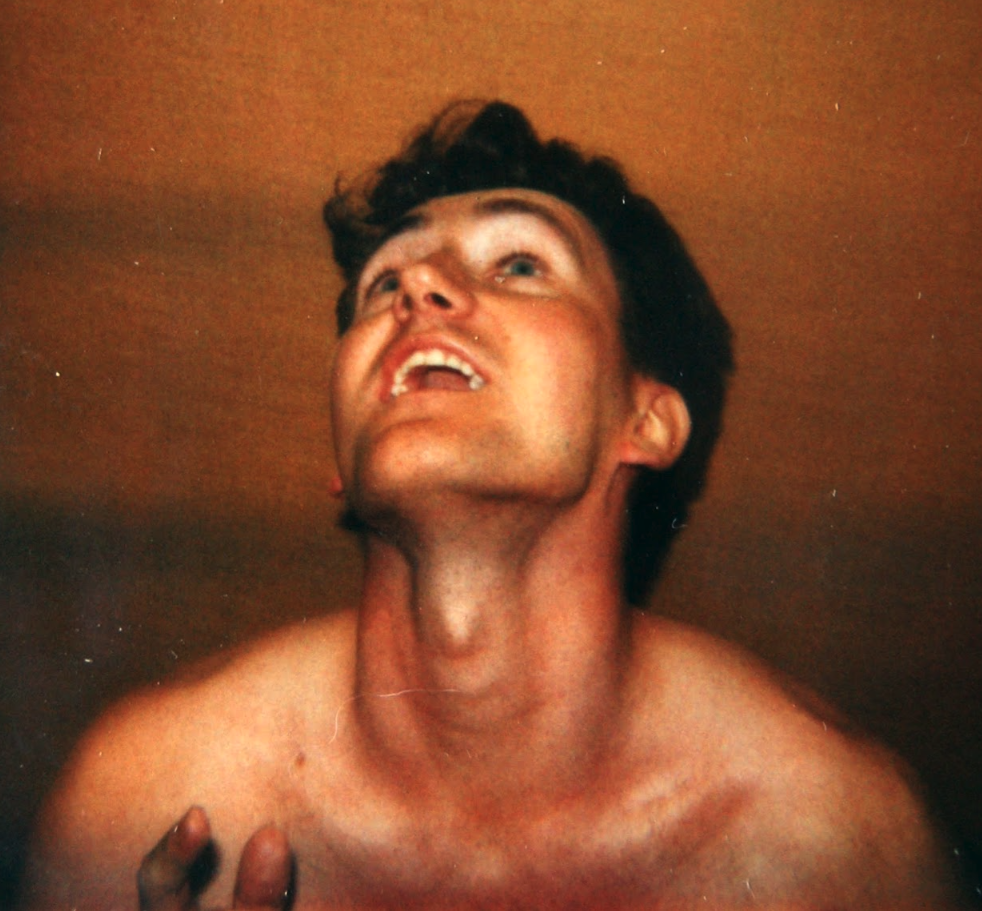
She laughed and said, “Alright then. You.”
So we made a plan. I would pose for her – naked, and she would pose for me. An hour or two each.
I was staying in this slightly ridiculous flat in Whitehall Court, central London, with grand views and high ceilings. My mother was temporarily residing there, and my brother sometimes stayed there as well.
Lucinda turned up on time, and I ushered her into one of the huge bedrooms. This one had two beds and a floor-to-ceiling arched window at one end that looked towards St. James Park.
She dropped her bag, took off her clothes without a flicker of hesitation climbed onto the wooden stool in the middle of the room.
I fussed with the easel. I made excuses when Lucinda asked if I’d be getting undressed. I started drawing. Slowly. Following the advice my mother would have given me, which she had given me a few years before when I’d completed a three-hour formal drawing of a model for my art A-level. I took the same approach, carefully measuring and placing marks.


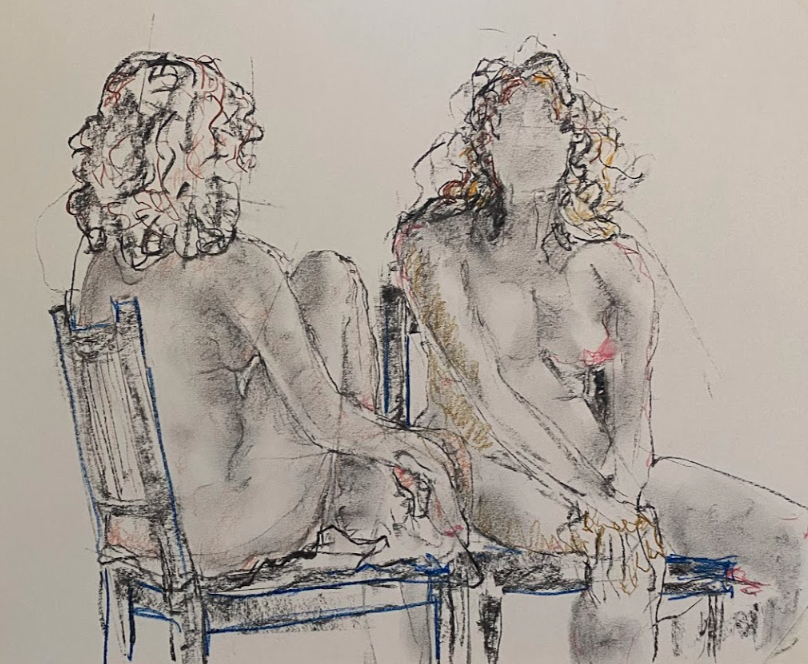
I did a few of these, each standing or sitting, facing me or turned away from me.
Before we’d finished, completely naked, she picked up the landline in my room—this is the mid-1980s —and called a friend. I sat on the bed, sketchbook open, charcoal in hand, listening to her say, quite loudly, that she might need the morning-after pill. She didn’t say why. She didn’t look at me. I didn’t ask. But it was said, just loud enough for me to hear.
We’d already agreed she was staying the night. Twin beds. Not pushed together. I lay awake for hours, aware of her presence in the next bed and wondering if she expected me to make a move. I didn’t, though I would have liked to. I thought that resisting temptation was the right thing to do. It showed character. I could channel all that energy into the drawings. That was the artist’s way—the noble sublimation of lust into line. I was young. Romantic. Possibly an idiot. Had she jumped me, I would have been up for it!
She came back a week later with champagne. My mother was away this time. The flat was ours. She’d brought her sketchpad, clearly expecting me to return the favour—fair’s fair. However, I was working on a screenplay with a female colleague from the advertising agency, which may not have helped the mood. I had a deadline; she was on a mission. Lucinda sat in the sitting room for two hours while I typed away. She didn’t push. Didn’t interrupt. Then she left, taking her bottle of champagne with her.
She could’ve waited, but didn’t. She might have come back the next day. But she hadn’t. And that was that.
Now here’s the thing. I was officially available. My long-term girlfriend and I had decided, god knows why, that while she was off in France for a year, we’d let ourselves off the hook. Not quite a break-up. Just… a pause. Freedom, in theory. But it never felt like freedom. I was toying with trying to be faithful, for no good reason. Hoping things would pick up where they had left off. So yes, Lucinda could have been something and then more. It wasn’t just about sex — it was about what might’ve come after. And I didn’t think I was ready for that.
Lucinda and I might have discussed it and created some drawings of both of us, and a bit more besides, but we didn’t.
I framed a couple of my drawings; I still have them somewhere.