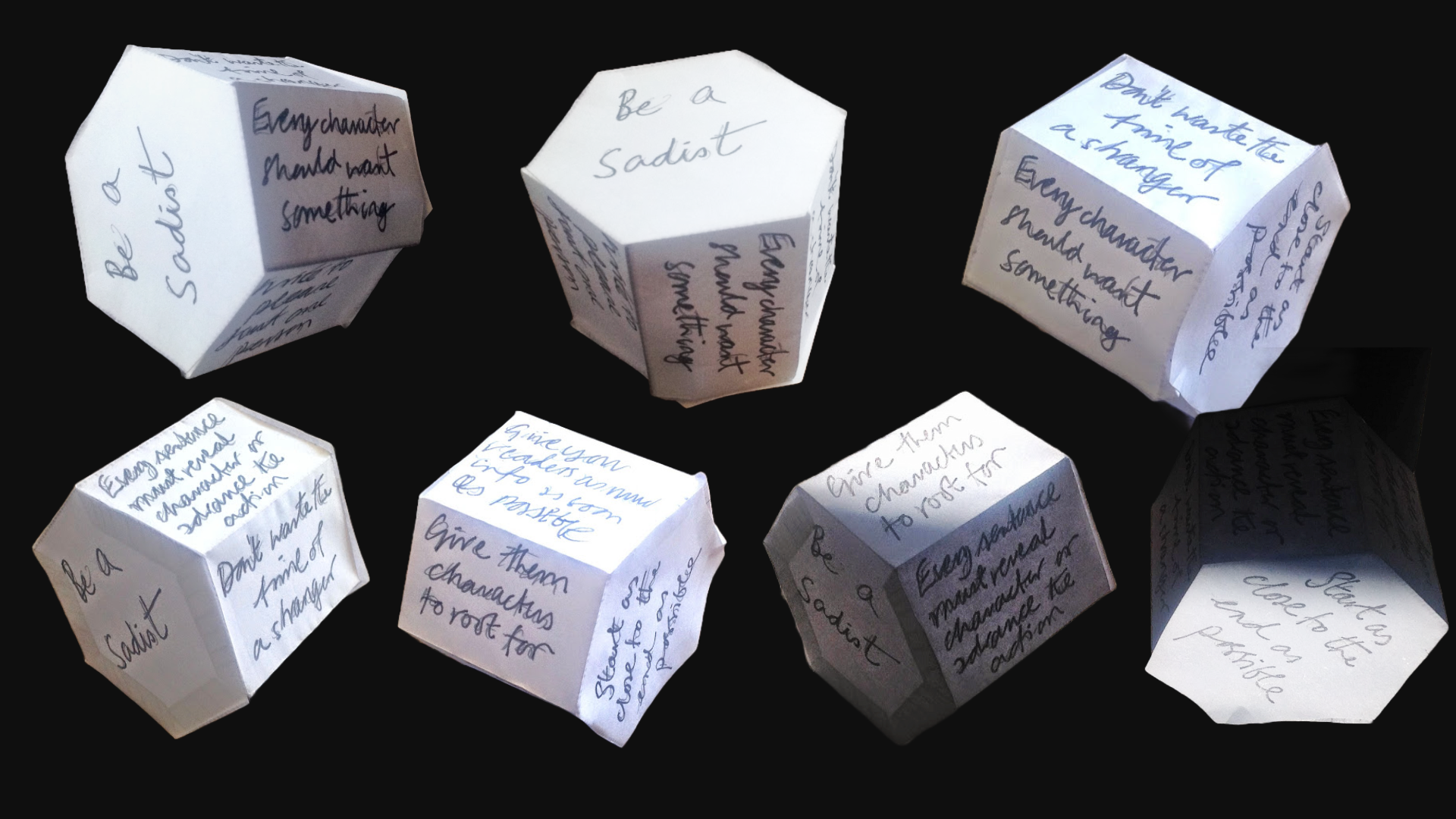
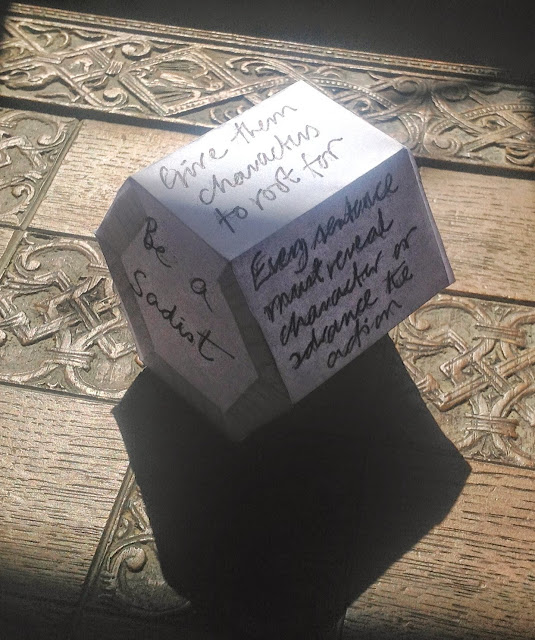
Since I struggle to remember multiple pieces of advice, I created an octahedron with the eight tips from Kurt Vonnegut. I toss it on my desk while writing, especially when I pause for coffee, to check if I meet the requirements.

Fig. 1 “Be a sadist.”
I interpret this as a conflict that creates chaos and allows me to observe how the characters behave and what lessons they learn or fail to learn as a result.
Unable to retain more than one piece of advice in my head for long, I’ve created this octahedron with the eight tips Kurt Vonnegut gives. This way, I toss it over my desk as I write every so often, at least every time I reach for a sip of coffee. I can then verify whether I am meeting the requirements.
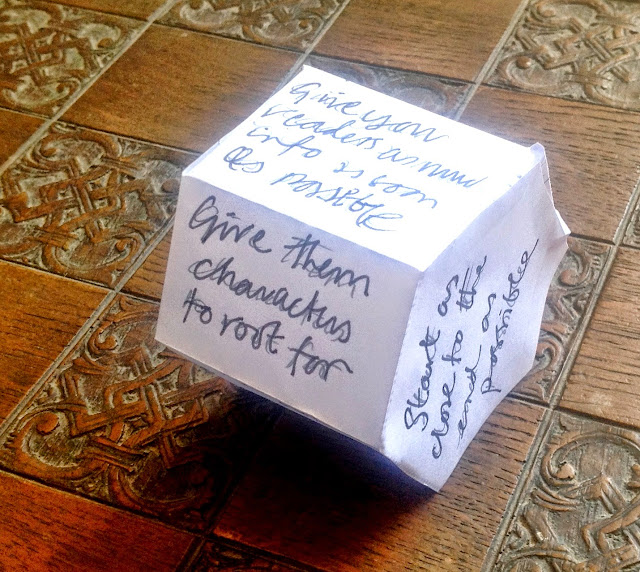
2) “Give your readers at least one character they can route for.”
This is all about creating believable characters: the good, the bad, and the ugly. By mixing different traits and ensuring most have something likeable, you forge a stronger connection with your readers and keep them engaged in your story.
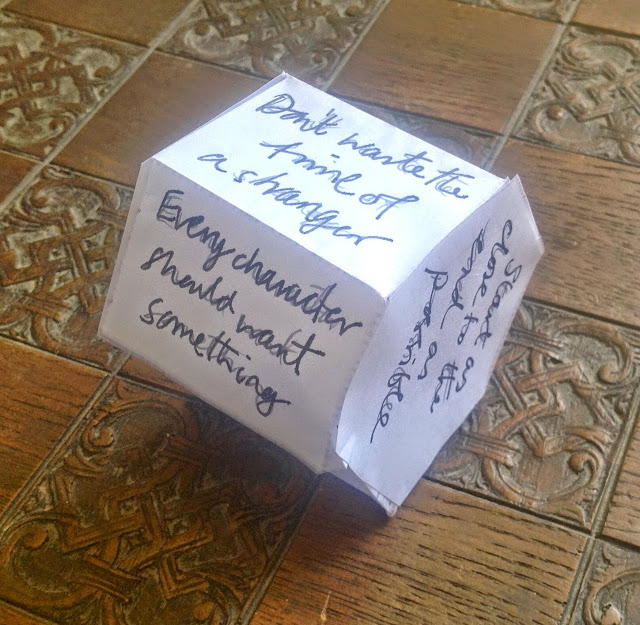
3) “Don’t waste the time of a stranger.”
I avoid the dull and obvious in settings, word choice, and phrasing. Take risks. Surprise and thrill them. It can be about how you perceive the everyday in a quirky and original way, rather than simply featuring wacky characters and locations.
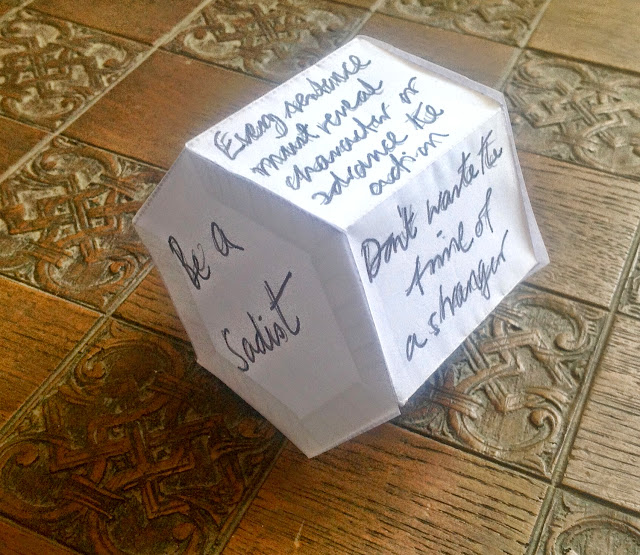
4) “Every sentence must reveal character of advance the action.”
Kurt Vonnegut advises against ‘jazz writing,’ which refers to self-indulgent, meandering prose that lacks purpose. Instead, he encourages writers to think like professionals and to ensure that every word contributes to the story’s meaning and progression.
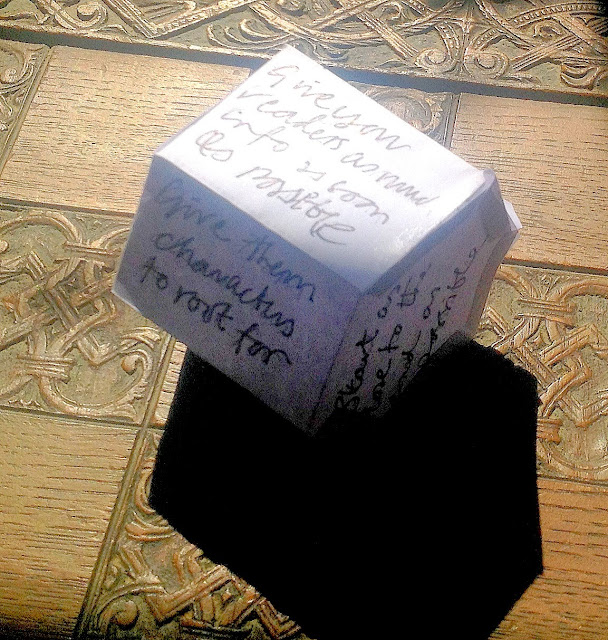
5. “Give your readers as much information as possible as soon as possible.”
He cautions against the ‘twist in a tail’ approach, which involves withholding key information until the end of the story. Vonnegut argues that storytelling is not akin to telling a joke or writing a sketch. Instead, he advocates for a more straightforward method, similar to Hitchcock’s technique of revealing a bomb to the audience and then building suspense as they wait for it to go off.
6. “Every character should want something. Even if it’s just a drink of water.”
Which I take to mean avoiding having characters as props for the protagonist: they, too, want something from life. Show what it is and have it conflict.
7. “Start as close as possible to the end.” Kurt Vonnegut.
I interpret this as meaning to get as close to the climax as possible. Don’t hold back, and certainly avoid excessive backfill and backstory that, with each draft, distracts you from the big idea and the significant events of the story.
8) “Write to please just one person.” Kurt Vonnegut.
Please one, and you will please many. Try to write for many, and you’ll either end up in a terrible tangle or produce mud.





Leave a Reply