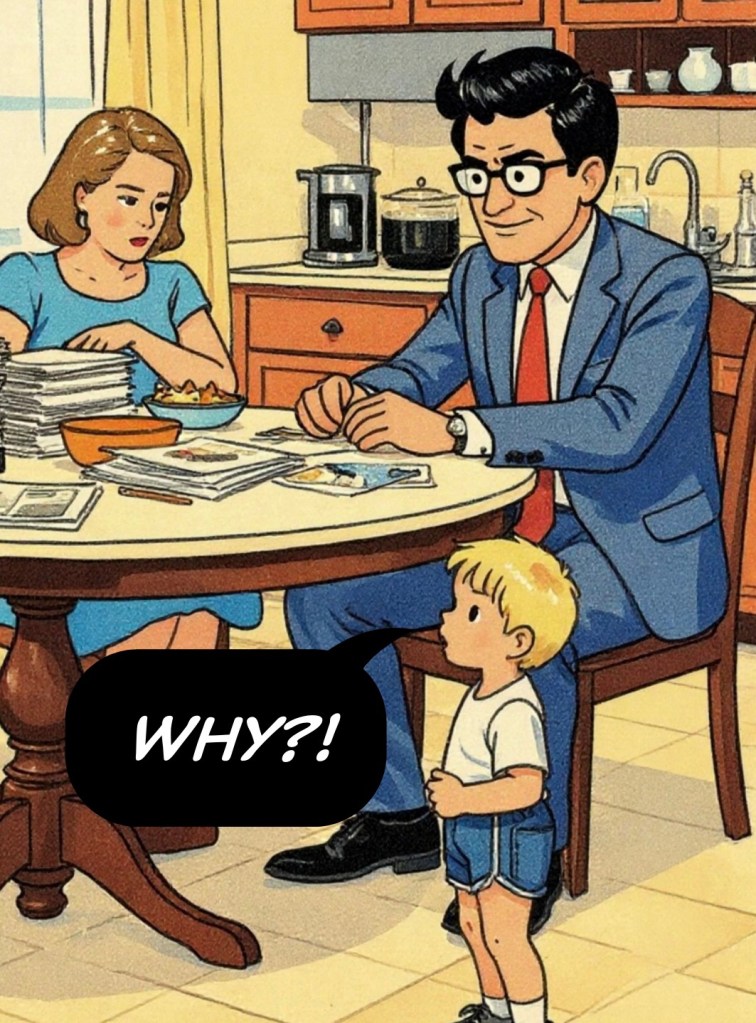
When I first encountered Jung’s concept of the shadow self, it resonated with me. The shadow is the notion that we hide away the most vital, instinctive parts of ourselves — only for them to leak out in frustration or longing.
As a boy, I felt that split forming within me. My father made me angry — not through cruelty, but through distance. I’d ask “why?” and then “but why?” again, eager for engagement as much as an answer. My mother gave more when she could, but her life had narrowed to keeping up appearances and being the “perfect housewife,” trailing after his lordship. My questions, my energy, my need to create — they all seemed too much. So I learned to press them down.
Years later, I was still doing it — choosing History at Oxford instead of art, advertising over acting, a full-time job over a creative gamble. I told myself I was being practical. In truth, I was building a persona: the version of me the world would find acceptable.
But what we repress doesn’t disappear. It returns as irritation, restlessness, or creative hunger. When my so-called stable job collapsed, I thought there must be something wrong with me. The ADHD diagnosis that followed only deepened the questioning. Yet now I see it differently: my shadow wasn’t sabotaging me — it was demanding attention.
Each collapse, each false start, has been a crack in the mask. Through those cracks, the artist, the storyteller, and the coach have emerged — the self I tried to hide, finally stepping into the light



Leave a Reply