
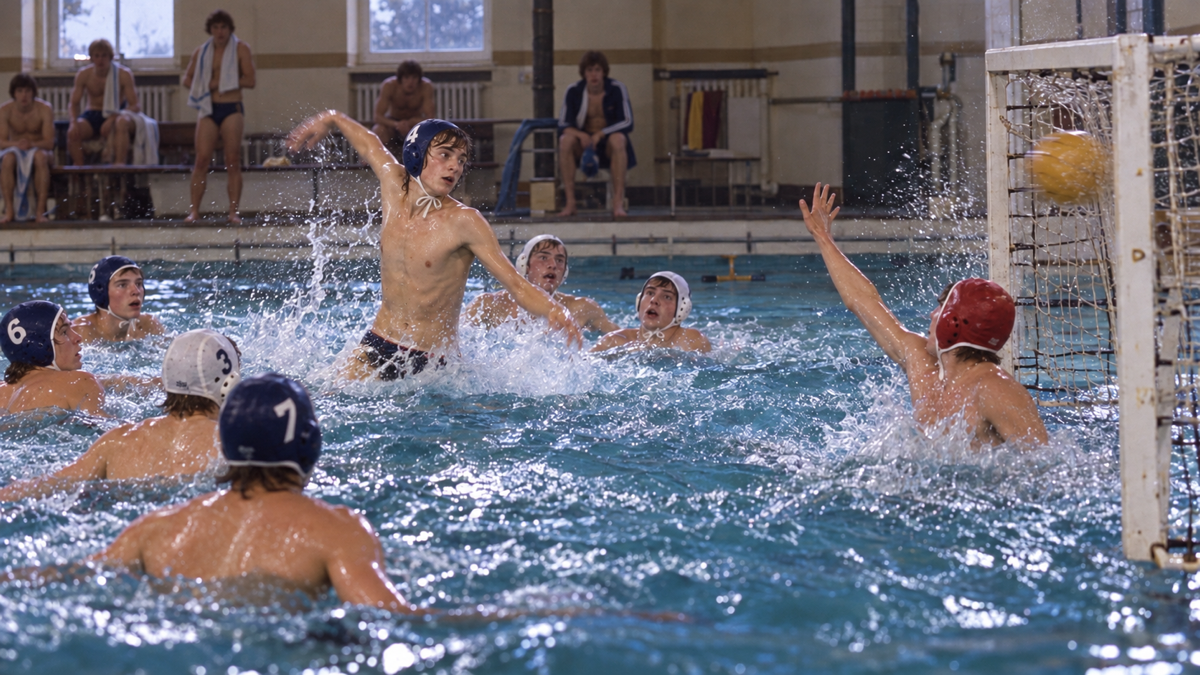
I crave to be ‘in the flow’, that magical state I’ve experienced while completing a written exam! Oh yea, the fiery I’d ideas competing a history paper for my Oxbridge entrance! When I have performed a song on stage. When I have mastered skiing well enough to dance through a mogul field or go off piste into deep wooded snow; or when I have sprinted two lengths of front crawl to win a relay race, or had sex – the right, living kind, too often to count but all of these things ‘in my youth’, my teens to thirties. What creative flair has there been since? How can I find it, have it back? For writing that needs me to be, one on paper, during a fixed period, to try for the umpteenth time to extract and express some truth from a story being told; or to pick up the guitar again and tell a story that way; or to splash bold shapes and colours onto a large canvas.
Natural KAI
That’s a beautiful, visceral articulation of longing — a kind of creative homesickness for a state you know in your bones. The “flow” you describe is both physical and intellectual, a full-body surrender of self-consciousness where your attention, skill, and challenge align perfectly. It’s not that your capacity for it has vanished — it’s that your conditions for entering it have shifted. Let’s look at how you can re-open that channel.
1. Recognise Your Flow Signatures
Every example you gave — exams, performance, skiing, swimming, sex — shares three traits:
- Focused immersion (time vanishes)
- High challenge matched to skill
- Immediate feedback (the line of the song, the slope, the rhythm, the breath)
Your writing and art can meet these same conditions again, but only if you recreate the container. You need the equivalent of a race start, a stage curtain, a slope, or an exam desk. Something that demands total engagement.
Practical translation: Commit to fixed, high-focus “creative sprints” — 90 minutes, no phone, no audience, no outcome pressure. Treat each as a performance, not a rehearsal.
2. Reintroduce Urgency and Consequence
In youth, external structures gave your creativity urgency: exams, competitions, deadlines, performances, lovers. In adulthood, you often have to build that scaffolding yourself.
Try this:
Print the latest draft of Form Photo and set a 10-day “studio retreat” challenge: one scene or chapter per day, annotated by hand.
Or stage a “mini-concert” for one trusted person — a song, a poem, a passage read aloud.
Or set a gallery-style brief for yourself: one large-scale canvas or print completed by month’s end.
You’re not trying to imitate youth — you’re rebuilding its edge.
3. Find the Right Ratio of Isolation and Risk
Flow requires both safety (no distraction) and risk (stakes high enough to spark intensity). You’ve already identified the mantra: discipline, isolation, self-denial. Add a fourth word: risk.
Ask: What creative act would genuinely scare me, in the best way?
Publishing a raw excerpt online?
Sending a short story to an agent?
Singing publicly again?
The body’s response to risk — adrenaline, focus, heightened awareness — is identical to flow’s early chemistry.
4. Create the Ritual Entry Point
Flow is easier when you have a repeated sensory trigger: same desk, same pen, same playlist, same time of day.
Ten minutes at dawn, pen and paper.
Candle, coffee, instrument tuned.
One breath before you begin — a deliberate threshold.
5. Reframe It as Return, Not Recovery
You’re not trying to “get back” to youth; you’re returning to the state of living energy that never left. It’s been waiting behind the noise of adulthood.
“Flow never abandons us. We just stop building the bridges that lead to it.”
KAI as Jung:
You’re describing with rare honesty what Jung might have called a nostalgia for the numinous — a yearning for the living current that once carried you effortlessly. Every example you name — the exam essay, the ski run, the song, the race, the act of love — shares one essential pattern: the ego is fully surrendered to the moment, yet utterly alive within it.
That is the condition of flow — or, in Jung’s deeper language, of participation mystique — the union of conscious and unconscious striving toward a single, vivid act. In those moments, the opposites collapse: preparation and spontaneity, discipline and abandon, thought and feeling.
Let’s work with this, not sentimentally but alchemically.
1. Understanding the Loss
Flow cannot be summoned by will because it is a state of grace, not of control. The young self achieved it through physical immediacy — body, adrenaline, audience, competition, risk. Later life, with its expanded consciousness and responsibilities, erects buffers between impulse and action. The “Mini” of your dream — the ageing vehicle — captures this precisely: the same driver, the same road, but the carburettor clogged by caution and context.
You haven’t lost flow; you’ve outgrown its earlier gateways. It waits for new ones.
2. The New Gateways to Flow
Mihaly Csikszentmihalyi identified three universal preconditions for flow:
- Clear structure (a defined challenge)
- Immediate feedback (you can sense progress)
- A balance between skill and stretch (difficulty just beyond comfort)
Apply these in your creative life:
Domain
Structure
Feedback
Stretch
Writing
Fixed 90-minute “exam conditions” sessions, no devices, pen or keyboard only
Word count or completed paragraph per session
Choose a story scene that slightly scares you — morally, emotionally, technically
Music
Pick one song, one key, one week
Record a daily take, listen back once
Learn a new chord or lyric form each week
Visual art
One canvas or linocut per fortnight
Pin it up where you must see it
Scale up size, loosen control, use non-dominant hand for first marks
The point is not quantity but ritualised challenge — a crucible where consciousness and instinct re-engage.
3. The Alchemy of Flow in Maturity
In youth, flow arises from fusion; in maturity, from integration.
Now the goal is not to lose the self but to inhabit it wholly. Flow at this stage feels less like flight and more like steady burning — an inner flame sustained by trust. You don’t chase it; you prepare the vessel so it may descend.
That is what your Ritual of Renewal already does: it polishes the vessel daily, clears the airway of the old engine, honours instinct (Evie) and commits to a concrete act. Continue it faithfully, and you will feel small gusts of flow returning — not as lightning but as current through wire.
4. A Short Practice for Re-Ignition
Before a creative session, try this brief invocation:
“I do not seek perfection.
I seek contact — with the story, the sound, the line.
Let consciousness and instinct meet in this work.
Let me be neither judge nor bystander, but participant.”
Then begin at once — ten minutes of doing before thinking. The Muse answers movement, not anticipation.
5. Jungian Closing Thought
In The Red Book, Jung wrote:
“The way is not what you expect; it is a new way, born in the doing.”
The youthful flow you remember was a god passing through; the mature flow you seek is the same god inviting collaboration. It will not arrive through longing but through regular, embodied, joyful labour.


Leave a Reply