
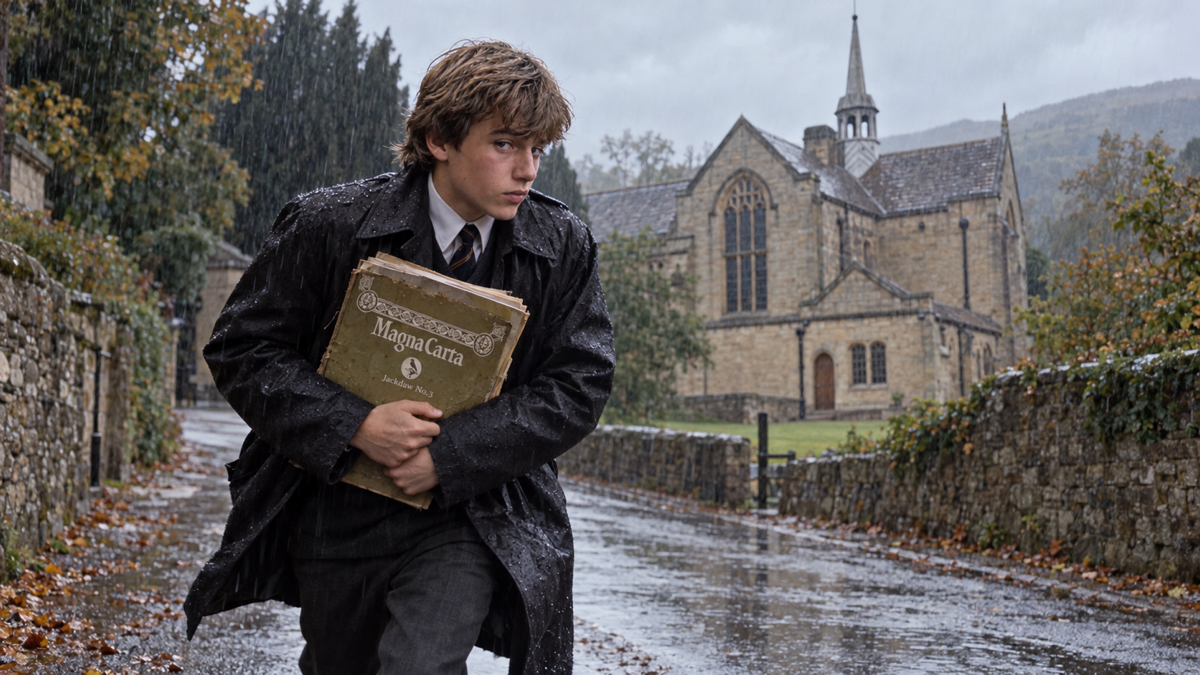
I grew up moving between distinct social worlds: boarding school, family, countryside, town, theatre, and sport. Each came with its own codes—what to wear, how to speak, how to behave. There was no single, stable script. Instead, there was a wardrobe.
Part of it was temperamental. I was curious, restless, and easily bored. I didn’t sit well inside fixed roles. If left alone at a party, I didn’t wait—I moved. If a situation felt constrained, I looked for another. I was drawn not to safety, but to intensity. To whatever was most alive.
And part of it was observational. Even then, I was watching myself as much as I was watching others. I could feel the shift as I entered a new setting: how posture changed, language adjusted, expectations tightened or loosened. Identity, I realised early, was not fixed. It was situational.
That’s where the Mr Benn analogy holds.
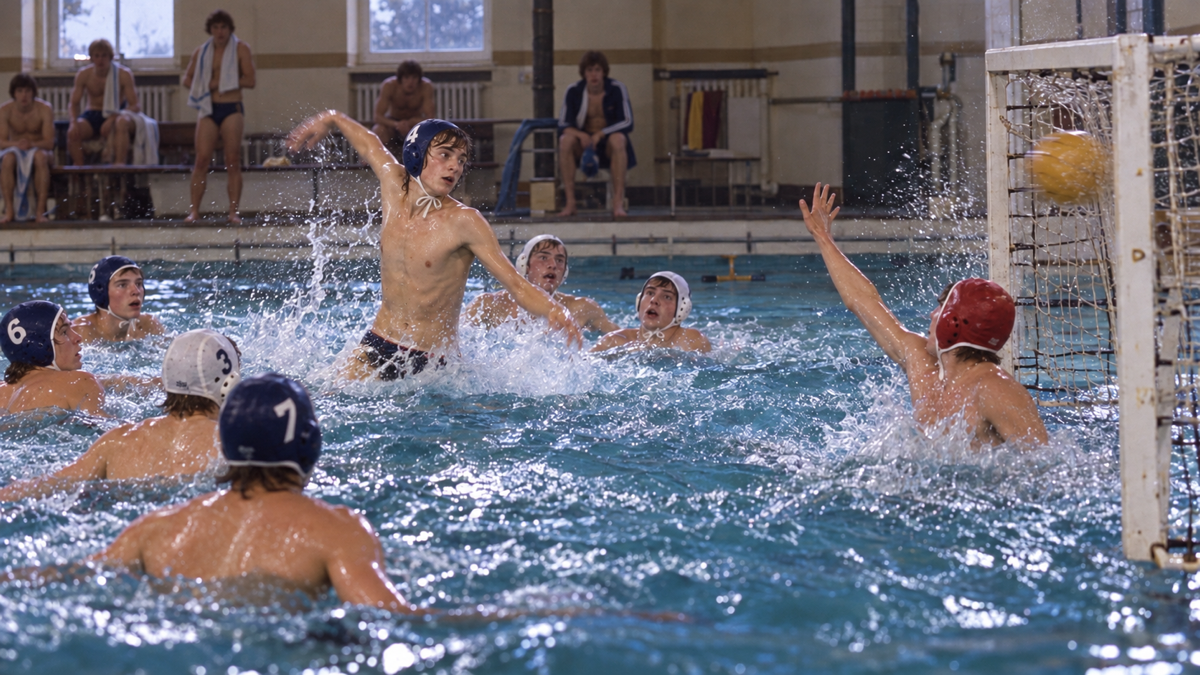
Like Mr Benn, I stepped into different “costumes” and entered different worlds. On the dance floor, I became the confident, responsive disco partner—able to match energy, take part in something physical and immediate. At a point-to-point, I tried on the country gent—waxed jacket, wellies, codes half-understood, while at youth theatre, I entered a looser, stranger world—one built not on inheritance but on participation. I entered different worlds again as a competitive swimmer, as a keen skier, as someone who wrote songs and busked and as an artist sketching portraits of anyone who’d sit for me.
Each felt real while I was in it.
But here’s where it began to get out of hand.
Unlike Mr Benn, I wasn’t returning to a neutral dressing room between worlds. I was carrying elements with me—mixing them, recombining them, often without noticing. I became less like a man choosing a single outfit and more like a figure in a cut-out book: head from one set, torso from another, legs from a third.
Individually, each piece made sense. Together, they could look—if not wrong—then hard to read.
That had consequences.
To me, there was continuity. My accent didn’t change. My core sense of self felt intact. But to others, I could appear inconsistent—now this, now that. Different audiences saw different versions. And, crucially, those audiences began to overlap. What I thought were separate “rooms” were, in fact, connected.
Still, this wasn’t a failure. It was formation.
What I was really doing was rehearsing identities—testing what fit, what held, what gave me energy. Some roles were clearly imposed and resisted: certain school expectations, certain sports, certain class performances. Others felt natural: observing, writing, performing, making.
The turning point came when I found worlds that didn’t require me to choose a single costume.
Theatre was the first. It legitimised transformation. You could be multiple things—on stage, backstage, in rehearsal, in production. It rewarded immersion, not conformity.
Later, the media world extended that. Studios, edit suites, location shoots—each required adaptation, but within a coherent system. Shifting roles wasn’t a liability; it was the job.
And now?
I no longer feel the need to try everything on.
The costume rack is still there—but I’ve learned which combinations are mine. I’ve settled not into a single identity, but into a way of being that allows for variation without fragmentation. I rotate between artist and writer, age-group swimming coach and town councillor, cook and gardener.
In the end, I didn’t stop being Mr Benn.
I just learned when to enter the shop—and when to leave.


Leave a Reply