Describe a risk you took that you do not regret.
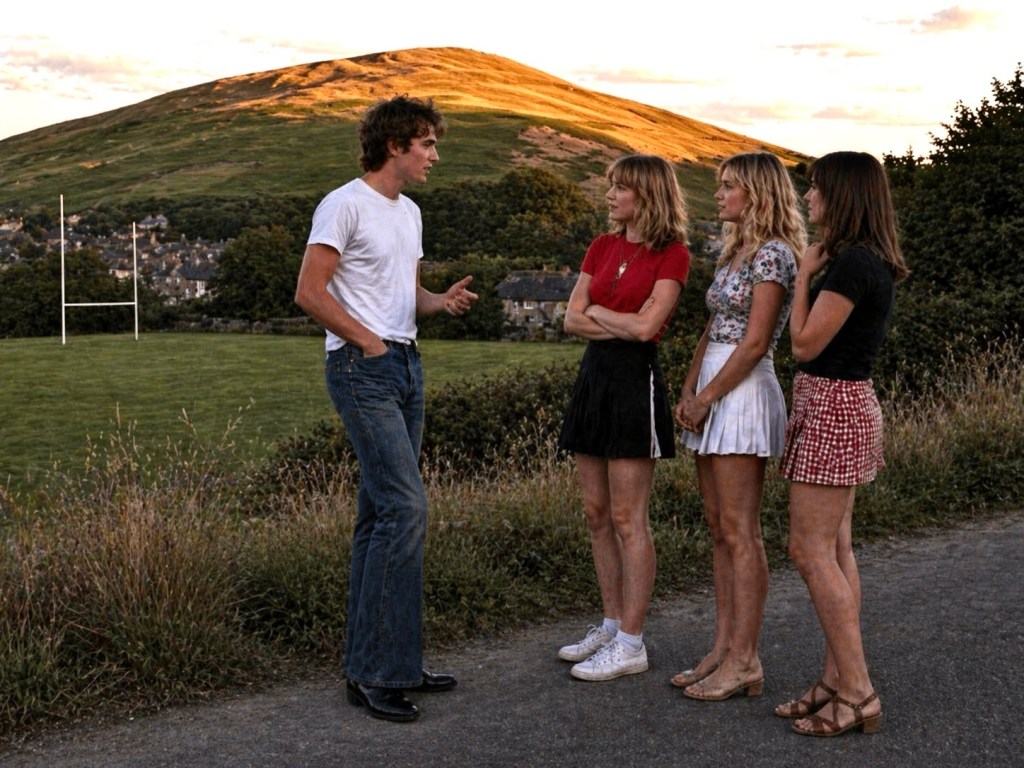
There was a particular kind of pressure cooker that defined an English public school in the 1970s – ours, Sedbergh, an all-male boarding school, founded in 1526 was steeped in male tradition, hierarchy, and control. Masters upheld the rules with varying degrees of competence and authority; prefects enforced them with zeal. Contact with girls was limited and mythologised. Everything—appearance, behaviour, movement—was monitored. You lived in a system designed to produce order and turn out a ‘type’.
It’s 1978, of course, so some of us pushed back.
I was sixteen. Restless. And experimenting with a version of myself that didn’t fit the public schoolboy mould. Punk was raw, defiant, and anti-establishment—and I was drawn to it instinctively. I had already taken a razor comb to my hair, hacking at it until something jagged and vaguely resembling Sid Vicious from the Sex Pistols stared back at me from the washroom mirror. It was more than a look—it was a signal. I was stepping out of line. Matron said I looked like a bog-brush. Other boys picked up on it. I wore the name like a badge of honour. I was planning to go further – to pierce my ear. The Housemaster’s daughter obliged with a gold stud after I had gone at my ear live with a nappy pin.
The risk was real . If the school decided I’d gone too far—appearance, attitude, relations with a girl – I could have been expelled. More likely, I’d have faced a caning. I knew that. And I knew I’d have refused it, which would have escalated things further. This wasn’t teenage posturing. The stakes were real.
But that Saturday, 27th May 1978, the urge to break out overrode everything.
The day itself gave nothing away. Morning classes, yes, Saturday morning in lessons. It was unseasonably warm, for us northerners we thought of it as stifling heat – revision for O’ Levels in a few weeks was going nowhere.
After classes our father appeared and took my brother and me to Appleby for an ‘exeat’ of a few hours—lunch, a drift through town. He asked about my hair. I deflected. It was mine now, not his to question.
I bought a copy of Saturday Night Fever – hardly punk credentials, but that was part of the contradiction. You didn’t step cleanly from one identity into another; you layered them, often awkwardly. It was a birthday present for a fellow ‘posh prison inmate’ at an all-girls boarding school nine miles down the road at Casterton.
Back at school by early evening, the real story began to take shape.
Word filtered through: girls from the town I’d met playing tennis on the town courts a few days before, Susan, Wendy and Jackie—wanted to meet. There was a disco. Could I meet up with them at 7:30. This sort of thing was entirely off-limits. We had a roll-call after evening prayers, then bed and lights out. And I’d never get out before 9:30, possibly 10.00.
So I made a decision. I dared to go.

After lights out, I changed into a set of home clothes (not allowed at school), then pulled on my pyjamas – a makeshift disguise—and tested the corridors. A prefect stopped me once; I improvised, said I was headed for the bathroom. He waited for my return. The second attempt twenty minutes later worked. Down the back stairs. Into the cellar. Pull my pyjamas off . Then the out of the window. It was still light. I had to push my way through a privet hedge, and onto the drive. The sun had gone down at 9:30 but it was still light.
That moment—half in, half out of the institution—was the risk crystallised and it was nearly over before it had began. There were figures, silhouettes on the drive. I’d been spotted. It might have been the Housemaster’s wife out walking their dog with their daughter. Luckily not.
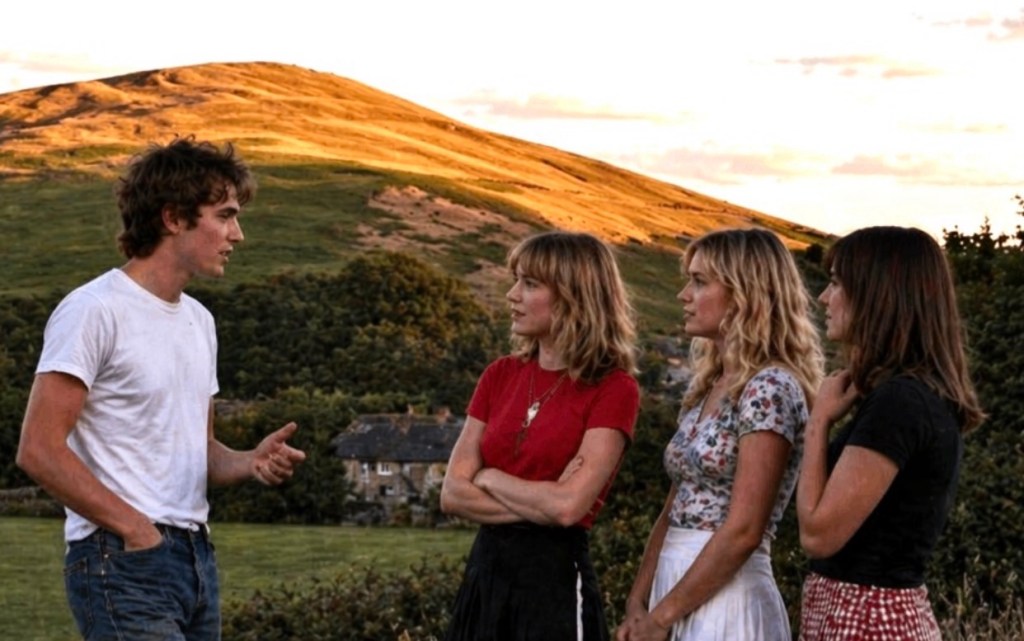
The three girls laughed; they knew me. They gave me directions to the village hall, off the high street, behind Sedbergh’s cinema.
And just like that, I was inside a transported. Home again, or so it felt. Back at a rugby club disco. Music, movement, girls—Wendy in particular. We danced all evening, nothing punk played (just as well), all very middle of the road and safe, and some slow dances too. And a kiss or two. Connection. What more could a boy want. A life that felt immediate and unsupervised.
It didn’t last unchallenged.
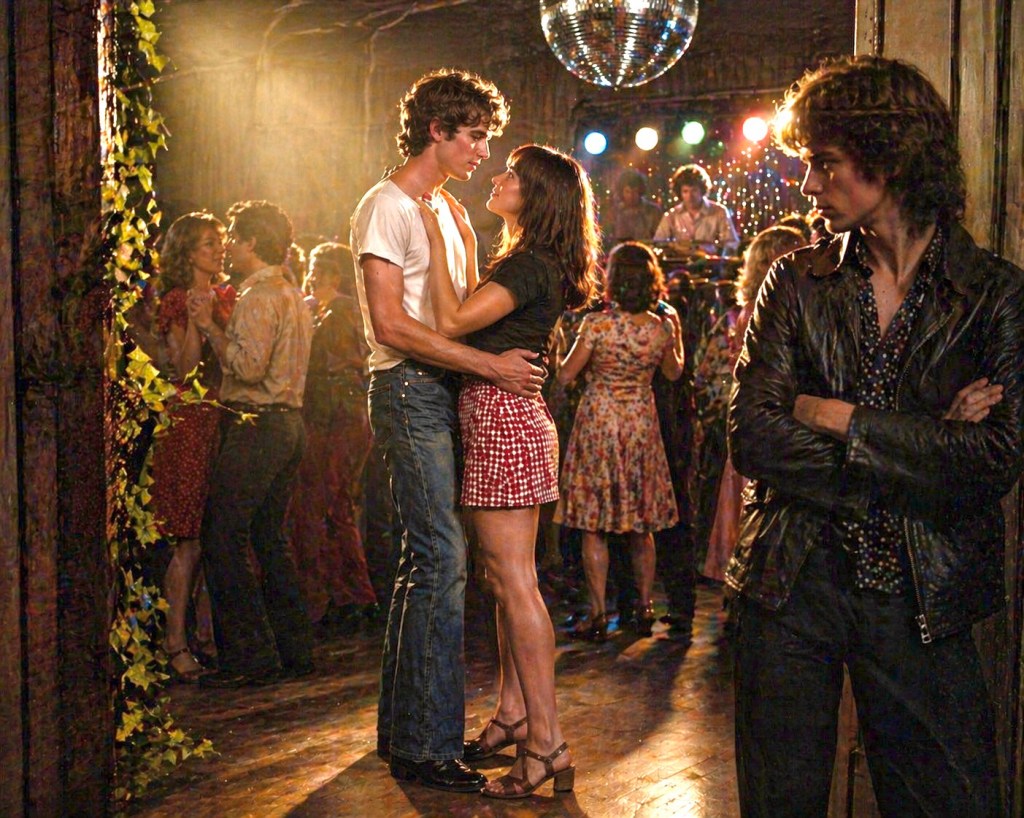
A local youth took exception to my presence—perhaps the look. He accused me of jostling him, or worse, his girl. I apologised which marked me out instantly as not belonging. The second time he punched me in the face. I understood the limits of my borrowed territory. A thick lip was the price. Time to go. The last thing I needed was a fuss. A last kiss goodnight from Wendy and I scampered back across the school playing fields.
Cellar window. Pyjamas back on. Bed. Unnoticed.
No punishment. No exposure. Just the quiet satisfaction of having crossed a line and returned intact.
I didn’t regret it then, and I don’t now.
The real risk wasn’t the expulsion or the caning. It was the possibility of never testing the boundaries at all—of accepting the system completely, without ever discovering what lay beyond it.
That night, I proved to myself that there was a beyond. And that I could reach it.
48 Years On
As an afterthought—written now, forty-eight years on—I find myself returning to Vladimir Nabokov and his line: “the more you love a memory, the stronger and stranger it is.”
That night has not faded. If anything, it has sharpened. I love the memory.
I see now what I didn’t fully articulate then: the sense of being marked out. The tall youth who fixed on me early in the evening had already read the signs. My T-shirt was too clean, my jeans too pressed, my hair—despite the razor attack—still carried a trace of a public schoolboy. There was, in that village hall, an unspoken divide: town and gown. I represented something—privilege, distance, perhaps even contempt—whether I intended to or not. I have not embellished that. If anything, I suspect I have softened it. I am fairly certain now that he had already decided, long before the second blow, that I would be leaving with a thick lip.
And yet, alongside that, the whole episode has taken on the quality of a film I might once have watched with my brother—something between Colditz or The Great Escape, or a schoolboy fantasy of it. The mechanics of the escape—the secret conversations passed between the girls and me, the pyjamas over my clothes, the cellar window—have a mythological status in my mind’s eye. At sixteen, it was improvisation. Now, it plays like choreography.
One image in particular was cinematic: the dusk light on the drive, figures in silhouette, that split second of uncertainty—had I been caught?—and then the immense relief as the shapes resolve themselves into girls from town, kitchen workers I recognised, not authority figures. My luck held. That moment holds. I can see it, hear the girls, smell the dew on the grass, the scent they wore, their laughter and warmth.
When I revisit the night, I realise I am not drawn to any one element. It is the fusion that gives it charge. The risk was real—expulsion, punishment, humiliation—but it was heightened, made intoxicating, by the extravagance of it. Slipping out into the forbidden world to meet girls, to dance, to kiss—it carried the logic of a fairy tale, or more precisely, of Romeo and Juliet: the crossing of boundaries, the illicit encounter, the sense that something larger than oneself is briefly, dangerously in motion.
Because I wrote it down in a Five-Year Diary, the moment is fixed. I have the day, the place, and several names. And because I have returned to it, again and again, it has deepened, layered, and become something more than the event itself.
Nabokov’s provocation holds: memory is not static. It grows in proportion to the attention—and the affection—you grant it.
And this one, unmistakably, has been loved. And so I can’t help but fictionalise it too. What if the punch in the face had turned into a brawl? What if I’d been taken back to Wendy’s house to be nursed and they had called the school or my parents? What if, as originally planned, my friend Bob from a different House had joined us? Double the trouble. He said he’d got out through the library window and had been caught. He made up a story about having a cigarette and was sent back to bed, only to be watched too closely.
I learned that it is easier to be secretive when you act alone.
A risk that paid off? I think so. It was worth it for this memory.


Leave a Reply