
When Vladimir Nabokov described memory as “pegs and echoes,” during a BBC interview reproduced in ‘Strong Opinions’ I recognised the architecture immediately.
Memory is not a continuous film; it is a series of hooks on which fragments hang, and the reverberations that follow when one is struck. My diaries—cramped Collins five-year entries from 1975 to 1982—are nothing if pegs. “Tennis. Flute. Tests.” “Kendal drifting.” “£100 on the stall.” Each line, at the time, barely enough to justify the day, now functions as a fixed point in a much larger field.
The echo is everything I have been doing since: reflecting, returning, sounding, visualising, and fictionalising and listening for what still vibrates.
What interests me is that the peg is often arbitrary, even trivial, while the echo carries the emotional truth.
A note about canoeing on Kidlington Lake becomes, in recall, wind, cold water, adolescent bravado, the choreography of rescue. A line about “human sexual reproduction—Nuffield Biology” opens not onto biology, but onto the silence around desire, the clinical tone of instruction, the absence of any language for what was actually unfolding among us. My desire to learn more with Shere Hite’s The Hite Report on female sexuality and ‘quality time’ spent with a girl.
The peg is neutral; the echo reveals the system.
In my dream work, I see the same mechanism at work. A dream image—a penthouse suite, a corridor, a figure at a distance—acts as a peg. The echo is the associative cascade: authority, exposure, performance, the shifting ground between safety and risk. The structure is Nabokovian even if the method is Jungian. I am not retrieving memory so much as activating it, allowing the echo to disclose a pattern.
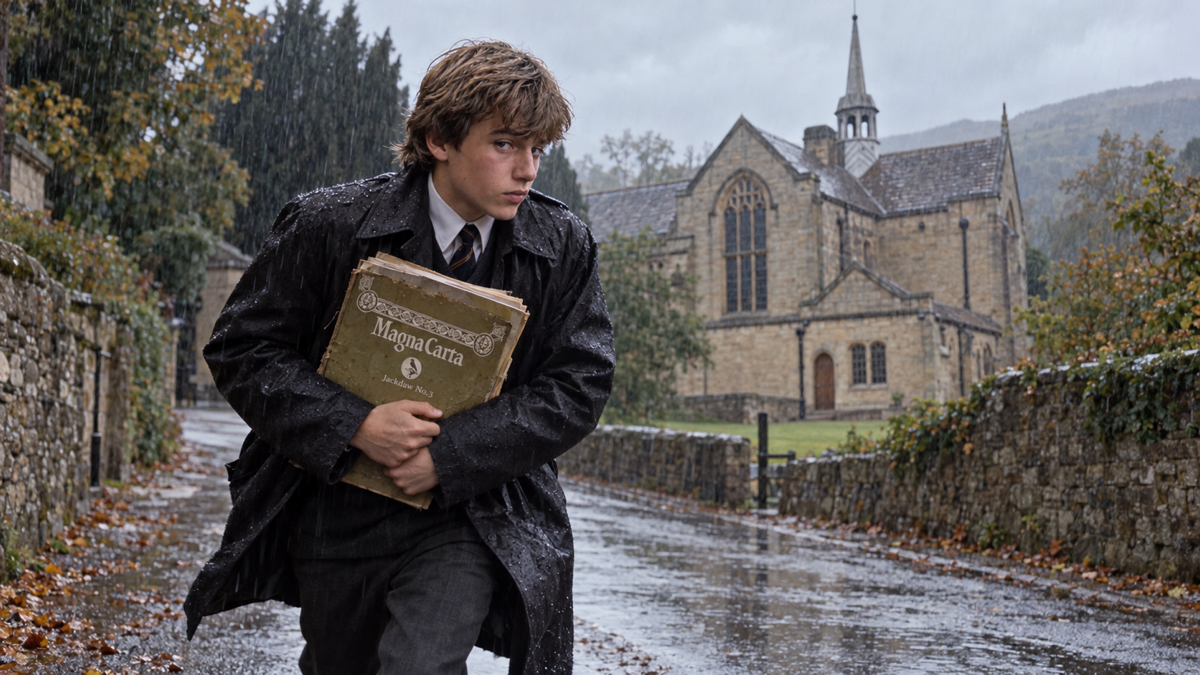
Form Photo operates on this principle, too. It is fiction. A class photograph of a group of schoolgirls my age is the ultimate peg: a grid of faces, fixed and indisputable. Yet each face releases multiple echoes—desire, rivalry, projection, the fragile circuitry of reputation. My character, Robbie, thinks he is managing parallel narratives; the echoes tell a different story, one of convergence and impending collapse. Kizzy, his twin sister, with her retrospective lens, listens not to what is said but to what reverberates between events.
What I begin to understand is that memory is less about accuracy than resonance. The Diaries permit me to trust the peg, however slight it may be. The work—writing, analysing, revisiting—is to follow the echo without forcing it into coherence too quickly. Nabokov’s phrase gives me discipline: do not overburden the peg, and do not mistrust the echo. Between the two, a life can be reconstructed—not as it was recorded, but as it continues to sound.



Leave a Reply